
2023
2023
2023

We continue to apply a meticulous selection in crafting Pavillon Rouge 2023, which represents 30% of the harvest.
Since 2016, we have undertaken regular efforts to restructure the vineyards. On some exceptional terroirs, the vines are still too young to be included in the Grand Vin blend, but these efforts are beginning to bear fruit, as some of these wines are now included in the Pavillon Rouge blend.
Like Château Margaux, Pavillon Rouge 2023 is very precise in terms of flavours and aromas and is silky on the palate.
The 79% cabernet sauvignon in the blend gives the wine remarkable freshness and length. The blend is completed by 14% merlot, 2% cabernet franc, and 5% petit verdot. (October 2025)
Climate
The winter of 2022-2023 was relatively mild, although there were about ten days of real winter temperatures in the first half of February.
There was also not much rain during the first few months of 2023: 196 mm in Margaux, allowing only a very light replenishment of groundwater reserves after an extremely hot, dry 2022 vintage. In these conditions, bud break occurred between the 3rd and the 10th of April.
Fortunately, spring did not bring any of the feared frosts. Rain was sparse but frequent during the growing season. There were just two weeks of sustained rain in June (72 mm). However, these conditions made it potentially difficult to keep the vines healthy. The high relative humidity in the air created very favourable conditions for downy mildew. Our vineyard teams succeeded in main¬taining healthy foliage to ensure good-quality ripening of the grapes and a successful harvest.
The vines flowered between the 31st of May and the 5th of June in good conditions, with no signs of coulure or millerandage.
2023 was markedly different from the previous vintage in terms of temperature. In 2022, there were very early heatwaves. In 2023, we had just one real heatwave, between the 17th and the 24th of August, the period when the grape skins mature, becoming thinner and more sensitive to the com-bined action of high temperatures and sunshine. The berries that were most exposed to the sun suffered scalding, forcing us to do a lot of sorting during the harvest.
We continue to apply a meticulous selection in crafting Pavillon Rouge 2023, which represents 30% of the harvest.
Since 2016, we have undertaken regular efforts to restructure the vineyards. On some exceptional terroirs, the vines are still too young to be included in the Grand Vin blend, but these efforts are beginning to bear fruit, as some of these wines are now included in the Pavillon Rouge blend.
Like Château Margaux, Pavillon Rouge 2023 is very precise in terms of flavours and aromas and is silky on the palate.
The 79% cabernet sauvignon in the blend gives the wine remarkable freshness and length. The blend is completed by 14% merlot, 2% cabernet franc, and 5% petit verdot. (October 2025)
Climate
The winter of 2022-2023 was relatively mild, although there were about ten days of real winter temperatures in the first half of February.
There was also not much rain during the first few months of 2023: 196 mm in Margaux, allowing only a very light replenishment of groundwater reserves after an extremely hot, dry 2022 vintage. In these conditions, bud break occurred between the 3rd and the 10th of April.
Fortunately, spring did not bring any of the feared frosts. Rain was sparse but frequent during the growing season. There were just two weeks of sustained rain in June (72 mm). However, these conditions made it potentially difficult to keep the vines healthy. The high relative humidity in the air created very favourable conditions for downy mildew. Our vineyard teams succeeded in main¬taining healthy foliage to ensure good-quality ripening of the grapes and a successful harvest.
The vines flowered between the 31st of May and the 5th of June in good conditions, with no signs of coulure or millerandage.
2023 was markedly different from the previous vintage in terms of temperature. In 2022, there were very early heatwaves. In 2023, we had just one real heatwave, between the 17th and the 24th of August, the period when the grape skins mature, becoming thinner and more sensitive to the com-bined action of high temperatures and sunshine. The berries that were most exposed to the sun suffered scalding, forcing us to do a lot of sorting during the harvest.
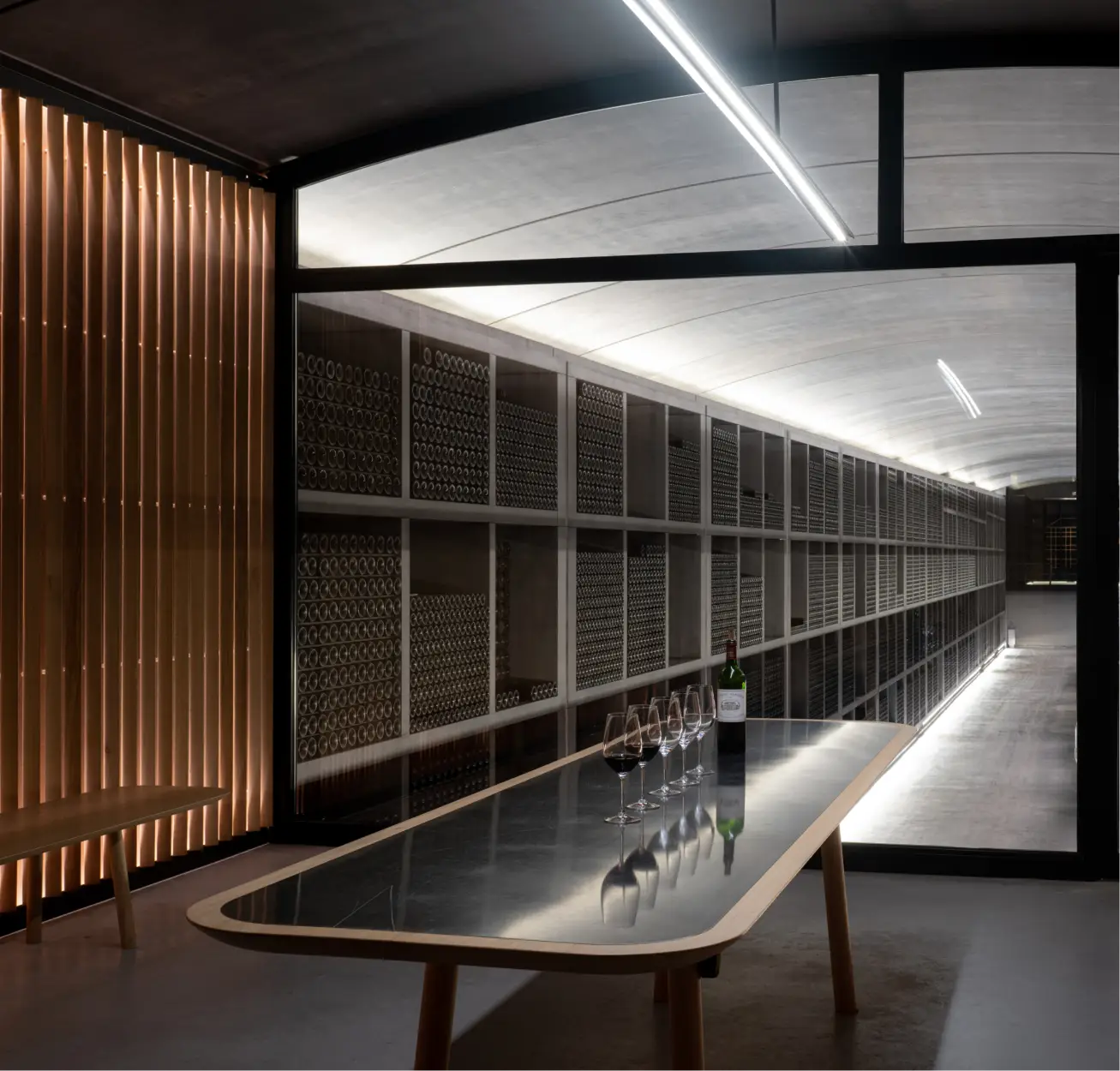
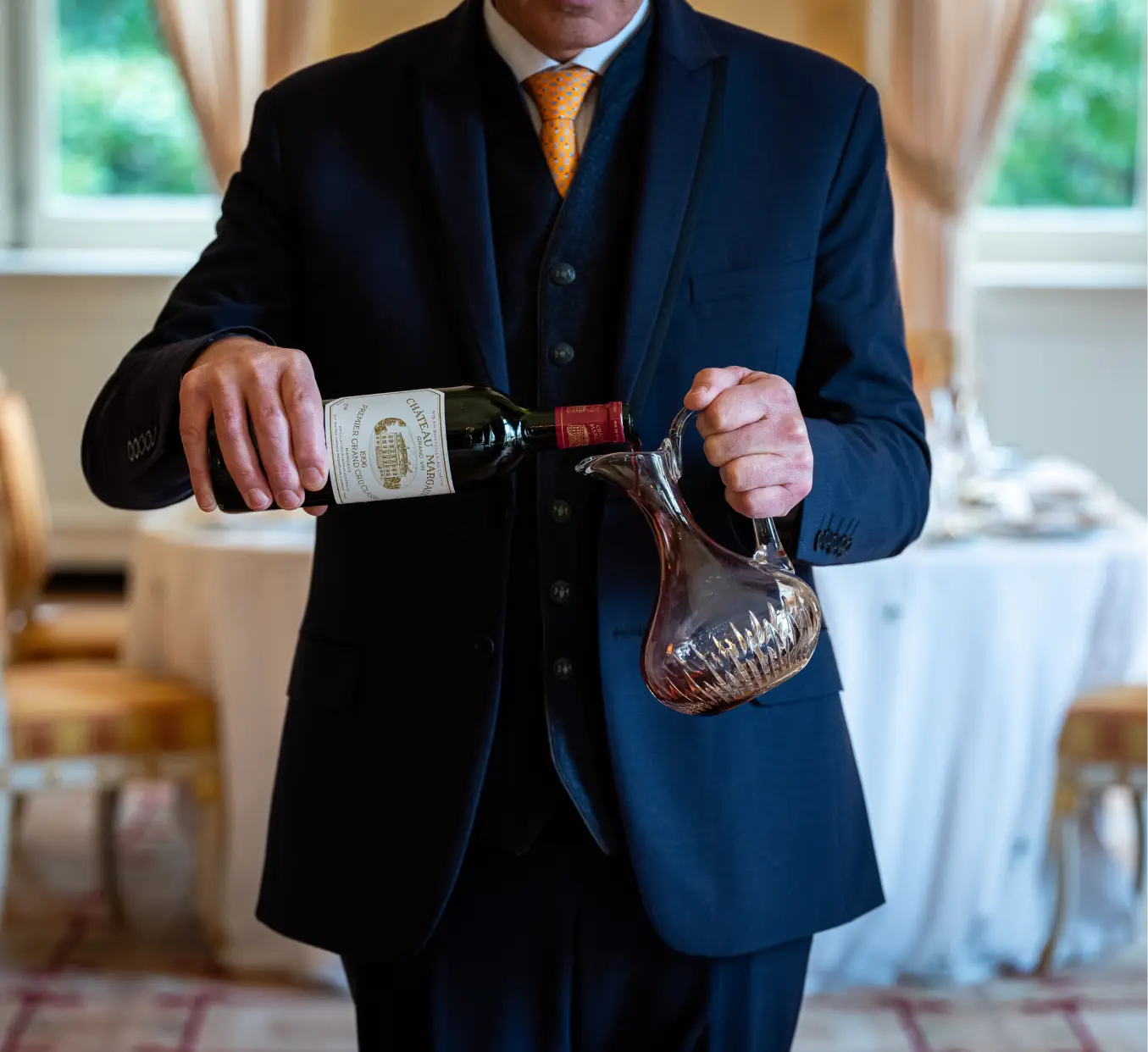
Service & tasting
Discover our tips for serving and tasting your wine in the best conditions.
Service & tasting
Discover our tips for serving and tasting your wine in the best conditions.