Service & tasting
Service and tasting are, above all, an encounter between a wine, a place, and a shared emotion.
1/3
Decanting
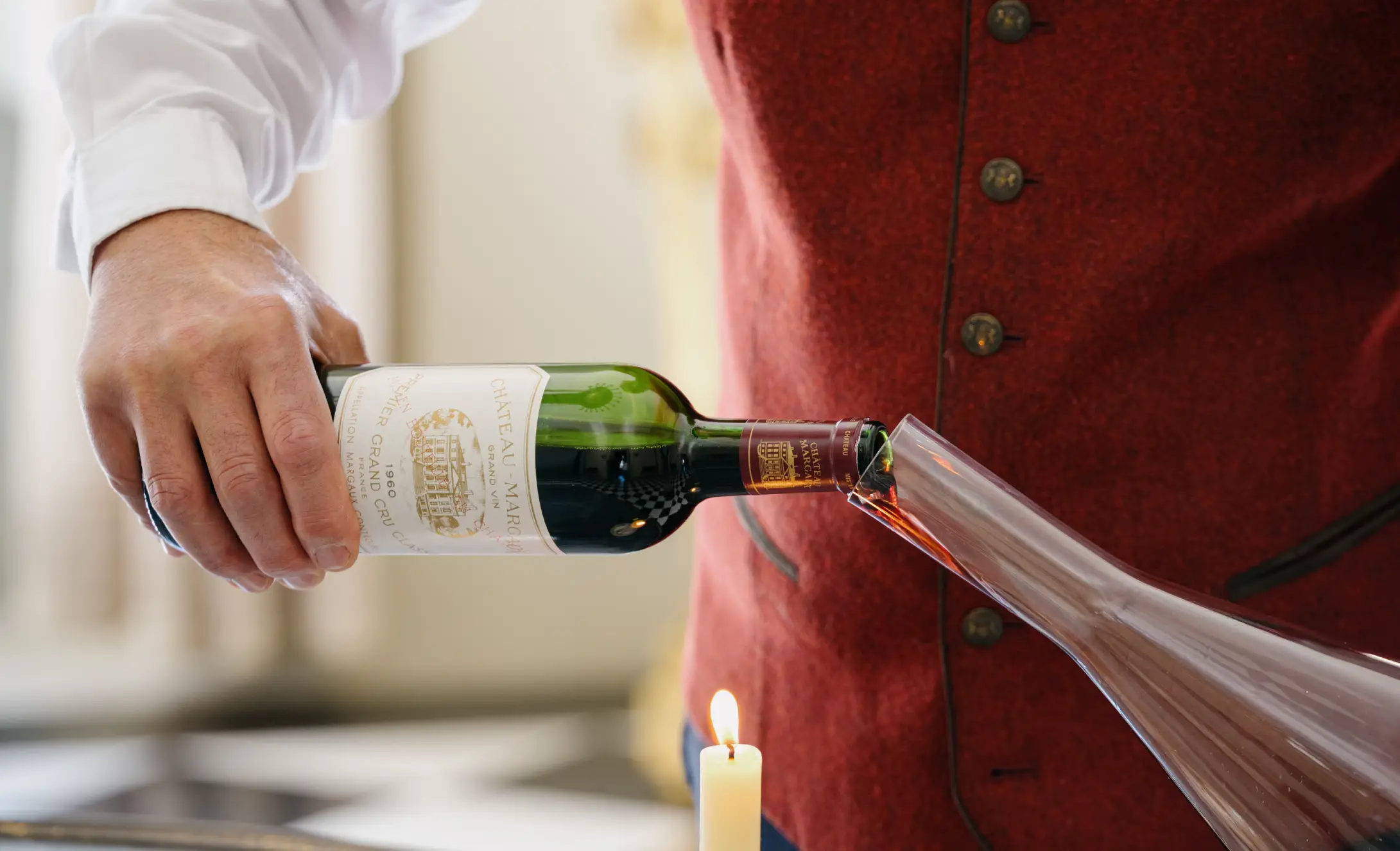
The main purpose of decanting red wine is to separate it from any sediment that may have formed in the bottle over time. This deposit is mostly tannins that have become insoluble from natural and chemical changes that take place during ageing.
Decanting also exposes the wine to oxygen which can help young, powerful wines, but may be harmful to older ones.
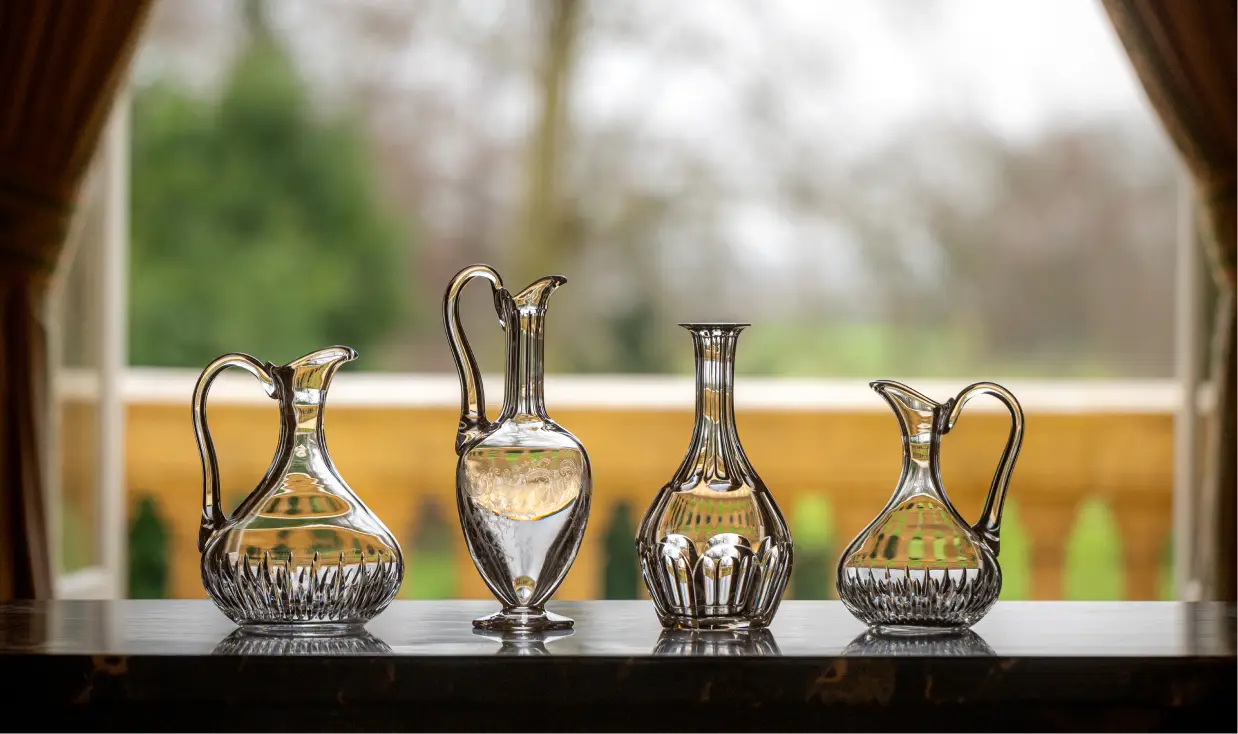
For young wines, decanting is generally beneficial: it allows them to breathe and open up, revealing their full aromas and structure. In this case, a wide carafe is ideal to maximise contact with air. For older wines, a narrower carafe is preferable, as the aim is simply to remove the sediment while limiting exposure to oxygen.
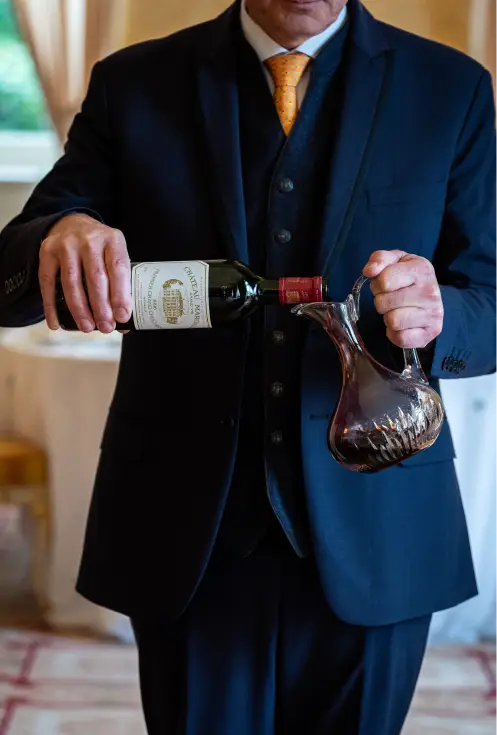
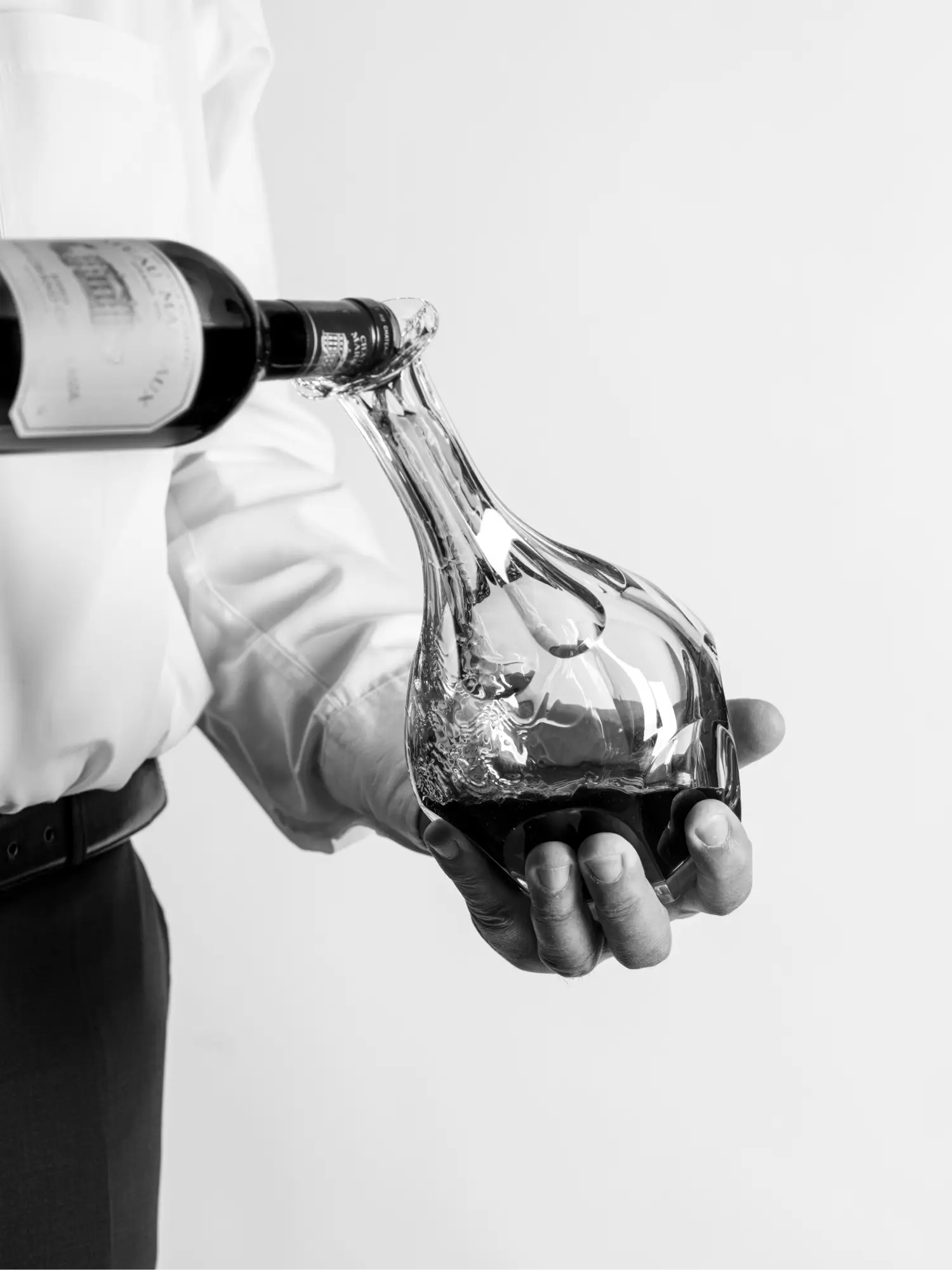
Once a wine has developed sediment, whatever its age, it is better to decant it. The simplest way is to pour the wine gently into a carafe (or another vessel) over a light source. The deposit will then fall towards the shoulder and neck of the bottle. Generally, decanting should not be done too long before serving.
1/3
Decanting
The main purpose of decanting red wine is to separate it from any sediment that may have formed in the bottle over time. This deposit is mostly tannins that have become insoluble from natural and chemical changes that take place during ageing.
Decanting also exposes the wine to oxygen which can help young, powerful wines, but may be harmful to older ones.
For young wines, decanting is generally beneficial: it allows them to breathe and open up, revealing their full aromas and structure. In this case, a wide carafe is ideal to maximise contact with air. For older wines, a narrower carafe is preferable, as the aim is simply to remove the sediment while limiting exposure to oxygen.
Once a wine has developed sediment, whatever its age, it is better to decant it. The simplest way is to pour the wine gently into a carafe (or another vessel) over a light source. The deposit will then fall towards the shoulder and neck of the bottle. Generally, decanting should not be done too long before serving.
1/3
Decanting
The main purpose of decanting red wine is to separate it from any sediment that may have formed in the bottle over time. This deposit is mostly tannins that have become insoluble from natural and chemical changes that take place during ageing.
Decanting also exposes the wine to oxygen which can help young, powerful wines, but may be harmful to older ones.
For young wines, decanting is generally beneficial: it allows them to breathe and open up, revealing their full aromas and structure. In this case, a wide carafe is ideal to maximise contact with air. For older wines, a narrower carafe is preferable, as the aim is simply to remove the sediment while limiting exposure to oxygen.
Once a wine has developed sediment, whatever its age, it is better to decant it. The simplest way is to pour the wine gently into a carafe (or another vessel) over a light source. The deposit will then fall towards the shoulder and neck of the bottle. Generally, decanting should not be done too long before serving.
2/3
Service
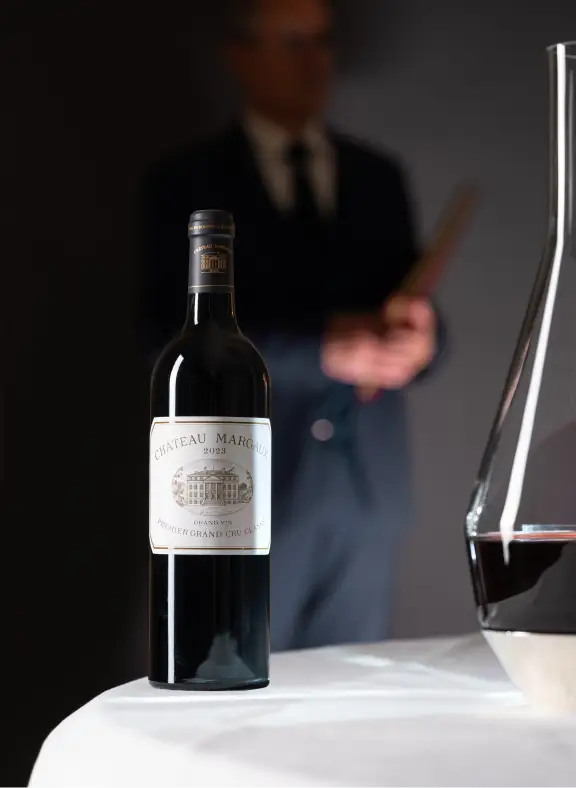
Great red Bordeaux wines are traditionally served chambrés, at room temperature, around 18–19°C (64-66°F). At higher temperatures, the bouquet loses finesse and the alcohol can overwhelm the delicate bouquet, even masking the fruit in younger wines. The tannins may also seem drier and less supple.
When served too cold, the aromas are muted and the wine can appear dull and short on the palate.
The same principles apply to Pavillon Blanc, though at lower temperatures. It should be served between 10-13°C (50-55°F), depending on the ambient temperature.
2/3
Service
Great red Bordeaux wines are traditionally served chambrés, at room temperature, around 18–19°C (64-66°F). At higher temperatures, the bouquet loses finesse and the alcohol can overwhelm the delicate bouquet, even masking the fruit in younger wines. The tannins may also seem drier and less supple.
When served too cold, the aromas are muted and the wine can appear dull and short on the palate.
The same principles apply to Pavillon Blanc, though at lower temperatures. It should be served between 10-13°C (50-55°F), depending on the ambient temperature.
2/3
Service
Great red Bordeaux wines are traditionally served chambrés, at room temperature, around 18–19°C (64-66°F). At higher temperatures, the bouquet loses finesse and the alcohol can overwhelm the delicate bouquet, even masking the fruit in younger wines. The tannins may also seem drier and less supple.
When served too cold, the aromas are muted and the wine can appear dull and short on the palate.
The same principles apply to Pavillon Blanc, though at lower temperatures. It should be served between 10-13°C (50-55°F), depending on the ambient temperature.
3/3
Tasting
Tasting lies at the heart of our daily work. Despite major advances in chemical analysis, nothing matches the accuracy and intuition of tasting when it comes to detecting subtle faults or anticipating a wine’s evolution.
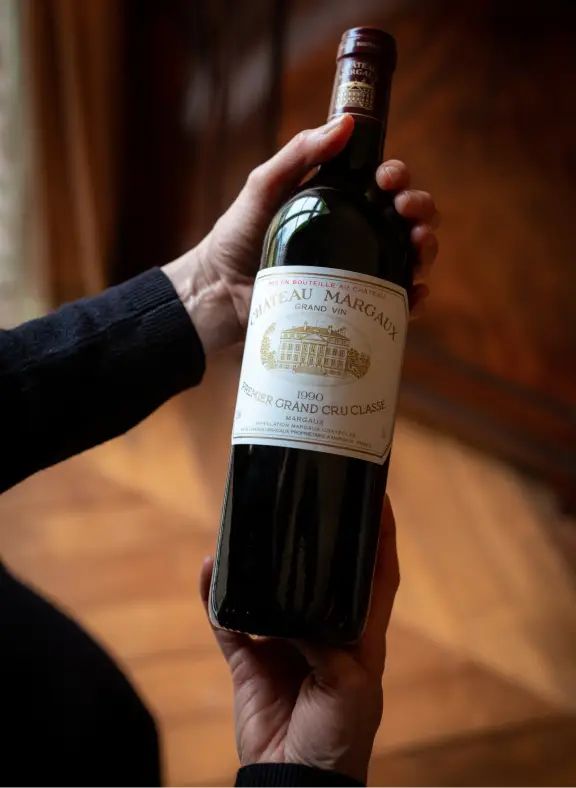
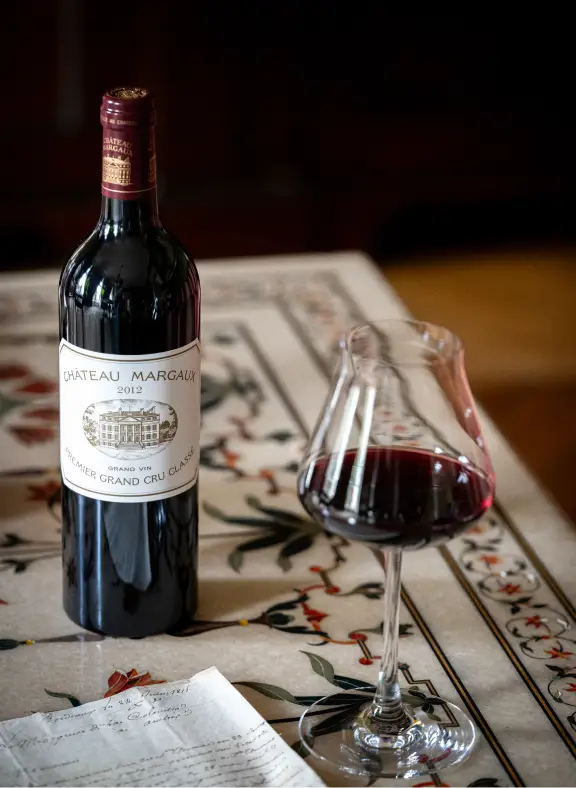
Tasting is also an essential tool for a growing number of professional critics. Each brings their own background and perspective, enriching our collective understanding of the wines.
Finally, tasting continues to captivate a broad community of wine lovers around the world. It is rarely a solitary exercise, it often gives rise to exchanges and opinions expressed in a particular language that nonetheless doesn’t need to be mysterious.
3/3
Tasting
Tasting lies at the heart of our daily work. Despite major advances in chemical analysis, nothing matches the accuracy and intuition of tasting when it comes to detecting subtle faults or anticipating a wine’s evolution.
Tasting is also an essential tool for a growing number of professional critics. Each brings their own background and perspective, enriching our collective understanding of the wines.
Finally, tasting continues to captivate a broad community of wine lovers around the world. It is rarely a solitary exercise, it often gives rise to exchanges and opinions expressed in a particular language that nonetheless doesn’t need to be mysterious.
3/3
Tasting
Tasting lies at the heart of our daily work. Despite major advances in chemical analysis, nothing matches the accuracy and intuition of tasting when it comes to detecting subtle faults or anticipating a wine’s evolution.
Tasting is also an essential tool for a growing number of professional critics. Each brings their own background and perspective, enriching our collective understanding of the wines.
Finally, tasting continues to captivate a broad community of wine lovers around the world. It is rarely a solitary exercise, it often gives rise to exchanges and opinions expressed in a particular language that nonetheless doesn’t need to be mysterious.
Explore the estate
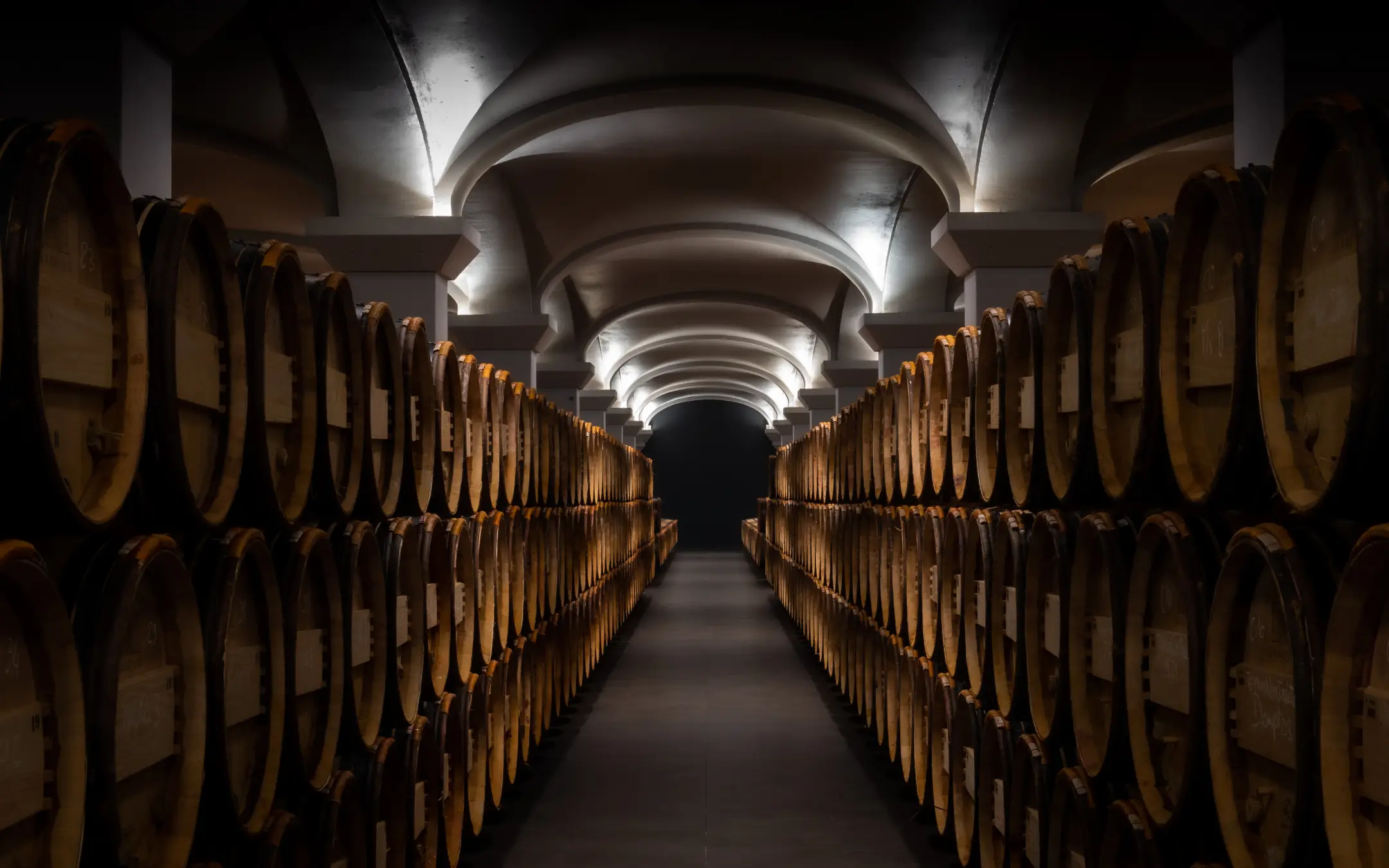
Discover Château Margaux and its vineyards, either through a virtual tour or by visiting the estate in person. An opportunity to discover the terroir, the cellars, and the daily work that shapes our wines.
Explore the estate
Discover Château Margaux and its vineyards, either through a virtual tour or by visiting the estate in person. An opportunity to discover the terroir, the cellars, and the daily work that shapes our wines.
Explore the estate
Discover Château Margaux and its vineyards, either through a virtual tour or by visiting the estate in person. An opportunity to discover the terroir, the cellars, and the daily work that shapes our wines.