Our heritage
At Château Margaux, the architectural heritage forms a small village entirely dedicated to the craft of winemaking. Each building has its own place and purpose: cellars, workshops, orangerie, the château itself and its gardens, creating all together a coherent and functional ensemble steeped in history. A number of staff also live on the estate, continuing the sense of community that has always shaped the property. Listed as a historic monument since 1946, this heritage reflects a timeless balance between tradition and modernity.
At Château Margaux, the architectural heritage forms a small village entirely dedicated to the craft of winemaking. Each building has its own place and purpose: cellars, workshops, orangerie, the château itself and its gardens, creating all together a coherent and functional ensemble steeped in history. A number of staff also live on the estate, continuing the sense of community that has always shaped the property. Listed as a historic monument since 1946, this heritage reflects a timeless balance between tradition and modernity.
The Château: classical elegance
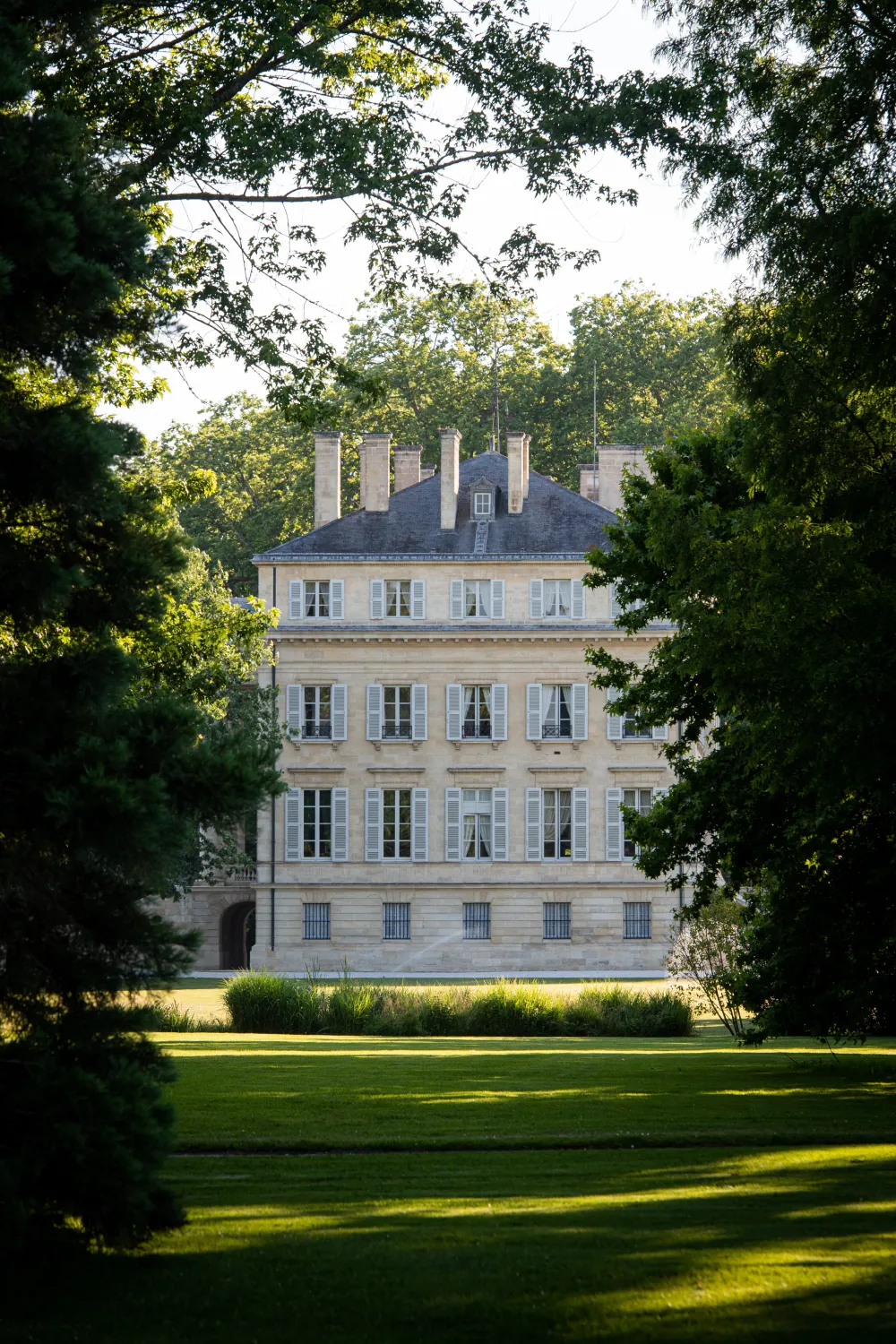
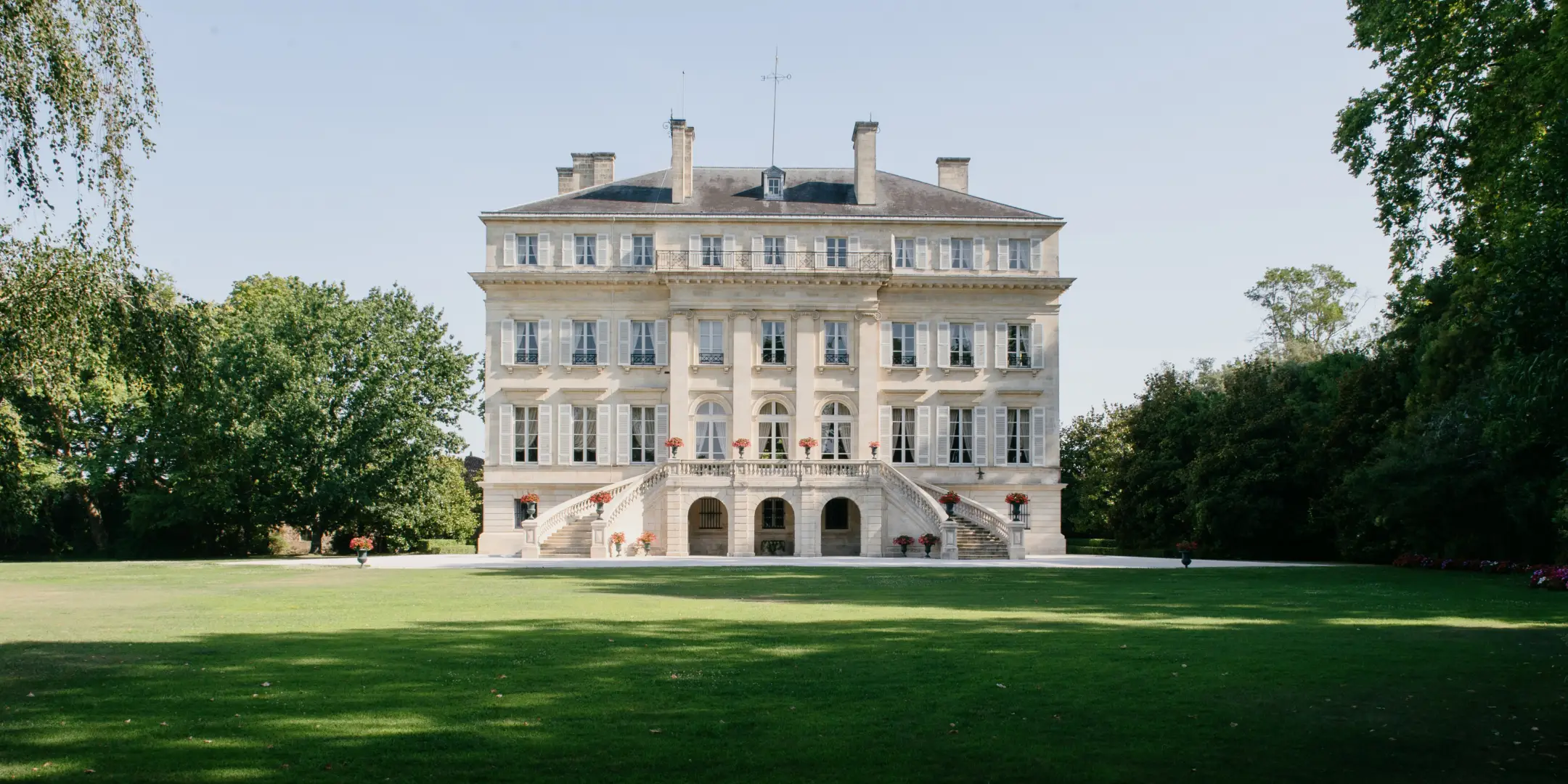
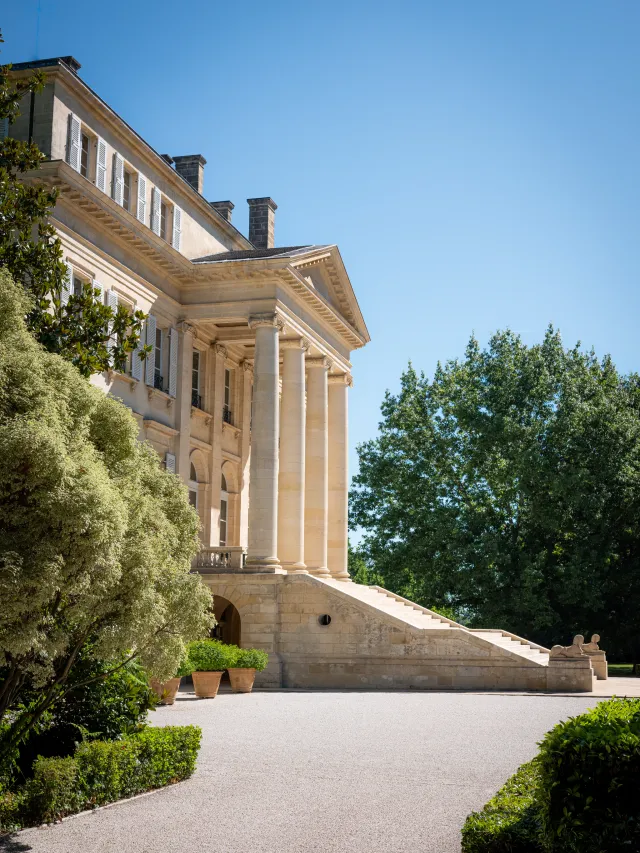
Built between 1805 and 1815 by Bordeaux architect Louis Combes, the château is a rare example of Neo-Palladian architecture in France. Known as the “Versailles of the Médoc”, it is recognised for its façade with four Ionic columns and a triangular pediment.
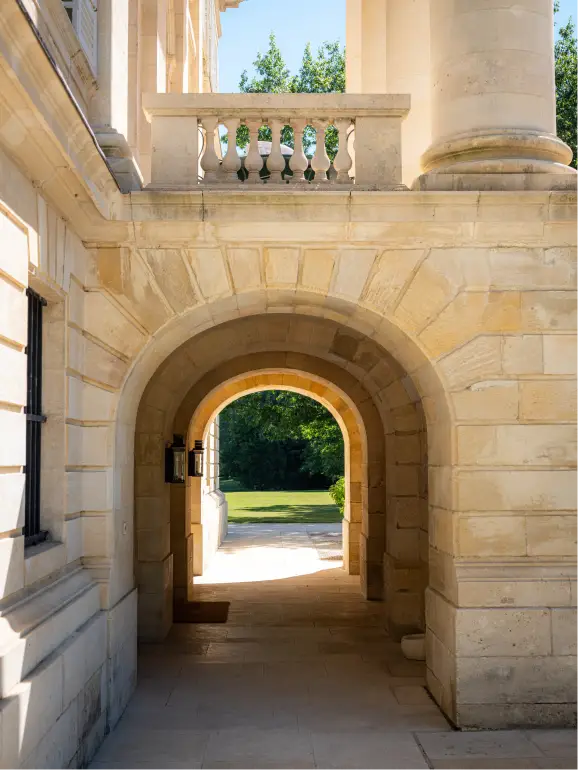
Inside, stonework, carved wood panelling and solid wood floors express a timeless refinement. Preserved since its construction, the château embodies the spirit of the estate, a symbol of excellence, rigour and beauty.
The Château: classical elegance
Built between 1805 and 1815 by Bordeaux architect Louis Combes, the château is a rare example of Neo-Palladian architecture in France. Known as the “Versailles of the Médoc”, it is recognised for its façade with four Ionic columns and a triangular pediment.
Inside, stonework, carved wood panelling and solid wood floors express a timeless refinement. Preserved since its construction, the château embodies the spirit of the estate, a symbol of excellence, rigour and beauty.
The Château: classical elegance
Built between 1805 and 1815 by Bordeaux architect Louis Combes, the château is a rare example of Neo-Palladian architecture in France. Known as the “Versailles of the Médoc”, it is recognised for its façade with four Ionic columns and a triangular pediment.
Inside, stonework, carved wood panelling and solid wood floors express a timeless refinement. Preserved since its construction, the château embodies the spirit of the estate, a symbol of excellence, rigour and beauty.
The historic cellars:
tradition and precision
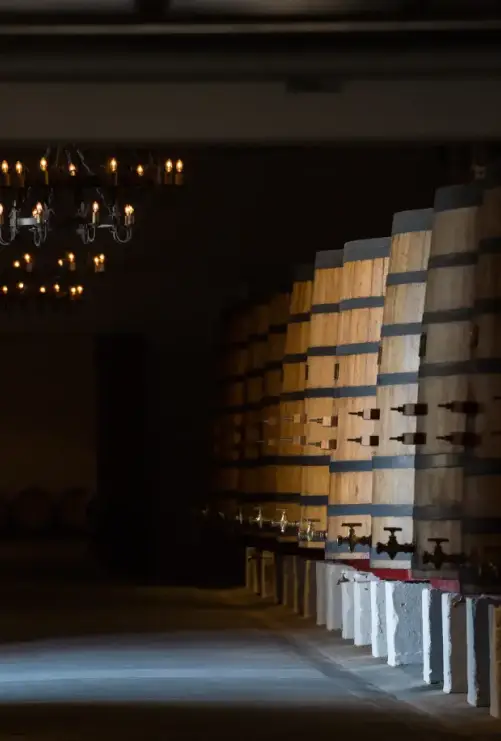
The cellars of Château Margaux lie at the heart of the ageing of our red wines.
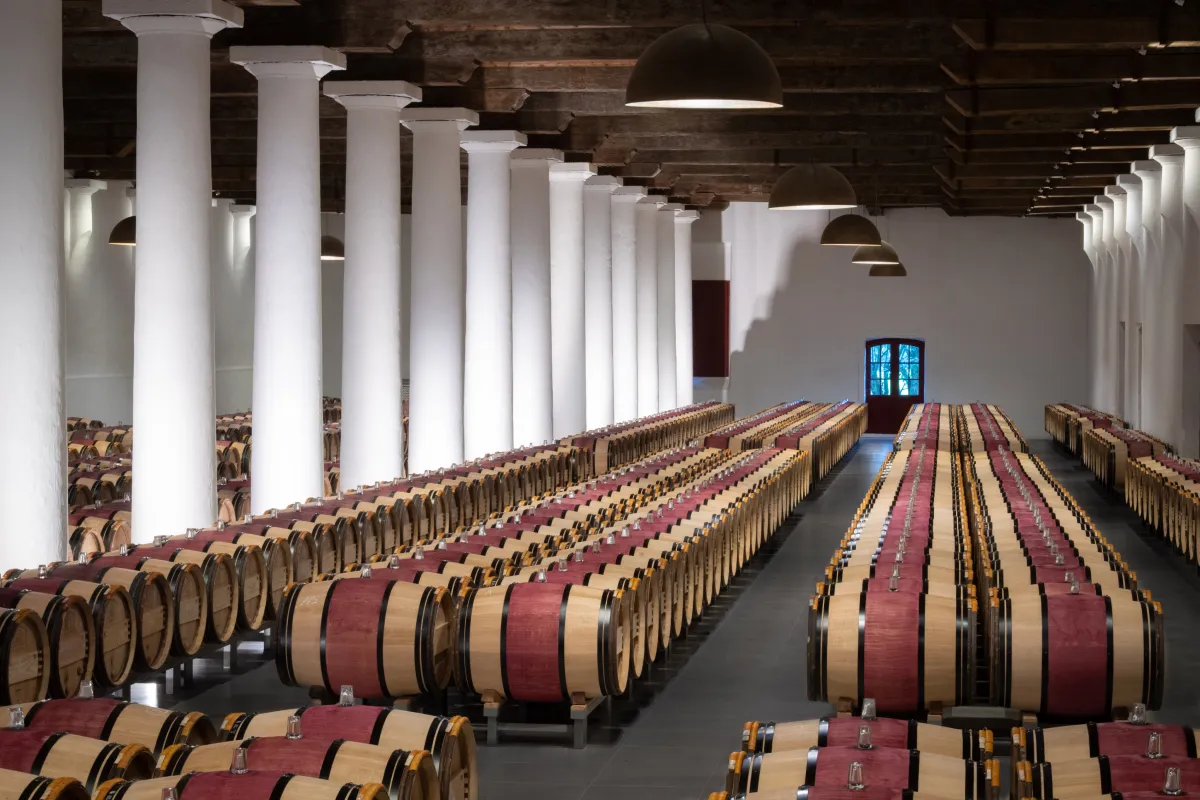
The first-year cellar, built in 1815, can hold up to 1,200 barrels. Its stone-and-timber structure reflects the estate’s traditional craftsmanship.
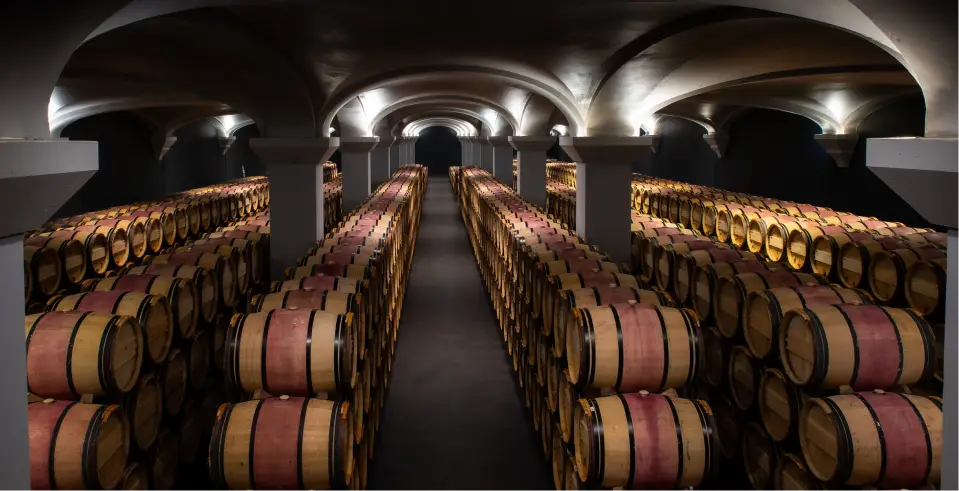
The second-year cellar, commissioned by André Mentzelopoulos and build by his daughter Corinne, was a technical achievement: one of the first underground cellars in the Médoc, built close to both a river and a water table. It houses up to 2,100 barrels and offers ideal conditions for ageing the wines.
The historic cellars:
tradition and precision
The cellars of Château Margaux lie at the heart of the ageing of our red wines.
The first-year cellar, built in 1815, can hold up to 1,200 barrels. Its stone-and-timber structure reflects the estate’s traditional craftsmanship.
The second-year cellar, commissioned by André Mentzelopoulos and build by his daughter Corinne, was a technical achievement: one of the first underground cellars in the Médoc, built close to both a river and a water table. It houses up to 2,100 barrels and offers ideal conditions for ageing the wines.
The Foster cellar:
innovation serving tradition
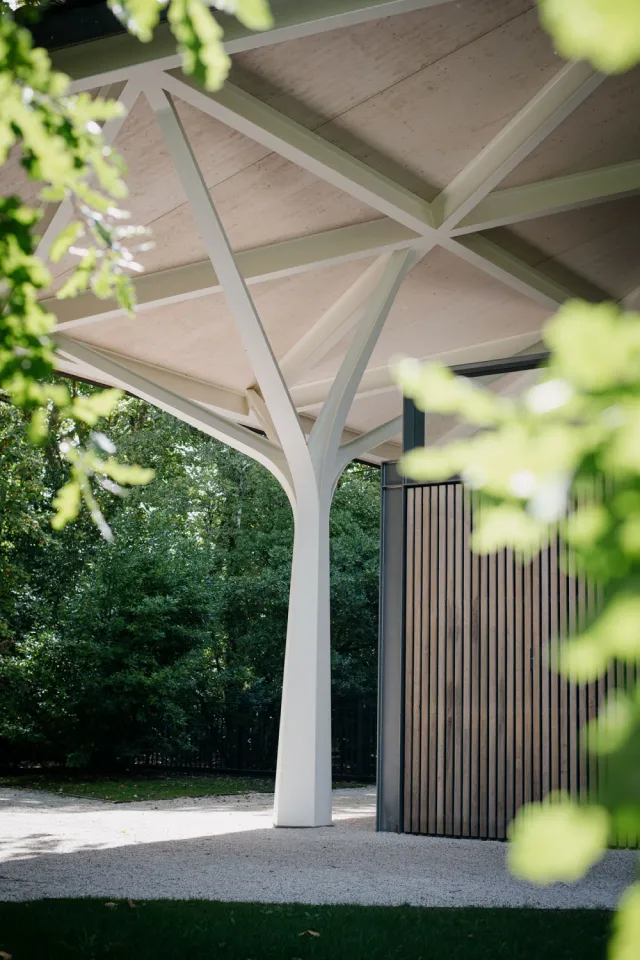
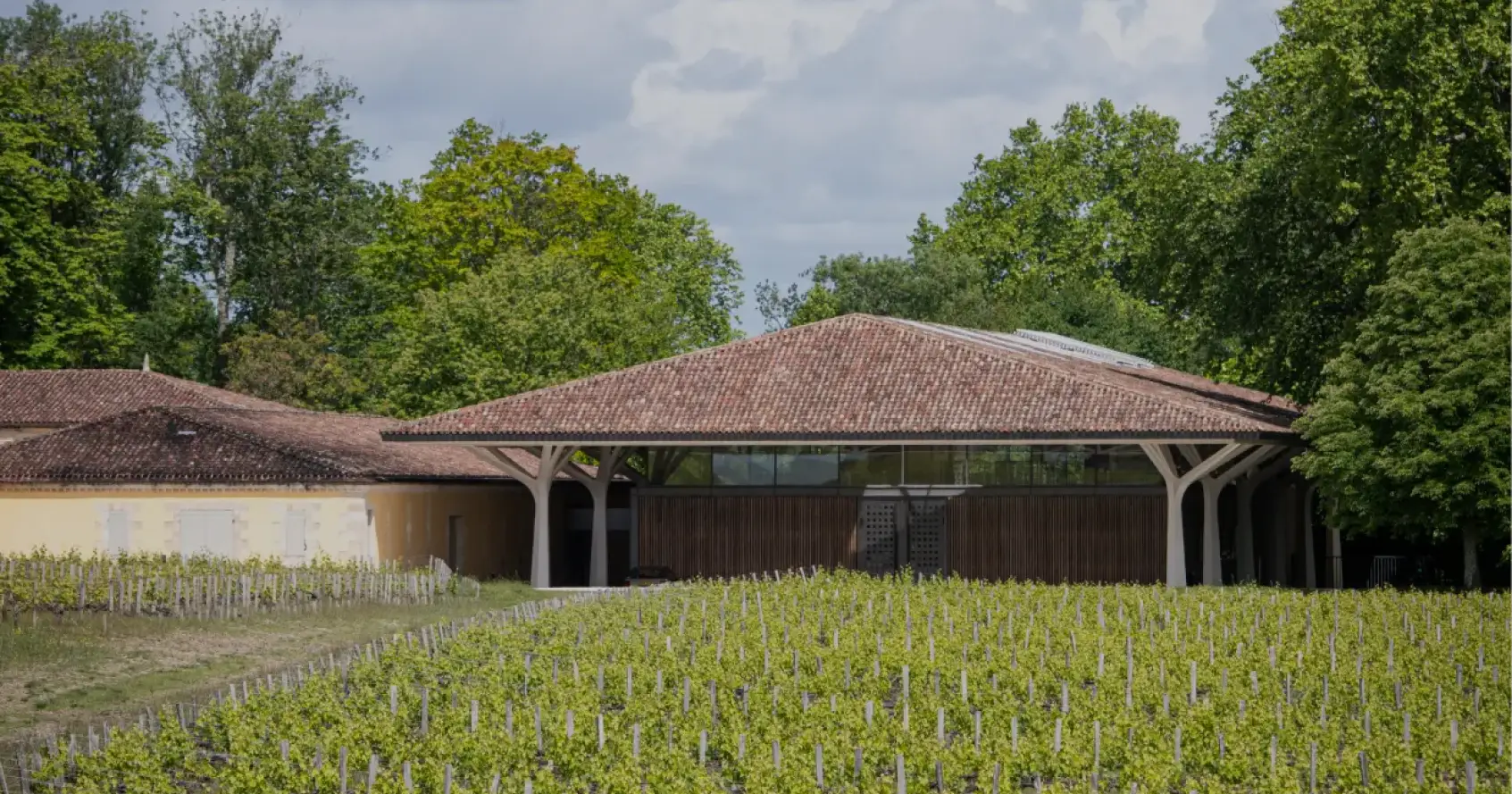
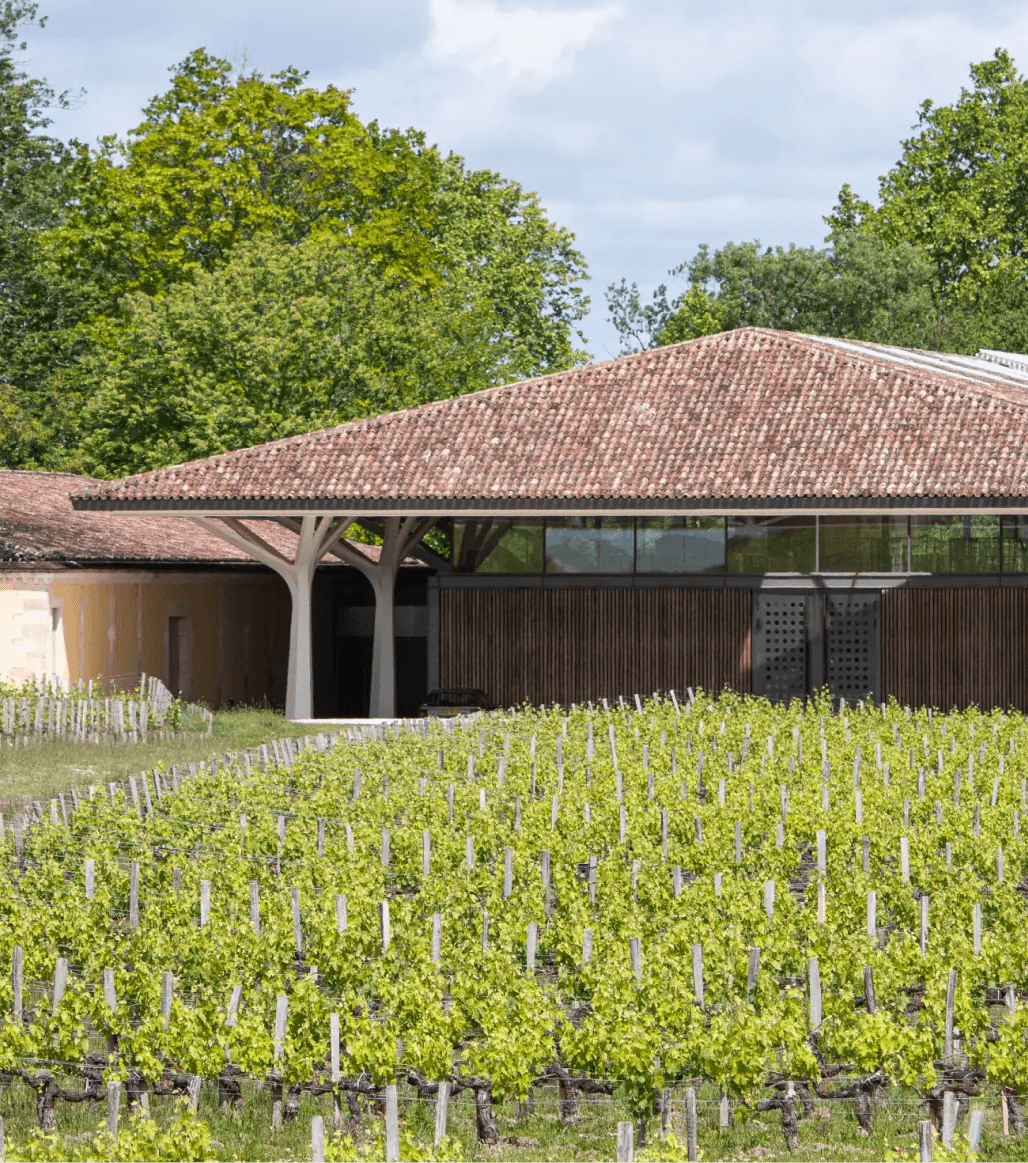
Inaugurated in 2015, the winery designed by British architect Lord Norman Foster embodies the union of architectural tradition and technical innovation. Extending the east wing of the nineteenth century historic complex, it sits naturally within the Château Margaux landscape. Its tiled roofs and slender columns, reminiscent of tree trunks, reinterpret regional architecture with elegance while harmonising with the surrounding woodland.
The Foster cellar:
innovation serving tradition
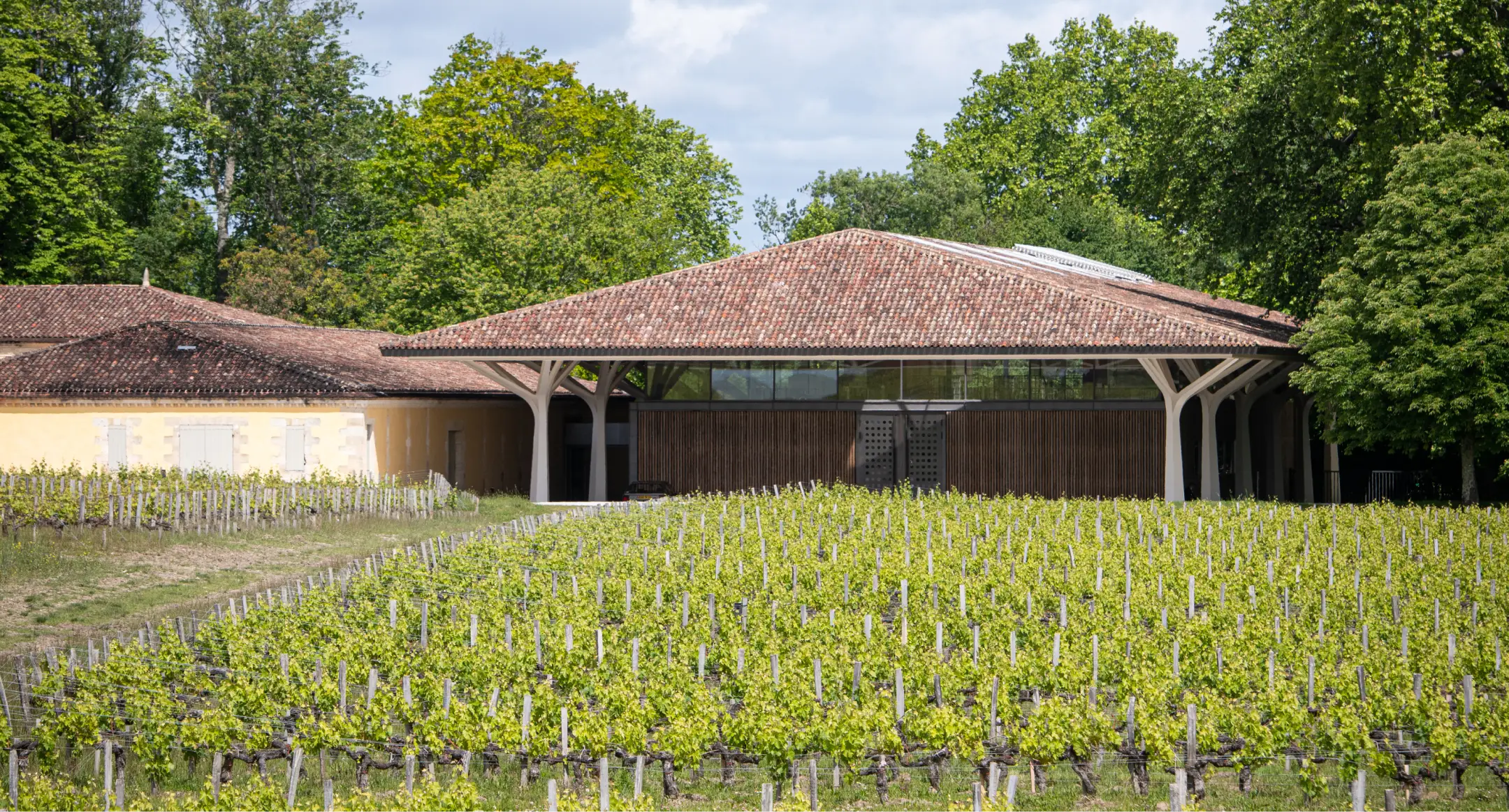
Inaugurated in 2015, the winery designed by British architect Lord Norman Foster embodies the union of architectural tradition and technical innovation. Extending the east wing of the nineteenth century historic complex, it sits naturally within the Château Margaux landscape. Its tiled roofs and slender columns, reminiscent of tree trunks, reinterpret regional architecture with elegance while harmonising with the surrounding woodland.
The Foster cellar:
innovation serving tradition
Inaugurated in 2015, the winery designed by British architect Lord Norman Foster embodies the union of architectural tradition and technical innovation. Extending the east wing of the nineteenth century historic complex, it sits naturally within the Château Margaux landscape. Its tiled roofs and slender columns, reminiscent of tree trunks, reinterpret regional architecture with elegance while harmonising with the surrounding woodland.
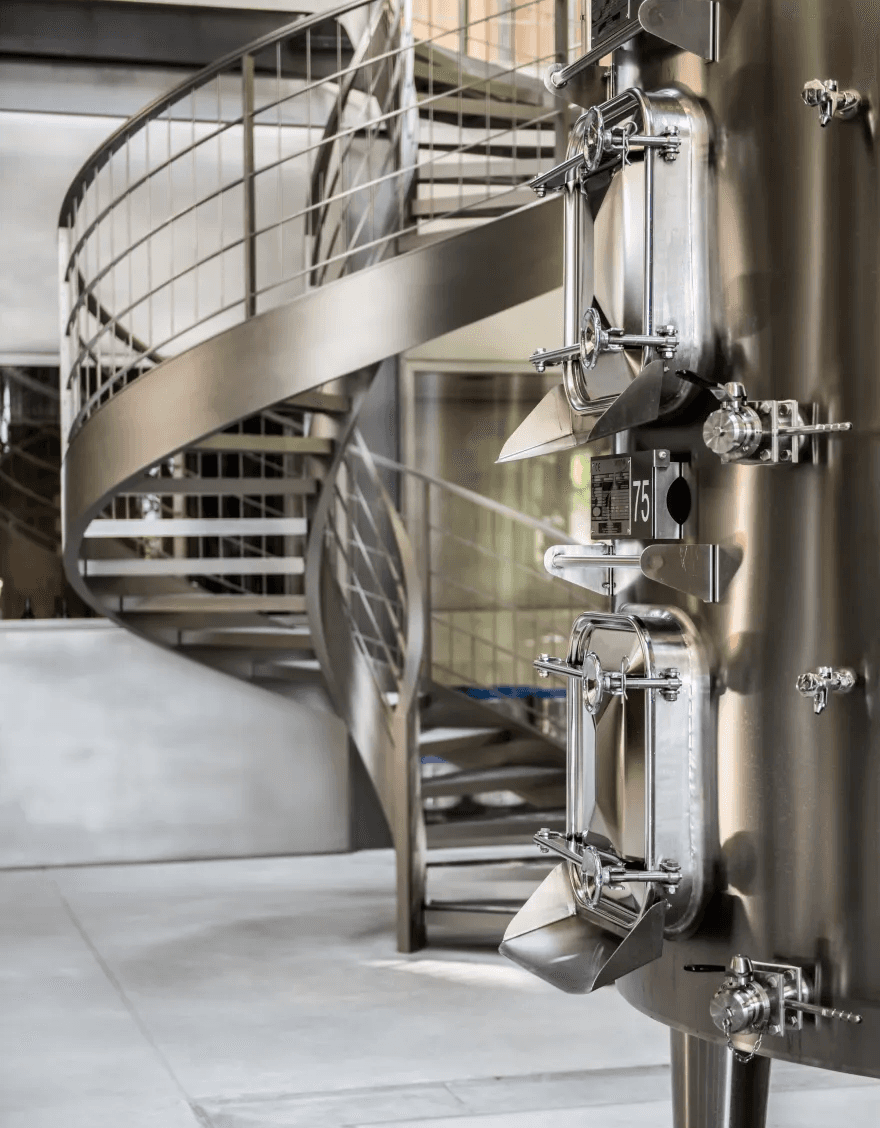
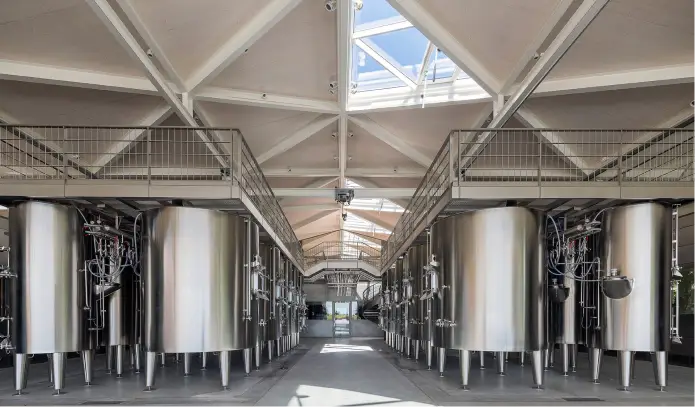
Beyond its aesthetic qualities, the new winery was conceived primarily to meet the technical requirements of winemaking. Corinne Mentzelopoulos established two key principles: seamless integration with the estate’s architecture and landscape, and a fully flexible structure, free of load-bearing walls, capable of adapting to future needs.
The project also allowed for an increased number of vats and the incorporation of some of the most advanced oenological tools, enabling even greater precision in parcel selection and winemaking.
This bulding fulfils three essential functions: bringing red and white wine production closer together, enhancing quality through finer parcel selection, and housing a dedicated research and development centre for the estate’s future.
Through its architectural simplicity and abundant natural light, the building fully expresses Château Margaux’s philosophy: discreet innovation, designed to serve the wine for generations to come.
Beyond its aesthetic qualities, the new winery was conceived primarily to meet the technical requirements of winemaking. Corinne Mentzelopoulos established two key principles: seamless integration with the estate’s architecture and landscape, and a fully flexible structure, free of load-bearing walls, capable of adapting to future needs.
The project also allowed for an increased number of vats and the incorporation of some of the most advanced oenological tools, enabling even greater precision in parcel selection and winemaking.
This bulding fulfils three essential functions: bringing red and white wine production closer together, enhancing quality through finer parcel selection, and housing a dedicated research and development centre for the estate’s future.
Through its architectural simplicity and abundant natural light, the building fully expresses Château Margaux’s philosophy: discreet innovation, designed to serve the wine for generations to come.
Beyond its aesthetic qualities, the new winery was conceived primarily to meet the technical requirements of winemaking. Corinne Mentzelopoulos established two key principles: seamless integration with the estate’s architecture and landscape, and a fully flexible structure, free of load-bearing walls, capable of adapting to future needs.
The project also allowed for an increased number of vats and the incorporation of some of the most advanced oenological tools, enabling even greater precision in parcel selection and winemaking.
This bulding fulfils three essential functions: bringing red and white wine production closer together, enhancing quality through finer parcel selection, and housing a dedicated research and development centre for the estate’s future.
Through its architectural simplicity and abundant natural light, the building fully expresses Château Margaux’s philosophy: discreet innovation, designed to serve the wine for generations to come.
The craftsmen's courtyard:
the heart of craftsmanship
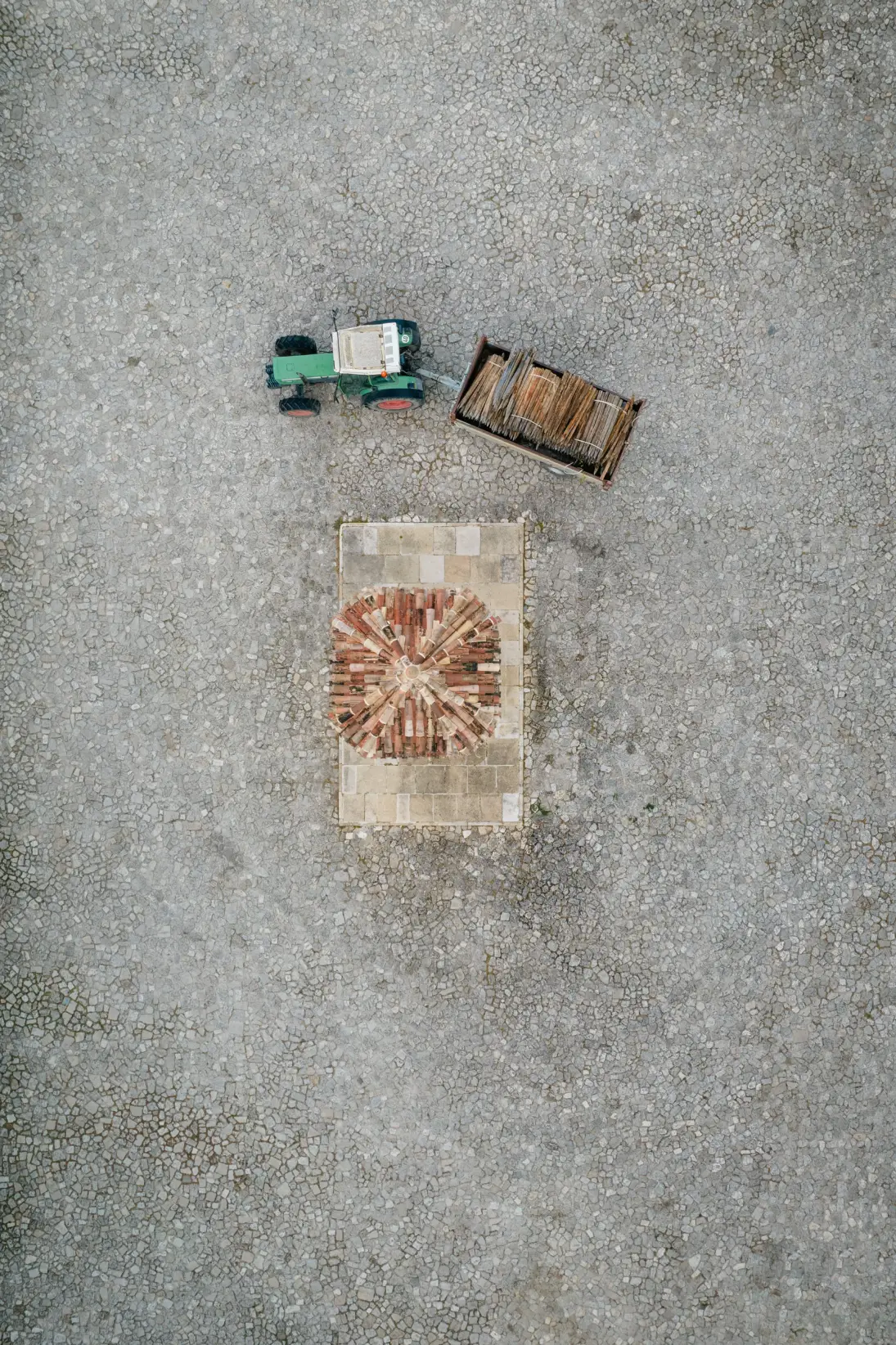
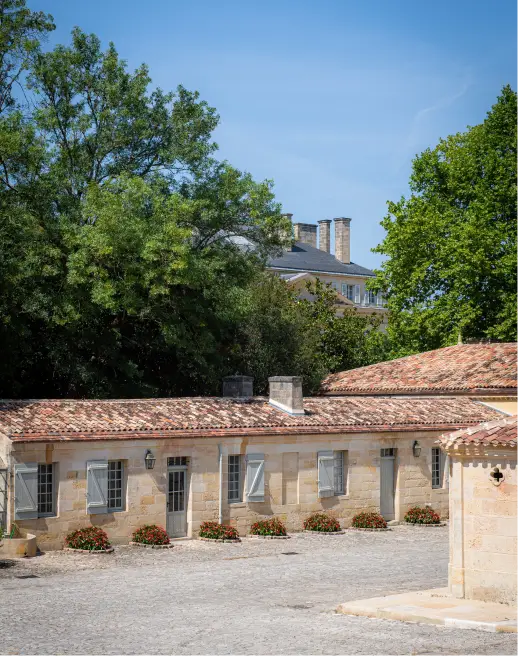
At the centre of the estate, the craftsmen's courtyard brings together the professions essential to life at the Château: painters, mechanics, electricians, gardeners and technicians. As a place of skill and transmission, it embodies the spirit of autonomy and precision that drives Château Margaux, where every task contributes to the quality and longevity of the vineyard.
The craftsmen's courtyard:
the heart of craftsmanship
At the centre of the estate, the craftsmen's courtyard brings together the professions essential to life at the Château: painters, mechanics, electricians, gardeners and technicians. As a place of skill and transmission, it embodies the spirit of autonomy and precision that drives Château Margaux, where every task contributes to the quality and longevity of the vineyard.
The craftsmen's courtyard:
the heart of craftsmanship
At the centre of the estate, the craftsmen's courtyard brings together the professions essential to life at the Château: painters, mechanics, electricians, gardeners and technicians. As a place of skill and transmission, it embodies the spirit of autonomy and precision that drives Château Margaux, where every task contributes to the quality and longevity of the vineyard.
The orangerie:
memory and continuity
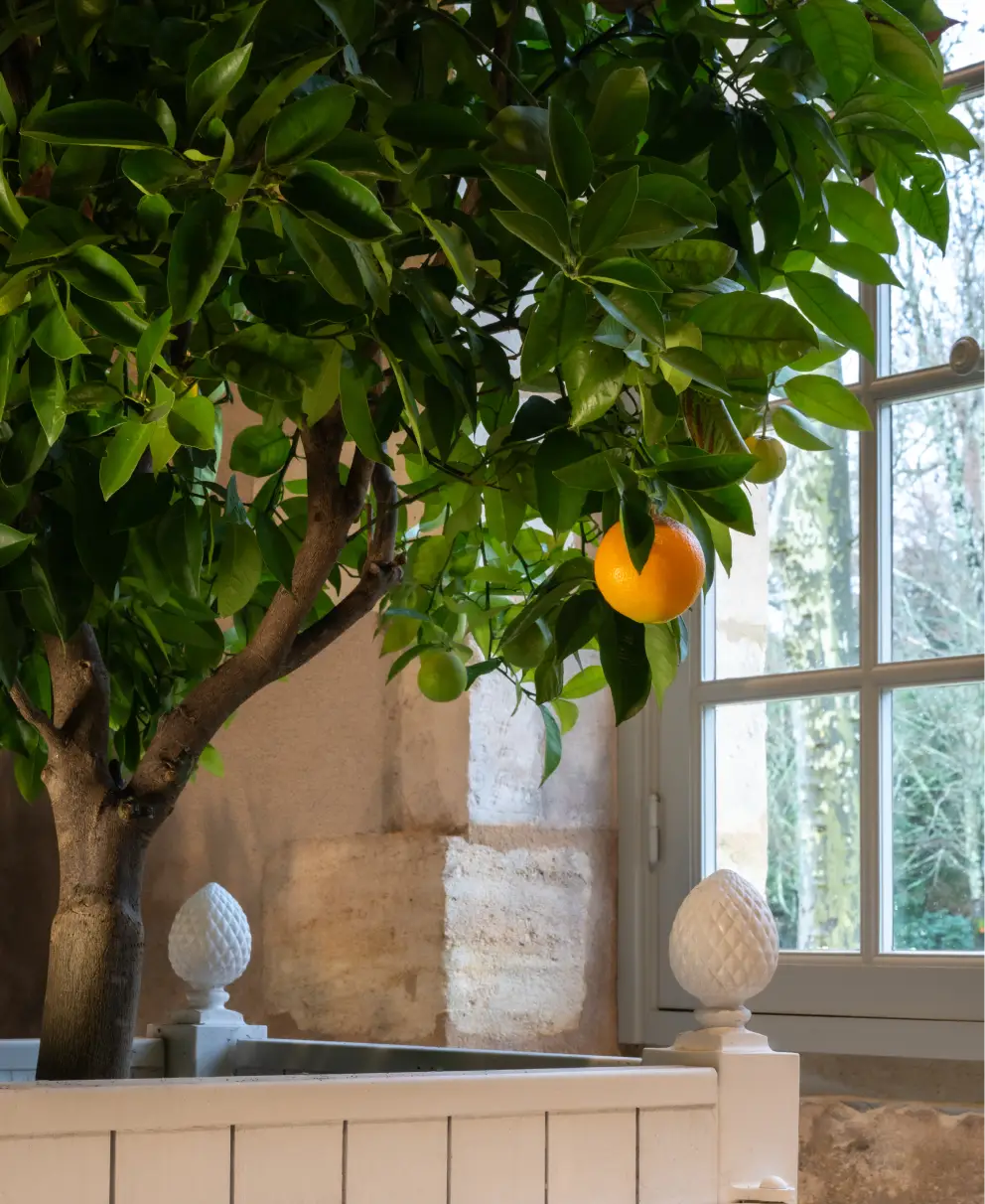
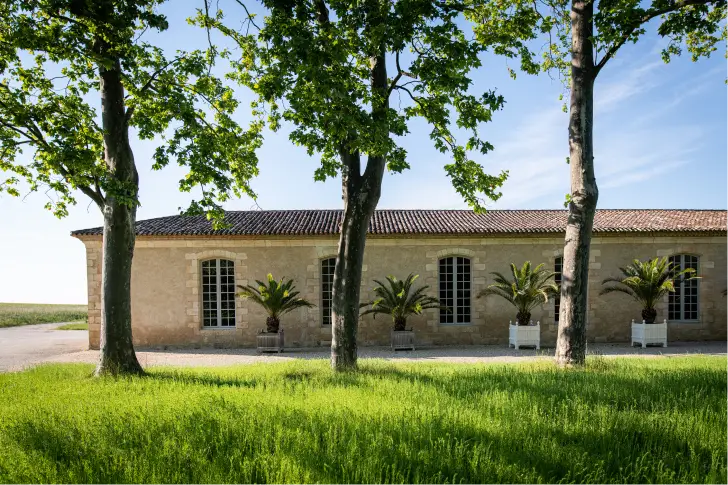
Dating back to 1765, the Orangerie is the oldest building on the property. Fully restored, it has regained its original purpose: to shelter the estate’s citrus trees and plants during the winter.
Both discreet and emblematic, it preserves its historic role while remaining fully functional today.
The orangerie:
memory and continuity
Dating back to 1765, the Orangerie is the oldest building on the property. Fully restored, it has regained its original purpose: to shelter the estate’s citrus trees and plants during the winter.
Both discreet and emblematic, it preserves its historic role while remaining fully functional today.
The orangerie:
memory and continuity
Dating back to 1765, the Orangerie is the oldest building on the property. Fully restored, it has regained its original purpose: to shelter the estate’s citrus trees and plants during the winter.
Both discreet and emblematic, it preserves its historic role while remaining fully functional today.