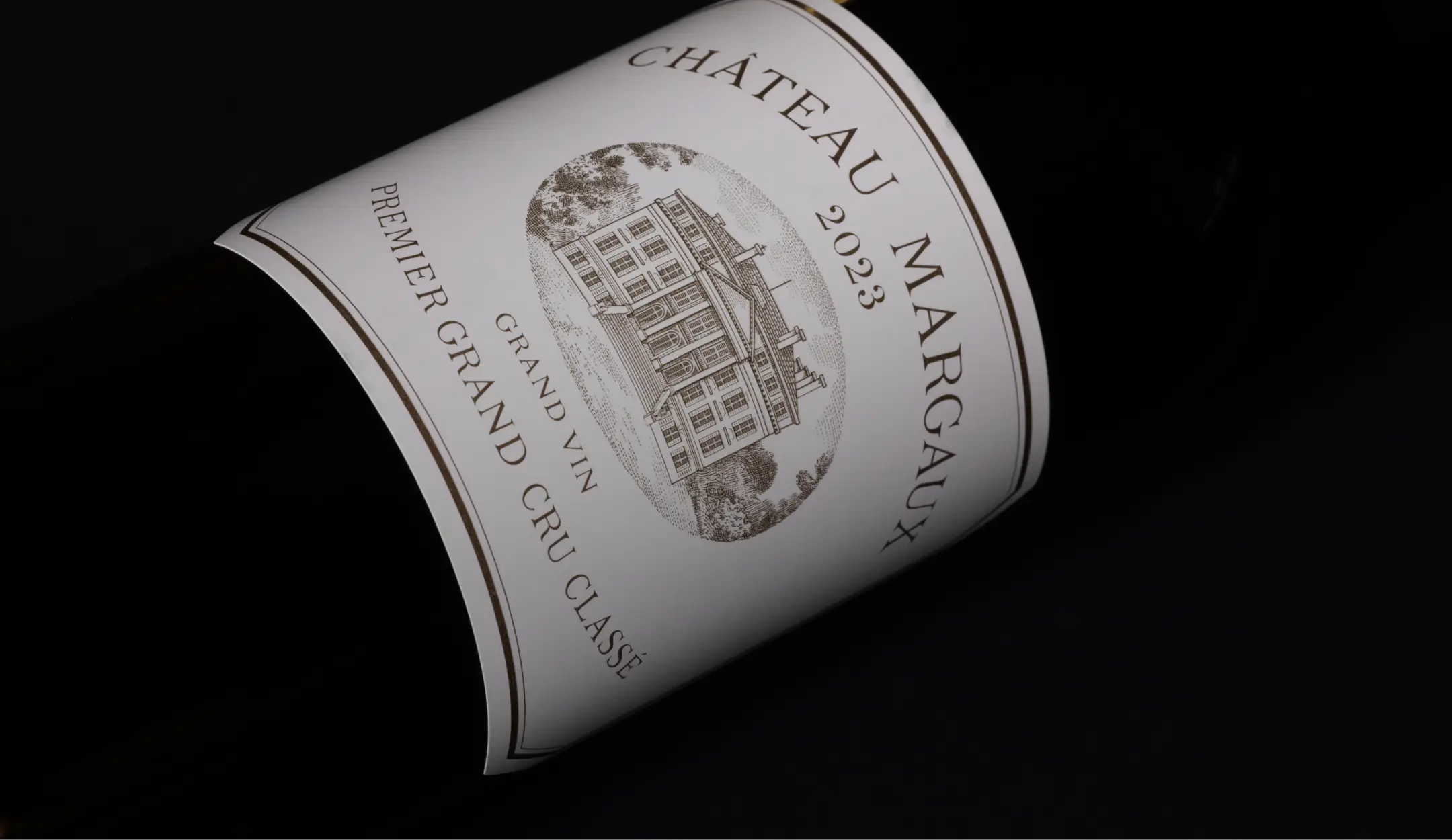

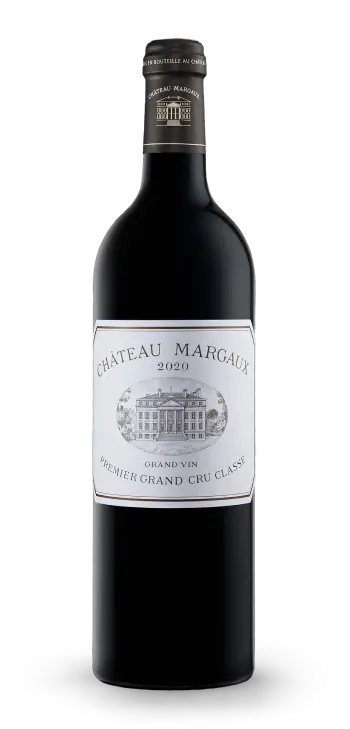
Grand Vin du Château Margaux
Recognised since the 17th century among the world’s greatest wines, the Grand Vin du Château Margaux embodies the pursuit of excellence and represents the purest expression of the estate. It is the result of meticulous work, carried out with perseverance by generations devoted to revealing the finesse and richness of this exceptional terroir.
History and winemaking
Classified First Growth since 1855, the Grand Vin du Château Margaux is the fruit of unique savoir-faire, where every detail matters, from the vineyard to the cellar. It combines tradition, precision, and rigorous attention to detail in a constant quest for balance. Its blend, dominated by cabernet sauvignon, is complemented by merlot, petit verdot, and cabernet franc, each contributing to the wine’s complexity and elegance.
History and winemaking
Classified First Growth since 1855, the Grand Vin du Château Margaux is the fruit of unique savoir-faire, where every detail matters, from the vineyard to the cellar. It combines tradition, precision, and rigorous attention to detail in a constant quest for balance. Its blend, dominated by cabernet sauvignon, is complemented by merlot, petit verdot, and cabernet franc, each contributing to the wine’s complexity and elegance.
Blending and ageing
The Grand Vin stands out for its rare harmony of finesse, elegance, and power. It combines great aromatic intensity with a remarkably silky texture. Its tannins, dense and supple, support a deep and balanced palate, marked by length and freshness. Aged for an average of twenty-one months in new French oak barrels, the wine’s structure is refined and its full potential revealed. After a particularly rigorous selection, around 40% of the harvest is dedicated to the Grand Vin.
Blending and ageing
The Grand Vin stands out for its rare harmony of finesse, elegance, and power. It combines great aromatic intensity with a remarkably silky texture. Its tannins, dense and supple, support a deep and balanced palate, marked by length and freshness. Aged for an average of twenty-one months in new French oak barrels, the wine’s structure is refined and its full potential revealed. After a particularly rigorous selection, around 40% of the harvest is dedicated to the Grand Vin.
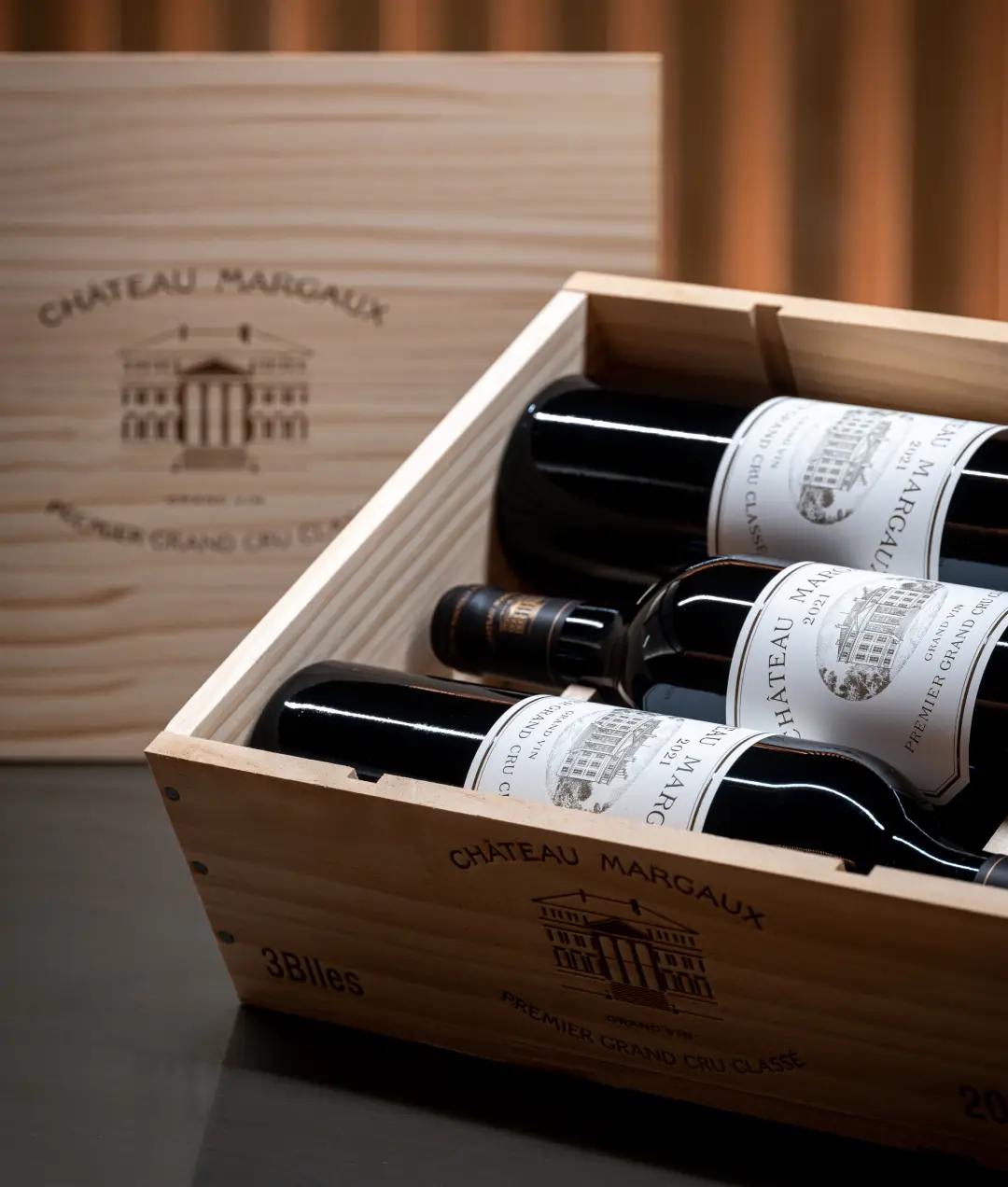
Thanks to its unique terroir, the precision of the work at every stage, and the care given to selection, each vintage expresses the depth and personality of Château Margaux. All share a remarkable ability to inspire emotion: the most approachable vintages reveal their charm early, while the more powerful ones unveil, with time and patience, exceptional complexity and intensity. Depending on the year, production averages around 120,000 bottles, a reflection of uncompromising standards and a relentless pursuit of perfection.
Thanks to its unique terroir, the precision of the work at every stage, and the care given to selection, each vintage expresses the depth and personality of Château Margaux. All share a remarkable ability to inspire emotion: the most approachable vintages reveal their charm early, while the more powerful ones unveil, with time and patience, exceptional complexity and intensity. Depending on the year, production averages around 120,000 bottles, a reflection of uncompromising standards and a relentless pursuit of perfection.
Through the vintages
Rediscover Grand Vin du Château Margaux through its vintages
Select your year
Grand Vin du Château Margaux
2025
Years ending in '5' have been consistently successful in Bordeaux, and 2025 follows in the footsteps of the great vintages of 1985, 1995, 2005 and 2015. The quality is outstanding, but yields, at 22 hl/ha, were among the lowest in the last hundred years, mainly due to the dry summer. The volumes produced were just over half those of a normal year.
At the start of the harvests, the excellent weather conditions suggested that the proportion of grapes selected for the Grand Vin would be higher. However, this was not to be: the batches from our best plots were so magical that the wines from other plots, while superb, did not make the cut! This resulted in only 37% of the harvest being allocated to Château Margaux.
The 2025 vintage bears some similarities to 2022, with similar summer conditions, but the rain in late August and early September helped to develop the wine’s style, bringing more freshness and balance. Our decision not to rush the harvest meant that we were able to pick perfectly ripe grapes and extract dense, silky tannins.
Château Margaux 2025 reveals a very powerful, complex nose. Creamy, velvety and dense, it unfolds with superb length. The deeply expressive tannic structure and texture give the wine its unique character. Destined for long ageing, it will also be highly enjoyable in its youth.
Blend: 89% cabernet sauvignon, 6% merlot, 4% cabernet franc and 1% petit verdot.
Climate
Le millésime 2025 est marqué par une saison contrastée, avec un printemps doux et équilibré, sans excès ni déficit, suivi d’un début d’été et d’une période estivale plutôt secs, rappelant le profil de 2022. Le débourrement intervient avec une semaine d’avance, précocité que l’on retrouve également dans la floraison. Celle-ci se déroule de manière rapide et homogène, dans des conditions climatiques particulièrement favorables, sans coulure ni millerandage.
La pluviométrie reste faible au début de l’été, installant progressivement un déficit hydrique. Le mois d’août est dominé par un épisode caniculaire, entraînant une accélération des maturités, notamment sur le sauvignon blanc.
En fin d’été, près de 60 mm de précipitations tombent entre fin août et début septembre. Ces pluies, attendues, apportent un rééquilibrage hydrique et une baisse des températures, permettant une maturation plus régulière et homogène en fin de saison. Malgré quelques épisodes pluvieux ponctuels en septembre, les conditions sanitaires demeurent très bonnes.
Dans ce contexte climatique, le choix a été fait de ne pas avancer les dates de vendanges afin d’atteindre une maturité optimale, en particulier phénolique. Cette décision, assumée mais engageante, a permis d’atteindre un niveau de qualité particulièrement élevé, avec des raisins récoltés à parfaite maturité, exprimant pleinement le potentiel du fruit et du millésime.
Grand Vin du Château Margaux
2024

The production of Château Margaux 2024 required constant attention. This particularly technical vintage demanded heightened precision all the way through to the harvest, in which every decision played a vital role in preserving the balance and aromatic purity that characterise the Grand Vin. Harvesting conditions were not ideal, with several rainy spells punctuating the picking. Despite the risk of botrytis, we maintained our commitment to wait for each plot to reach optimal ripeness, so as to preserve and fully express the identity of the terroir. The harvests took place in two stages: from September 23rd to 29th with our small team, then from September 30th to October 8th with our large team of pickers. Château Margaux 2024 represents 46% of the harvest, a slightly higher percentage than in previous years. This was due to the best cabernet sauvignon plots which, being less susceptible to downy mildew, produced the vineyard’s highest yields. The blend, true to Château Margaux’s identity, is dominated by 93% cabernet sauvignon, giving it structure and depth. The remainder is made up of 5% merlot, 1% cabernet franc and 1% petit verdot, enriching its aromatic complexity and refining its balance.
This vintage stands out for its wonderful finesse, lively freshness and elegant tannins. Its delicate, refined aromatic expression perfectly reflects the precision and purity we seek in our wines. Château Margaux 2024 illustrates once again the extraordinary capacity of our terroir to express, even in the most challenging years, exceptional grandeur and timeless elegance. (April 2025)
Climate
Weather factors impacting the 2024 vintage began in 2023 with exceptional amounts of rain. From autumn onwards, there was an unusually intense accumulation of rainfall for several months. Between the 18th of October and the 28th of March, more than 1,000 mm of rain fell in the vineyard, surpassing the previous record for rainiest vintage by 300 mm. With mild winter temperatures, 3°C higher than historical averages in March, the abundance of water and warmth provided ideal conditions for the vines to start their growth cycle well ahead of schedule. Bud break occurred between the 22nd and 25th of March, 7 to 10 days earlier than in recent years. However, the wet weather continued, setting the pace for the entire growing season. While some past great vintages, such as 2000, had similar rainfall, what set 2024 apart was the frequency of rainy days. Access to the plots became a constant challenge, and the omnipresent threat of downy mildew meant that teams had to remain vigilant at all times. In this challenging context, flowering was slightly delayed, spanning from the 31st of May to the 7th of June.
Véraison, when the grapes change colour, took place between the 9th and 23rd of August, and was reminiscent of vintages such as 2014 and 2016, confirming a growth cycle significantly influenced by wet weather. Faced with these conditions, the vines reacted in contrasting fashions. Plots with very cool, deep soil suffered from downy mildew, particularly affecting the volumes destined for our third wine, Margaux du Château Margaux. Conversely, our gravelly terroirs, with better drainage and earlier ripening, were able to preserve their potential and produce some of the finest grapes of the vintage.
While the weather conditions put the vines to the test, they did not compromise the exacting stan - dards and precision with which our teams work on every Château Margaux vintage. With an average yield of 30 hl/ha, the sorting carried out by our pickers in the vineyards was more rigorous than ever, highlighting the most resilient terroirs and offering an optimal balance between concentra - tion and finesse.
Grand Vin du Château Margaux
2023

Harvesting required more delicate work than usual and therefore took longer, but this extra care was necessary to achieve the aromatic purity that characterises Château Margaux’s wines. The red grape harvest began on September 11th with the first plots of merlot. The great cabernet sauvignon plots were picked on September 22nd. Harvesting was completed on October 5th.
Château Margaux 2023 is a fine, precise, complex wine. It represents 41% of the total volume of the harvest. Although it cannot match the exceptional density of its predecessor, it has the same aromatic style and the same silky tannins.
In some respects, it has exceeded our expectations after the rain in September. This vintage shows us once again how great terroirs are capable of adapting and expressing their exceptional quality in the wines.
The Château Margaux blend is still mainly composed of cabernet sauvignon (89%). 5% merlot, 4% cabernet franc and 2% petit verdot make up the rest of the blend. (April 2024)
Climate
The winter of 2022-2023 was relatively mild, although there were about ten days of real winter temperatures in the first half of February.
There was also not much rain during the first few months of 2023: 196 mm in Margaux, allowing only a very light replenishment of groundwater reserves after an extremely hot, dry 2022 vintage. In these conditions, bud break occurred between the 3rd and the 10th of April.
Fortunately, spring did not bring any of the feared frosts. Rain was sparse but frequent during the growing season. There were just two weeks of sustained rain in June (72 mm). However, these conditions made it potentially difficult to keep the vines healthy. The high relative humidity in the air created very favourable conditions for downy mildew. Our vineyard teams succeeded in main¬taining healthy foliage to ensure good-quality ripening of the grapes and a successful harvest.
The vines flowered between the 31st of May and the 5th of June in good conditions, with no signs of coulure or millerandage.
2023 was markedly different from the previous vintage in terms of temperature. In 2022, there were very early heatwaves. In 2023, we had just one real heatwave, between the 17th and the 24th of August, the period when the grape skins mature, becoming thinner and more sensitive to the com-bined action of high temperatures and sunshine. The berries that were most exposed to the sun suffered scalding, forcing us to do a lot of sorting during the harvest.
Grand Vin du Château Margaux
2022
Château Margaux 2022 is undoubtedly as extraordinary as the weather conditions themselves. Extraordinary, first and foremost, for its concentration: due to the very dry summer, the cabernet sauvignon berries were almost 35% smaller than in a normal year. Particular care had to be taken during vinification and the running off, during which only the silkiest tannins were extracted. Another less fortunate consequence of the small berries was the lowest yield since 2013.
The wine is also extraordinary for the freshness of its flavours: we had expected wines with ripe notes. We might have expected them to be lacking in acidity. But this was not the case. The nose reveals a delicate blend of fruity and floral notes. The wine’s length remains supported by a remarkable acidity, nicely balancing the higher-than-usual alcohol levels.
The blend is more classic, predominantly composed of cabernet sauvignon (92%). This enabled the wine not to be too high in alcohol, at 14.5%, despite the weather conditions. 6% merlot and 2% cabernet franc complete the blend. Château Margaux represents 40% of the harvest. (April 2023)
Climate
The description of the weather conditions has begun the same way almost every year for the last ten years: 2022 was once again the hottest year on record... and to this, we must add another climate phenomenon: a severe drought. However, these two factors impacted the harvest in such a way as to produce an extraordinary vintage.
Apart from some frosts in mid-January, the winter of 20x22 was mild and relatively dry, with just 150 mm of rain. Nationally, the spring of 2022 was the third warmest (13.2°C) since 1900, close behind 2011 and 2020. It was the same in Margaux, with record temperatures during June, sometimes exceeding 40°C. Fortunately, in typical Bordeaux fashion, there was regular rain throughout the spring, with 182 mm in Margaux. Summer brought further extremes: three long, intense heat waves; the thermometer again recorded temperatures over 40°C several times, and over 35°C for more than 14 days in July and August. Slightly more than six long weeks passed without a single drop of rain. The 20 mm that arrived at the end of August was welcome, but its effect was more to cool the air than to significantly rehydrate the surface soil.
In these conditions, budburst was relatively spread out, between March 28th and April 13th, depending on the grape variety and the nature of our diverse terroirs. Conditions were sufficiently good that no coulure or millerandage was observed in our plots during flowering, which took place in the week of May 24th, indicating an early vintage.
The summer weather then reinforced the early nature of the vintage. The white grape harvest took place extremely early, on August 18th.
For the red grapes, it lasted from September 8th to 27th, with normal temperatures in September and optimal harvesting conditions. The first autumn rains began on the last day of the harvest.
Grand Vin du Château Margaux
2021

The 2018, 2019 and 2020 vintages were so exceptional that it would be difficult for the 2021 vintage to claim any comparison with them. During the wine-making process, we did not want to artificially extract tannins for fear it would increase the astringency. We opted instead for a gentle extraction process, and were quite pleasantly surprised at the concentration we achieved despite such a difficult growing season.
The initial tastings from the first batches of our vineyard selections, just after the fermentation process, amazed us with their density. The polyphenol content was close, if not equal, to those achieved in vintages considered "warm" years.
Merlot makes up 8% of the blend while cabernet sauvignon remains the heart of the Grand Vin, accounting for 87%. cabernet franc (3%) is delicious and its elegant structure integrates seamlessly into the blend. Petit verdot (2%) completes the composition. Château Margaux 2021 represents 36% of the harvest. (February 2025)
Climate
The winter of 2021 was relatively mild, although quite wet, with more than 230 mm of rain falling in the first two months of the year. With the month of March being drier and warmer, our vines flowered between the 23rd and the 30th of the month. Spring was marked by frequent and severe episodes of frost, testing the frost protection sprinkling systems on our white grape vineyards like never before. Temperatures fell so drastically that we lost close to a hectare's worth of our white harvest. On the other hand, our red grape vineyards were less affected by the cold, with only a few vines hit by some morning frost.
May and June recorded quite a bit of rainfall, and we had to be watchful to prevent the spread of fungal diseases. The determination of our team eventually paid off and we were able to maintain the grapes and leaves in good health. Budbreak occurred between the 1st and the 6th of March in average conditions, however the fruit-set was excellent, with only a few of the older plots falling prey to coulure or shatter.
After a rainy month of July, August and the first half of September were extremely dry. Just after we had finished picking the white grapes, we had about 45 mm of rain, raising concerns of a poor red harvest.
As in the 2017 vintage, we were faced with the following choice: pick grapes that were not fully ripe before they could potentially be attacked by Botrytis, or wait till the end of September to harvest the grapes when they would be riper and more concentrated from the additional sunshine. And as in that year, the decision was made to prioritise the quality of the grapes. The early Merlot plots were harvested on the 24th of September while the later Cabernet harvests only began by the 4th of October. The harvest was completed by the 13th of October. The season definitely presented its fair share of challenges, but the quality of our work and attention ensured we had an elegant and dense vintage.
Grand Vin du Château Margaux
2020

Château Margaux 2020 follows in the footsteps of 2018 and 2019. It is very rare for three consecutive years in Bordeaux to be so homogeneous and of such high quality. It now seems almost presumptuous to regard so many vintages produced over the past six years as exceptional. The future will bring us more discernment.
The final blend is very similar to those of the latest vintages: it consists of 89% cabernet sauvignon, 8% merlot, 2% petit verdot, and 1% cabernet franc. The Grand Vin represents 36% of the harvest. There is a perfect balance between density and fine tannins.
Several factors contributed to making this a superb wine: homogeneous flowering, summer conditions that favoured small berries and therefore concentrated wines, and excellent harvesting conditions. The only disappointment was the yield. The vine fertility was lower than in previous years, with 1.6 bunches per shoot, compared to 2 in 2019. The average yield on the estate was therefore 36 hl/ha. Château Margaux 2020 is a wine built to last for eternity—one that deserves to be awaited with patience. (February 2025)
Climate
As in the preceding vintages, 2020 saw average temperatures that were among the highest ever recorded due to a series of heatwaves and an exceptionally dry summer.
After abundant rainfall at the end of 2019, there was very little rain in the first quarter of 2020, 80 mm (3.15 inches) less than the thirty-year average. Winter 2020 stood out for its mild temperatures. Average temperatures were 3°C (37°F) above the thirty-year average and temperatures in February sometimes exceeded 20°C (68°F). Only four light frosts occurred in what was otherwise a mild winter. As a result, bud break was extremely early, from the 22nd to the 26th of March depending on the grape variety, approximately ten days earlier than average. The 2020 vintage promised to be an early one.
The spring was also very mild. Temperatures in April were among the hottest since 1962. Flowering occurred between the 21st and the 26th of May, in excellent conditions. There were no signs of coulure or millerandage. The spring was particularly wet, which meant a greater risk of disease that we nonetheless managed to control (very few signs on the leaves and none on the bunches).
The summer brought long and intense heatwaves between the 23rd of June and the 12th of August, as well as significant drought, with no rain at all between the 19th of June and the 10th of August. Ripening occurred between the 23rd and the 26th of July. It was only during the second ten-day period of August that rainfall helped limit potentially excessive hydric stress. Nearly 80 mm (3.15 inches) of rain fell on August 13th. In spite of the thunderstorms that followed, the rainfall did not significantly penetrate the soil. However, the storms did cause the temperature to decrease and limit sun exposure thus contributing to maintaining good acid potential in the berries.
Conditions in September were also ideal for the grapes, with glorious sunshine by day, cool nights and only 14 mm (0.55 inches) of rain. We began to harvest our early Merlots on September 10th. There were just a few days in mid-September when it became too hot to harvest during the afternoon. The harvest began on a larger scale on September 21st when all our grape-pickers arrived and immediately began picking our Cabernets. The harvest ended on September 30th.
Grand Vin du Château Margaux
2019

Château Margaux 2019 is one of the greatest vintages in our history and joins the list of exceptional wines we’ve been fortunate to produce this decade: 2015, 2016, 2018, and now 2019...
Cabernet sauvignon still forms the heart of Château Margaux, accounting for 90% of the blend. Merlot accounts for 7%. In addition to our emblematic plots, this year we have added the merlot from the plot known as "Haut-du-Jardin" which bring body and charm to the wine as a whole. Cabernet franc (2%) and petit verdot (1%) complete the blend. Château Margaux represents 37% of the harvest. Ideally, it should be kept for many more years, but it's already hard to resist!
Château Margaux 2019 will be the first to fully benefit from the new facilities in the second-year cellar, the construction of which was initiated by André Mentzelopoulos at the end of the 1970s. Following numerous interventions over the years, a major refurbishment was required, and we are delighted to complete it just as his grandson, Alexis Leven-Mentzelopoulos, joined the Château Margaux team. He and his sister Alexandra Petit-Mentzelopoulos now represent the future of the estate. (February 2025)
Climate
Globally, 2019 was the warmest year on record. In France, the average temperature was 13.7°C, 1.1°C to 1.2°C higher than usual.
In Margaux, the winter of 2019 was mild at 1 to 2 degrees above the 30-year averages, with limited rain (30 mm less than the 30-year averages) and only three days of frost. Under these conditions, the date of bud-break ranged from March 29th to April 4th.
Spring was mild and temperatures were near-normal for the season, with abundant rainfall at the end of April and again between June 5th and June 18th. Flowering occurred between the 1st and the 9th of June and went relatively well. Only some older parcels of Merlot showed some signs of coulure. The rain, which risked causing occasional outbreaks of mildew, had no sanitary impact and the vineyards remained in a very good state throughout the year.
The summer stood in sharp contrast to the rainy spring. Anticyclonic conditions prevailed and only 64 mm of rain fell between June 21st and September 21st. However, the summer of 2019 will be best remembered for two heatwaves at the end of June and then from July 22nd to 24th when the temperature reached 39.9°C in Margaux!
The red grape harvest began on September 18th in ideal conditions, and the Merlot grapes were perfectly ripe and concentrated when picked. A weather disturbance between September 22nd and the 29th did not affect the health of the grapes and allowed them to ripen more slowly under conditions that were less aggressive for the vines, better preserving the acidity levels, with ultimately not too high levels of alcohol. The grapes picked between the end of September and the beginning of October benefited from the concentration developed after veraison (August 5th to the 10th), without being significantly affected by low slight dilution from the rain.
The harvest ended on October the 10th.
Grand Vin du Château Margaux
2018

Château Margaux 2018 is one of the very best wines produced on the estate in recent years even taking into account the extraordinary quality of the 2015 and 2016 vintages!
Château Margaux 2018 is incredibly concentrated, given the small berry size and relatively low yields. These exceptional tannin levels, however, don't add any aggressiveness or exuberance, but rather give this wine remarkable length.
Fairly early in the wine-making process, we understood this tannic potential and thus moderated our extraction programs including for our merlot plots, which are usually less dense than our fine cabernet sauvignon wines. The latter still form the heart of Château Margaux, accounting for 90% of the blend. They also help limit the alcohol content to 14% under such weather conditions. This wine’s blend, which represents 36% of the harvest, is completed by 4% merlot, 4% cabernet franc and 2% petit verdot. The power and softness of this wine already make it very impressive, but it is best to wait patiently to fully enjoy all its qualities. (February 2025)
Climate
The warmest year since the beginning of the 20th century, temperatures in 2018 were 3.24°F above the national average. In Margaux, the year began with a relatively mild winter with below-normal temperatures and occasional frosts in February which had no impact on our vines. The rest of the year was hot, sometimes very hot, compared with seasonal averages, marked by record-breaking temperatures in the last ten days of June and the first ten days of August, more than 7.2°F above the 30-year average.
Rainfall in the first half of the year was heavy with nearly 25 inches in Margaux between January 1st and July 10th, making growing conditions challenging. Each rainy day made a good vintage less likely. But dry and warm summer conditions eventually reached our region and remained until the end of the harvest. Rainfall was very low between mid-July and late September at 2 inches. This rainfall pattern is reminiscent of 2009.
Under these conditions, budbreak was relatively late between the 4th and the 10th of April. The vines flowered between the 25th and the 28th of May and, despite fairly poor conditions, we did not note, even in the relatively sensitive Merlot plots, poor or failed fruit-set. The greatest challenge was mildew which this year led to slightly lower yields than hoped for after the fruit-set.
The white grapes were harvested the week of August 27th. The red harvest took place from September 17th to October13th in ideal conditions. Again this year, we were able to choose the best time to harvest our grapes – no Botrytis symptoms, mild weather, ripening conditions sufficiently spread between the earliest Merlots and latest Cabernets – and we had time to take the necessary care with each wine-making vat. Nearly a hundred different batches were converted into wine this year, demonstrating our continued efforts for better and more precise selections.
Grand Vin du Château Margaux
2017

The quality of Château Margaux 2017 comes close to its illustrious predecessors without claiming to rival the generosity of 2015 or the elegance of 2016. However, it is in line with the great vintages produced at the estate: it is deep, complex, intense and long. In some respects, it even exceeds our expectations after the September rains and demonstrates once again to what extent great terroirs are capable of adapting and transmitting all their best qualities into the wine.
The first tastings in the winemaking process offered a moment of astonishment. The merlot batches are remarkable: fruity and soft aromas, a roundness on the palate and rich volume allowed them to account for 8% of the Grand Vin. Cabernet sauvignon has always formed the heart and backbone of Château Margaux, accounting for 89% of the blend. Upon tasting, the tannins were perfectly ripe, which reassured us that our decision to wait a few more days before harvesting was the right choice. The wine’s structure remains a rare combination of power and refinement. Cabernet franc (2%) and petit verdot (1%) complete the blend. Château Margaux represents 37% of the harvest. It is best to wait patiently, even though it already offers great pleasure. (February 2025)
Climate
After a relatively dry 2016, the first months of 2017 brought the necessary precipitation to keep the water table balanced. Winter temperatures weren’t particularly cold. The vines budded around April 4th, but we weren’t wary enough of the spring-like temperatures and a frost on the nights of April 27th and 28th served as a reminder that, above all, winegrowers are dependent on nature. The choice location of our vineyard plots allowed us to limit frost damage: only 10% of our red vines were affected.
In the whole growth cycle, only the last week of June saw heavy rainfall. The vines had already flowered between May 25th and 30th in the most favorable conditions for efficient, homogeneous pollination. Summer 2017 more or less resembled summer 2016: warm and very dry through July and August. Light rainfall in early September was the only thing that disrupted a rare opportunity to produce a third great vintage after 2015 and 2016; we had just harvested our white grapes when heavy precipitation dashed our hopes of a truly standout year.
We then had to make a crucial decision: to harvest quickly grapes that were not yet ripe enough for fear that Botrytis would ruin them, or wait for the sun’s return and harvest riper, more concentrated grapes later in September. In keeping with our high standards of quality and reassured by optimistic weather forecasts, we chose the latter and harvested the reds between September 12th and October 3rd in exceptionally fine weather conditions.
Grand Vin du Château Margaux
2016

How difficult it is to follow a vintage as extraordinary as 2015! And yet, Château Margaux 2016 clearly ranks among the greatest vintages of this early century!
The nose is particularly delicate, complex and deep. On the palate, the wine reveals incredible volume, softness and, above all, length. It is, of course, our finest cabernet sauvignon plots that lend this wine its elegance, making up 94% of the blend. Merlot and cabernet franc, at 2% and 3% respectively, contribute significant complexity—both aromatically and through the softness of their tannic structure. Finally, petit verdot, despite its small quantity (only 1% of the blend), adds considerable density and volume.
Despite the dry and sunny summer conditions of this vintage, this wine has retained all its acidity—promising fabulous ageing potential. Château Margaux 2016 is an exceptional wine, the result of a combination of outstanding weather conditions, deep knowledge of our terroir and a rigorous selection process (28% of the harvest). It is, however, important to wait patiently, given its immense ageing potential. (February 2025)
Climate
The wet and relatively mild winter led to quite early sprouting in the last week of March. The 400 mm of rain during the first 3 months of the year helped to replenish the ground water after a rather dry 2015. The spring rains came very close together and thus gave the impression that they had been plentiful, whereas in fact, the total of all the rain only amounted to the average of the last 30 years. The vines nevertheless managed to find a few rare, beautiful sunny days to blossom between June 6th and 8th.
The contrast with the summer drought was just as striking. Only 8 mm of rain fell during July and August. Even though the very young plants showed a few marked signs of hydric stress, our old vines behaved perfectly, once again demonstrating this species’ incredible capacity to adapt to the climate. Although dry, the summer wasn’t exceptionally hot. Only the second half of August was marked by higher than normal temperatures. The combination of these factors caused the colour change to be quite spread out. September, with its dry days and cool nights, enabled the grapes to complete their ripening process in optimal conditions.
The harvest of the reds, which was the most staggered in the history of the Estate, took place from September 23rd to October 18th.
All through the summer, with every passing day, we felt a little more excited at the thought of a great new vintage taking shape…
Grand Vin du Château Margaux
2015
2015 was a historic year—literally—for Château Margaux. We celebrated both the bicentenary of the estate’s buildings dating from 1815, and the inauguration of the new facilities designed by architect Norman Foster. It is easy to imagine how much we dreamed of 2015 becoming a great vintage!
Part of the result is undoubtedly due to the decisions made during blending: only 35% of the harvest went into the Grand Vin—a record level of strictness for a vintage of this quality. As usual, cabernet sauvignon forms the backbone of the blend, accounting for 87%; in addition to its concentration and finesse, it displays unusual vigour and strength this year. The merlot has nothing to be ashamed of, at least in the best plots, and makes up 8% of the Grand Vin. Cabernet franc (3%) and petit verdot (2%) also earned their place in this highly selective blend, confirming that truly great vintages generally allow all grape varieties to express their full potential.
How does 2015 compare to its predecessors? It is a thankless—and somewhat futile—task, when it comes to the greatest vintages. There are, of course, similarities and resemblances, along with some unexpected differences… But one can evoke a combination of the strength of 2005, the flesh of 2009, the subtlety of 2010, and the inimitable charm of Château Margaux. Still, it is best to wait patiently, as its potential is immense.
Fittingly, the final vintage overseen by Paul Pontallier, Managing Director of Château Margaux from 1989 to 2015, expresses the estate’s most beautiful qualities.
For all these reasons, Château Margaux chose to create a special design for its 2015 Grand Vin.
A unique case was designed and adorned with a magnificent screen print, specially conceived for this vintage, and affixed directly to the glass in place of the usual labels. The vintage seems to have been built for eternity. (March 2025)
Climate
Winter, which was appreciably colder than those of the previous years, caused late, but perfectly regular blossoming. Dry and sunny weather in the spring made for optimal conditions, so flowering took place very quickly and homogenously. This hot, dry weather persisted throughout the months of June and July, to a point where we were afraid there could be water stress, at least in the most sensitive plots. Fortunately a little rain in August arrived just in time to ensure a quick and regular colour-change. The drought, which arrived again in September, together with very warm days and cool nights, enabled the grapes to balance their richness in sugar with good acidity, to render their tannins more silky and to make their aromatic potential more complex.
The harvest of the reds took place from September 18th to October 6th. The small size of the grapes and their thicker skins indicated a very high concentration of tannins. The 2015 weather conditions are, in fact, the feature of very great vintages, like 2005, 2009 and 2010.
Grand Vin du Château Margaux
2014

What a relief after the difficult moments we experienced in 2013! This succession of very different vintages makes Bordeaux a unique place, where one can rely on experience without ever being tempted to repeat it! In 2014, we went back to—almost—normal quantities, certainly higher than in 2013, but yet not at the level we hope to reach. As usual, when conditions are not those of a great vintage, the gap widens between the best terroirs and the others, which, despite a beautiful September, could not fully catch up on the time lost in August. Only our emblematic plot of merlot, called « l’Eglise », could be included in the Grand Vin, representing only 5% of the merlot in the blend. But it is superb and ranks among the best successes of the past ten years. All the great cabernet sauvignons are exactly where they belong—at the top! They account for 90% of the Grand Vin. 3% cabernet franc and 2% petit verdot complete this blend, which has become fairly classic in recent years.
Château Margaux 2014 represents 36% of the harvest—the core of true quality. It’s a powerful, fleshy wine, whose silky tannins almost make one forget its great concentration and fine acidity. It may not rank among the greatest vintages of this century, but can certainly claim a place just behind them. Ideally, it is best to wait a few more years before opening. (February 2025)
Climate
After a very wet and mild winter, without any significant cold spells, spring was « normal »: May was rather cool and June was quite warm, so flowering happened on the usual dates, and under very favourable conditions; it was therefore very quick and homogenous, contrary to the previous year.
July didn’t bring us any great surprises, but August was particularly cool, without doubt one of the coldest we have seen in recent times. These low temperatures made it difficult for the grapes to change colour, which took a long time. Fortunately it didn’t rain much, but in neither July nor August did we have a really dry spell. As it often happens in Bordeaux, at the end of August anything was still possible; a prospect of a good vintage as well as of a mediocre one… The really fine sunny weather of September brought us exactly what we were hoping for: the heat and drought enabled the grapes to ripen perfectly, and the harvest to take place under ideal conditions. The complete opposite to what happened in 2013… The white harvest took place from the 15th to the 19th of September, and the red harvest from the 29th of September to the 10th of October.
Grand Vin du Château Margaux
2013

It’s in the challenging vintages, in one way or another, that truly great terroirs reveal their incredible supremacy. 2013 is no exception to this rule, whose inner workings remain partly mysterious. Precocity is one of the reasons: our best cabernet plots had already reached a very good level of ripeness before the harvest was hastily carried out, and it came close, within four or five days, to reaching excellence. The other reasons remain, and will remain, unclear for a long time yet; the genius of great terroirs is difficult to fathom.
Whatever it is, all the large cabernet plots have, without exception, produced magnificent wines, so clearly above all the others that the Château Margaux blending was, in fact, easy to decide. It consists of 38% of the harvest, a very classic figure. However, the proportions of the grape varieties are unusual: 94% cabernet sauvignon, the largest proportion ever; 5% cabernet franc, 1% petit verdot and… no merlot at all. Even our best plot, which we had the luxury of harvesting with great care, turned out to be disappointing.
So we can expect a wine dominated by cabernet: it is indeed, but not the way in which we would have thought. When ripe enough, Margaux cabernets have a balance and softness that are otherwise characteristic of merlot; and of course this charm and finesse belong only to their terroir.
Château Margaux 2013 cannot claim to be a great vintage: we know very well that it was born under difficult conditions. But we are immensely privileged to have produced it at the beginning of the 21st century when all the care and attention, all the sacrifices, are possible; this wine justifies all of these efforts. We can start drinking it, even though, of course, there is no rush. (February 2025)
Climate
The particularly cool temperatures at the end of winter and into spring delayed the shooting and then the flowering by a good ten days compared to the average. And as it also rained a lot during this period, the flowering was slow and the formation of the grapes difficult which caused a generalised “millerandage” and a bad problem of “coulure” - falling of underdeveloped fruit - in the Merlots. This latter phenomenon turned out to be more moderate for the Cabernets. Straightaway, we knew that the 2013 vintage wouldn’t be plentiful…
Fortunately, the summer drought enabled the grapes to catch up some of their lateness: at the moment of changing colour, we didn’t find the same heterogeneity as at the moment of flowering. It is also possible that their low quantity accentuated the catching up. At the beginning of September hope was growing for a harvest, certainly small, but that seemed to be ripening under excellent conditions.
September was paradoxical, relatively dry, but damp at the same time. Frequent small bursts of rain, in fact, maintained a raised ambient humidity without causing too much precipitation. So there was everything to play for until the end of the month when a sudden development of Botrytis led us to a quick start of the harvest ; in the end, the grapes would lose just a few days’ ripening, enough to dash the hopes of a great vintage, not enough to take away all its promises.
The harvest of the whites took place from the 19th to the 27th of September, and that of the reds, from the 30th of September to the 11th of October.
Grand Vin du Château Margaux
2012

The rigorous selection—a little less than 34% of the harvest in the Grand Vin—can largely be explained by the heterogeneity of the 2012 vintage, mainly due to water stress affecting young vines and sensitive terroirs. What a disappointment not to have been able to include that fabulous 13-year-old cabernet plot, which had performed so well in 2010 and 2011! But what a joy to see our greatest plots of mature vines reach such heights of concentration and elegance! The cabernet sauvignon (87% of the blend) is remarkable: powerful, dense, fleshy and refined. The two usual batches of merlot (10%) as well as the small batch of cabernet franc (2%) that usually join them didn’t disappoint, but weren’t better than in 2011. As for our only old plot of petit verdot, it produced a superb wine, quite different from the younger ones.
Our best press wines, which are the result of a stringent selection, bring remarkable density and flesh to this year’s blend, without sacrificing the slightest finesse. We sometimes forget that they are the concentrated essence of both the strengths and weaknesses of the free-run wines, and that rigorous work is all it takes to reveal their fantastic potential.
Château Margaux 2012 is a perfect example of the softness, delicacy, charm, and balance that have been the hallmarks of our wines for centuries. In the end, all it needs is a little depth and density to be a great vintage. The softness of its tannins also makes it delicious even today, though reason would suggest waiting a little longer before drinking it... (February 2025)
Climate
2012 marked the return of a great climatic classicism: a cold winter, especially in February, followed by a very wet spring, then a very dry summer before a return to rainy weather as from September 20th.
The heavy rain which lasted until July 15th, created very favourable conditions for the development of mildew. However this year we intensified our organic programme with great success: not only have we not used any insecticide on the estate for 10 years, but in 2012 we only used one chemical treatment, as opposed to the usual 7 or 8 on the great wine plots. We’re almost there…
From July 15th onwards, the weather was dry and moderately warm but punctuated by a few very hot days. Such conditions are typical of great Bordeaux classic vintages: they allow for the simultaneous ripening and concentration of the grapes. Only the less good terroirs and young vines suffered from the sudden transition from a very wet spring to a very dry summer.
The weather changed again from the first day of autumn: the moderate rains, which fell regularly from September 20th onwards, arrived too late to greatly upset the ripening or health of the grapes, but probably prevented, by a few days, 2012 from being the great vintage it should have been.
The harvest of the whites took place between the 10th and the 14th September, while the harvest of the reds was carried out between the 25th September and the 16th October, just before the weather really deteriorated...
Grand Vin du Château Margaux
2011

Whatever the conditions of the vintage, the "core" of the quality—that is, all the plots which make up the basis of the Château Margaux blend—has been remarkably stable for more than three hundred and fifty years... These very great terroirs withstand rain, drought, disease, and sometimes even human inconsistency better than others. 2011 is no exception to this rule: 38% of the harvest went into the Grand Vin, the same proportion as the previous year. Naturally, the cabernet sauvignon still largely dominates with 86% of the blend. This year, it shows uncommon strength, vigour, fortunately balanced by remarkable softness. Then comes the merlot (10%), petit verdot (2%) and cabernet franc (2%). Château Margaux 2011 is the most concentrated wine we have ever produced. And yet, we barely notice its tannins... It can be enjoyed now, provided it is decanted in advance, but ideally it should be kept for a few more years. (February 2025)
Climate
The wine-growing year started with a virtually summery climate, the months of April and May being a lot hotter and drier than normal. The start-up and growth of the vines was, therefore, very quick and flowering was particularly early. Following that, the months of June, July and August were rather cool, but not wet enough, especially at Margaux, to really change the drought status of the vineyard, a characteristic of the vintage. The 26th and 27th of June were hotter than we had ever seen: numerous bunches of grapes, ready to ripen, taking into account the precocity of the vintage, were subjected to intense heat which caused some damage, particularly in the not very vigorous cabernet sauvignon parcels. The dryness of the vineyard after three months of drought probably amplified this phenomenon, of which the consequences remain generally limited. The harvest, which started on the 25th August for the whites, and the 5th September for the reds, benefited from generally hot and dry weather, which allowed plenty of time for the various sorting operations made necessary by the problems of intense heat. Our only disappointment is the quantity: with a yield of 29hl/ha, the 2011 vintage is the smallest harvest for 20 years!
Grand Vin du Château Margaux
2010

As unbelievable as it may sound, 2010 is at least as great a vintage of Château Margaux as 2009! As always, the cabernet sauvignon made the most of this very dry and cool year. With as much as 90% in the blend, the cabernet "makes" the wine, providing it with exceptional aromatic finesse, restrained power and subtle freshness. There is not much room left for the merlot (7%), cabernet franc (1.5%) and petit verdot (1.5%). The genius of these cabernet plots is astounding.
Château Margaux 2010 is a giant, but it is not monstrous. It is sheer magic—both classic and extraordinary. Classic in its purity, finesse, and soft, refreshing finish; extraordinary in its astonishing aromatic complexity and exceptional power. It's a “modern” wine in the sense that it represents the culmination of today's technology and selection efforts, but it's also timeless, as its stature and charm will transcend time and fleeting trends. However, it is best to wait patiently before drinking it... (February 2025)
Climate
Winter was quite cold and dry, causing some delay in the budding. Mixed weather conditions in the spring made the flowering process uneven and caused a little coulure in some of the older Merlot plots. Yet, as always, the great terroirs appear to have set their own agenda and ignored the vagaries of the weather, enjoying a fast and homogenous flowering process with perfect results. Then again, the Cabernet Sauvignon, which is so well suited to these lands, is not very prone to coulure.
From the end of June until the last grapes were harvested in October, we experienced, once again, the type of drought typical of great Bordeaux vintages. Indeed, while on the one hand, the vines were spared any excess of water, thereby preventing unwanted foliage, they benefited from just enough moisture to favour ripening as well as enhance concentration in the grapes.
While the 2010 weather conditions were reminiscent of 2009 and 2005, vintages are never completely alike. The summer of 2010 was as dry as 2009, yet cooler. The absence of extreme heat combined with cool nights compensated for the drought and probably allowed some of the great terroirs’ young plants to reach a new quality threshold. It also favoured the aromatic character in all grape varieties, particularly in Sauvignon Blanc and Cabernet and enabled the maintenance of excellent acidity levels – the perfect foil for high levels of alcohol. (The picking began on 22nd September)
Grand Vin du Château Margaux
2009
2009 may well be the greatest young Château Margaux we have tasted over the last 30 years.
Mother Nature could not have done it all by herself; barely 36% of the crop (just 31% at bottling) went into the Grand Vin—a drastic selection for such a vintage. Still, in 2009, Mother Nature surpassed herself, allowing grapes from the finest terroirs to reach an exceptional level of concentration, finesse, balance, and freshness.
The cabernets (87% of the blend) are only rivaled by those of 2005, though they are softer; the two merlot lots retained (9%) are simply unmatched. The cabernet franc (2%) and petit verdot (2%) are also at their very best.
Château Margaux 2009 is an extraordinary wine—defined both by its tannic power and breadth, reminiscent of 2005, and by its softness, which evokes 1990. And with an alcohol level barely above 13%, its finish remains fresh, flavorful, and memorably long.
When to drink it? That’s a tough question: it’s already charming and irresistible, yet its ageing potential is immense.
(February 2025)
Climate
After a cold, dry winter, the weather turned rainy and cool in April, causing a rather late bud-break and a somewhat slow growth of the vine shoots. As from May 1st however, temperatures rose quite sharply and settled above the seasonal norms, without ever reaching excessive highs. This allowed a quick and successful flowering that promised a very even ripening of the berries.
By then a drought had begun to set in, though in these early days we had no idea of how severe and long it would actually be. Very few vintages (apart from the 2005) have been so dry. It hardly rained from July 10th until the end of the harvest on October 14th!
Such dry weather is particularly beneficial to the great terroirs which can regulate the water supply to the vines, and also to Cabernet Sauvignon because it is less affected by drought than Merlot. Still, some of the vines planted in lighter and less clayey soils struggled to get their grapes perfectly ripe.
While these very dry months had some very hot days, the nights remained rather cool. This contrast helped the tannins and anthocyanins to concentrate in the skins of the red. All the pieces were gradually falling into place to make 2009 a really outstanding vintage. (The picking began September 24th).
Grand Vin du Château Margaux
2008
No vintage between 2004 and 2008—with the notable exception of 2005 of course—enjoyed a glorious August. And yet, the grapes managed to ripen well each time, at least in the finest terroirs, thanks to the excellent conditions in September. But also due to so many other factors whose influence we still do not fully understand!
In 2008, it’s likely that the July drought helped mitigate the effects of the August rains—light but regular. The fine weather from mid-September onwards would have further limited their impact. There’s no miracle here, only our ignorance…
As always, it is the rigor of selection that reveals the sometimes hidden spirit of the vintage. 2008 is no exception: the Grand Vin represents only 36% of the harvest (and this proportion will drop to just 31% at bottling, once the lees wines produced during barrel ageing are removed). Each grape variety finds its place harmoniously: our best merlots, accounting for 10% of the blend, bring power, roundness and flesh they lacked in both 2007 and 2006.
The cabernet cauvignons, at 87%, are, as usual, the heart of the wine: they give it life, and make us feel it deeply…
Let’s not forget the 1.5% cabernet franc and 1.5% petit verdot; their modest presence surely belies their true influence.
This 2008 vintage is a beautiful Château Margaux, with a nose of great finesse and purity, as deep and charming as the 2004.
What's surprising is its power on the palate. We didn’t expect it to be so dense, so long, so rich.
What magnificent tannins! They give Château Margaux 2008 a tight texture, great length, and ultimately a more classic character than we had imagined. Ideally, it should be kept for a few more years.
(February 2025)
Climate
After quite a dry winter, spring was cool and damp; in fact it was so chilly at the beginning of April that we used our anti-frost sprays on April 7th at Virefougasse, our Sauvignon Blanc plot. May was particularly wet, which heightened the risk of downy mildew at a time when the vines were most vulnerable, so that for the second year in a row, we had to carefully monitor the health of the vines. Nevertheless we continued our research on alternative solutions to chemical sprays; the conditions provided us with an ideal opportunity to do so. The flowering began at the very beginning of June, right on the normal date, although it was partly affected by heavy rains, which were no doubt responsible for the coulure and millerandage observed in some of the Merlot plots. Also, the vines showed fewer potential grapes than last year, so we knew that we were in for a smaller crop. The weather was cool throughout the summer, with temperatures around two degrees below average in July, August and September. July, however, was very dry with barely 10 mm (0.4 of an inch) of rain, whereas in August and up till September 15th, it rained regularly. This chilly and humid weather slowed the colour transformation of the grapes and their ripening process while it gradually affected our spirits…
Grand Vin du Château Margaux
2007
By talking too much about miracles, we can simply forget that nature is capricious—especially in Bordeaux… But it is precisely the succession of vintages, so different and so unpredictable, that gives Bordeaux a little of its charm, part of its interest and above all, lends our wines a genius like no other. Who would have thought, at the end of August, that they could reach such a level of quality? Ah, that famous Indian summer that we always dream of, which sometimes eludes us, but when it deigns to appear, lifts our hearts with wild enthusiasm! 2007 is one of those vintages marked by a succession of emotions — worry, sometimes anguish, hope, enthusiasm, doubt, and serenity. Yet our most consistent reaction in the end this year was... severity—particularly during blending, with only 32% of the crop selected for the first wine—the most rigorous selection ever made at that time. All our great plots are nonetheless present, some of them at their very best: the cabernets, of course, so noble, with such pedigree, both fine and dense. Representing 87% of the blend, they dominate, as usual, the personality of Château Margaux 2007. The merlot (11%) finds a better place this time, thanks to its full, tender and rich texture, along with the cabernet franc (2%) which clearly benefited from the conditions of the vintage. In the end, only a few late-ripening cabernets and our petit verdot did not make it into the blend, their ripening having proved too difficult. Already so charming, it's hard to resist—even if wisdom would suggest waiting a few more years. (February 2025)
Climate
The especially mild and dry winter brought about an early bud-break for the vines, at least two weeks ahead of an average year, such as 2006. Then, the spring was, as usual, a mixture: March was mild and wet, April very hot and very dry, May mild and very rainy and June just about normal, slightly more humid than average. The flowering was therefore staggered, but the incidence of coulure was minor. Many lesser and great vintages have begun in the same circumstances…
From the end of June on, a period of cool weather with relatively little sunshine set in with frequent rain showers which created the general impression of a « lousy summer ». These weather conditions brought about a high risk of downy mildew, which is fortunately much better controlled nowadays than in the past, as well as vine vegetation growth which kept on shooting right up to the end of August. At this stage we were getting a little concerned, though we are always know from experience that a complete turnaround in the situation in the month of September should not be ruled out…
The pleasant surprise of a fantastic hot and very dry month of September therefore should not have taken us aback –so many good and very good vintages, such as 2002 and 2004 very recently, went through the same scenario! This fine, sunny weather even carried on through to October, enabling us to pick plots very late which had finally reached ripeness at the end of a growing season of record length. (Picking began on September 27th)
Grand Vin du Château Margaux
2006
For a number of years now, we have had a succession of great and very great vintages, surely proving that—at least so far—the weather conditions have particularly favoured the ripening of the cabernet grapes. It shouldn’t be overlooked though, that this success has also been the result of increasingly rigorous selection: in 2006, barely 36% of the crop went into the first wine, which will only be a third by the time it is bottled, after the unavoidable loss of the lees wine at each racking.
One single batch of merlot, though of remarkably high quality, finally went in the blend, but it only represents 4% of the whole… It is the first time we have had so little. Petit verdot (4%) and cabernet franc (2%) make up their usual proportions; they each bring added complexity that is difficult to define, but undoubtedly essential to the character of Château Margaux wines.
Cabernet sauvignon therefore dominates the blend: 90%! It brings to the 2006 vintage extraordinary aromatic finesse, tannic richness second only to the 2005, and a particularly dense and tight-knit texture. The finish is very long, fresh and lively—slightly firm, but already flavoursome.
2006 is therefore a great vintage of Château Margaux. Of course, it is not 2005, or 2000—those vintages are exceptional. But it does have both the grace and the purity of the 1996, the classic freshness of the 2004 and the captivating power of the 1986 or the 1995. Such balance is a brilliant expression of Château Margaux’s noble terroir, but it also demands a little patience. We recommend waiting a few more years. (February 2025)
Climate
After a rather cold winter (particularly during the month of February) but fortunately with more rainfall than in 2005, spring was so dry we almost started to get concerned about a possible lack of water for the vines. But that would have been forgetting just how adaptable vines are during a period of drought, and especially just how well great terroirs manage to even out such climatic extremes. On the other hand, our frost protection system was unable to prevent damage on April 11 at Virefougasse, the plot which produces the Pavillon Blanc, and resulted in a serious reduction in the potential yield.
The flowering, which took place in excellent conditions, promised an average-sized crop of red at picking dates very close to those of the previous two years.
The summer was then hot, even turning into a heat-wave during the last two weeks of July, the weather then cooled a little in August. It was dry, in particular: it rained less in July and August than during that same period in 2003! September brought the usual contrasting types of weather: very hot and dry for the first ten days, then mild and humid until the beginning of the harvest, then sufficiently dry to carry out the picking without any rush. This pattern of weather bears a strange resemblance to that of 1996, which had the same summer rain, the same very favourable weather at the end of August, and exactly the same rainfall from September 1st until the end of the picking. ... (The picking began on 19th September)
Grand Vin du Château Margaux
2005
2005 is a truly great, pure Château Margaux vintage!
First of all, it has all the class one expects from it: that incomparable nose of finesse, grace and depth that belongs solely to its terroir and to a few dream vintages. It also has power: its concentration is exceptional—greater than in 2000 and even 2003! It comes through first in the colour, with unprecedented intensity, and on the palate with extraordinary density and length. And yet, it’s not power that has the final say, but voluptuousness and harmony.
The cabernet sauvignon (85% of the blend) is, of course, largely responsible for this balance, having reached perfect ripeness without exceeding 13% alcohol. The single merlot that joined it (8% of the blend) is the only batch that didn’t reach 14%.
Built for eternity, it has opened up considerably over the past five years, although ideally, we recommend waiting a few more. (February 2025)
Climate
The colder than average winter delayed the bud-break by a week compared with the usual dates. Then, a hot, sunny spring brought about even vegetation growth and led to a quick flowering as from the first days of June on exactly the same dates as the previous year. Thanks to excellent weather conditions, the setting was perfect, but the crop potential turned out to be lower than in 2004, displaying significantly fewer bunches per vine.
The weather was fine and sunny throughout the whole of the summer, and above all, particularly dry: barely 100 millimetres of rainfall between May 1 and the beginning of the harvest! We had never seen such weather before. Luckily, the hot weather was not extreme. It doesn't bear thinking what such a drought would have done to the 2003 vintage! But the great terroirs (and this is partly why they are great terroirs) have an amazing capacity to smooth out nature's excesses. They seem to react with the same sense of moderation and balance which is the hallmark of the wines they produce. (Picking began on September 20th)
Grand Vin du Château Margaux
2004
2004 was born in conditions closely resembling those of 1996: the same unsettled summer weather, the same lovely early autumn, the same rainy harvest… Last minute rain, however, in no way alters the body of the wine or weakens its muscle; it only removes a bit of roundness, giving it a finer silhouette.
Château Margaux 2004 is therefore a great classic vintage. There is great finesse—and above all, purity—on the nose, in this subtle combination of floral, fruit and spice aromas. All are clearly present, but none dominates. On the palate, the tannic structure is tight-knit, fine and tender. The overall impression is one of balance, precision, purity and freshness—so characteristic of great vintages. It also possesses that air-light grace found only in the finest Margaux wines.
It can already be enjoyed now, even though a brilliant future awaits it.
(October 2025).
Climate
After quite a late bud-burst, spring was cool and rather dry. The temperatures then went up in late May, while an early and lengthy period of drought set in. As a result, the flowering was quick and the setting went through perfectly, which reinforced our forecasts of an abundant crop. The summer was "normal", in so far as no excessively hot, cool, wet or dry weather was noted. At the end of August, all the potential was there, including the chance of a great vintage. The month of September, which was hot and dry, was therefore decisive, as it often proves in Bordeaux, allowing an even and complete ripening of all the grape varieties. (Picking began on October 1st)
Grand Vin du Château Margaux
2003
Given the extreme weather conditions, we could have expected a rather warm nose, marked by aromas of very ripe or even roasted, black berry fruits. But instead, it’s red berry fruit, freshness, and purity that literally leap from the glass. As in 1996 and 2000, there are floral and slightly spicy notes, that fits beautifully into this very complex blend, where the new oak has already been fully integrated, as if "digested" by the body of the wine.
And what body! We knew, of course, that all the wines were extremely concentrated. The summer was coupled with a very low yield. Yet, the 2003 blend, reinforced by an excellent press wine, has a density that is almost unmatched in recent vintages. This density gives the wine not just power and strength, but also depth and length—and above all, a tannic structure so tight it becomes silky.
Much was said that year about acidity and its mysteries. It is true that grapes had rarely been picked at such low levels of acidity as in 2003. And yet today, we find total acidity exactly in line with the average of the last twenty vintages. In the end, this vintage—once thought to be shaped by extreme conditions—has given us a great classic! Although destined for a brilliant future, the first bottles can already be opened—provided they are properly decanted. (February 2025)
Climate
2003 was a very early vintage which will above all be remembered for its exceptionally hot summer weather. Such conditions, which at times were described as extreme, caused many questions to be asked and sometimes gave rise to concerns; however, the greatest terroirs fared remarkably well, producing grapes of perfectly balanced ripeness.
The picking began on September 10, as in 1989, which was the earliest vintage since 1893.
Grand Vin du Château Margaux
2002
The merlot yields—especially those from old vines—were seriously affected by coulure and, more notably, millerandage. One might have thought that a relatively low crop would allow the grapes to ripen under better conditions, but the fine weather arrived too late for the merlot, whose ripening was already compromised. Overall, its quality was disappointing.
On the other hand, the cabernets and the petit verdot fully benefitted from the Indian summer that so often defines very good, even great, vintages in Bordeaux. Their quality was, on the whole, remarkable.
Logically, our final blend includes very little merlot—one of the lowest proportions in our history. It is therefore a wine composed essentially of cabernet sauvignon: fine and pure, rich, tight-knit, and tender. It may lack some complexity and depth to be considered a great vintage. A very fine September weather can certainly make up for the essentials, but it cannot totally replace the ripeness gained during a glorious August. Today, Château Margaux 2002 has gained even more finesse, without losing any of that tight-knit tannic structure which promises excellent ageing. We recommend waiting ideally a few more years before opening it, even though it already offers considerable pleasure. (October 2025)
Climate
The quite adverse weather conditions during the period of flowering resulted in severe millerandage in the old Merlot plots.
The summer was cool and relatively humid, especially during August. Fortunately however, as from September, hot, dry and sunny weather set in until the end of the harvest. (Picking began on September 30th)
Grand Vin du Château Margaux
2001
The unusual delay in the harvest compared to the expected date at the time of flowering cannot be easily explained. Perhaps the weather conditions were particularly favourable to vine growth, at the expense of fruit ripening. Thanks to a generally favourable month of September, the grapes were nevertheless able to reach a good level of maturity overall. In a few plots, however, some cabernet sauvignon did not ripen perfectly. The petit verdot, on the other hand—despite being a later-ripening varietal— achieved remarkable ripeness, even better than in 2000.
Château Margaux 2001 clearly confirms its status as a very fine vintage. It actually recalls the 1999, both for its great aromatic finesse and its tannic texture, so tender and harmonious. What more can be said about the sheer pleasure experiencing when drinking these two wines? We are convinced that this early harmony, the result of perfect grape ripeness, promises many years of pleasure.
The 2001 can therefore be enjoyed fairly early, especially if one appreciates the freshness and purity of the fruit—and why resist the temptation?—or in 15 to 20 years, for those who prefer to wait for the bouquet’s finesse to develop with age. Only the balance will remain unchanged. (October 2025)
Climate
After a very rainy winter, the flowering went quickly and evenly. During the entire summer, there were unusually alternate periods of hot and cool, dry and wet weather, which encouraged vegetation growth and slowed ripening. We harvested eight days behind schedule but in fine weather. (The picking began on 1st October)
Grand Vin du Château Margaux
2000
The grapes had rarely, perhaps never—except in 2010—been so concentrated, particularly the cabernets. In certain cases, we even surpassed the already historic levels of the 1986 and 1995 vintages, with an elegance and softness on the palate, reminiscent also of the 1990 and 1996 vintages. It seemed, in fact, that 2000 was setting a new benchmark in quality never before attained—at least in terms of style. Throughout barrel ageing, these first impressions were gradually confirmed. The wine has since acquired a slightly tighter texture while retaining that soft, and especially long, finish that seems to go on forever… Bottling took place in November 2002, after more than two years of ageing in new barrels. Such a long maturation is unusual, though not as rare as one might think: most of the greatest vintages undergo similar ageing.
Testing our patience, it is best to wait a few more years before opening it—unless decanted several hours in advance.
A wine built for eternity. (February 2025)
Climate
April and May were warm and rainy, an early encouragement to downy mildew which was halted by the very dry summer. The absence of rain in August and at the beginning of September was very beneficial for the ripening process and the concentration in the grapes. A few light showers at the beginning of the harvest could not spoil this dream vintage. (The picking began on 25th September)
Grand Vin du Château Margaux
1999
The same scenario as in 1998 was almost repeated in 1999: an exceptional spell of fine weather in August and early September brought the grapes to near-perfect ripeness levels. Then heavy rains at the end of September—just a few days too early—prevented the grapes from reaching the maturity of great vintages, as in 1998, or caused a slight dilution, as was the case in 1999. In both cases, the wines were "almost" great vintages. It is clear that a period of fine weather in August is of crucial importance, while rain—even heavy rain—during the harvest is not necessarily a handicap.
Château Margaux 1999 stands out for its great finesse, intensity and aromatic complexity. The nose combines great purity and great classicism. On the palate, it first reveals delicacy and suppleness, then softness, richness and density, before finishing with great length, displaying the wine’s true power. An extremely charming Château Margaux—hard to resist today—yet full of surprises. A great success. (February 2025)
Climate
After an early flowering, the summer was hot and sunny, with isolated rainy spells: optimal conditions to the ripening of the grapes, but also to the onset of downy mildew. From 20th August to 10th September, the very dry weather brought the ripening and the concentration of the grapes to exceptional levels; then heavy rains came until the end of September. (The picking began on 22nd September)
Grand Vin du Château Margaux
1998
We came very close to producing a great vintage. It all came down to a few showers at the start of the harvest… From the beginning, the wines—whether merlot or cabernet—had astonishing concentration, recalling the 1995 and 1996 vintages. Initially, they may have seemed a little firm and austere, but they gained considerable roundness and harmony during barrel ageing.
Today, Château Margaux 1998 displays aromas of great freshness, dominated by fruit—especially red berries—with lingering notes of vanilla and roasted coffee gradually melting into the wine. On the palate, the impression is of great power with fresh, firm yet fat tannins, that give this wine a very classic dimension.
1998 is undeniably a long-ageing wine and should ideally be kept a few more years before opening. (October 2025)
Climate
The dates for bud-break, flowering and colour change in the grapes correspond exactly to the averages. What distinguishes this growing season is the exceptional heat and drought during the month of August : the grapes acquired an excellent level of concentration early on. The heavy rain at the end of September came too late to cause significant dilution. (The picking began on 24th September)
Grand Vin du Château Margaux
1997
The generally adverse weather conditions in August prevented the grapes from reaching the concentration achieved in great vintages. However, the exceptional weather in September and during the harvest brought them to an excellent level of ripeness.
Château Margaux 1997 stands out for its great elegance and aromatic finesse—worthy of the finest vintages—as well as for its harmony and balance on the palate where the tannins are well integrated and almost smooth already. All that is missing in fact is a little density and depth for it to be a true great vintage.
It can be enjoyed now, as it already offers great pleasure, but there’s no rush—quite the opposite. A true success in a vintage often regarded as challenging. (October 2025)
Climate
After a particularly dry and warm start to the year and an early but long, drawn-out flowering, July was dry and hot and August was rainy and very hot, resulting in the threat of disease in the vines. Fortunately, at the beginning of September, hot and very dry weather set in until the end of the harvest. (The picking began on 15th September)
Grand Vin du Château Margaux
1996
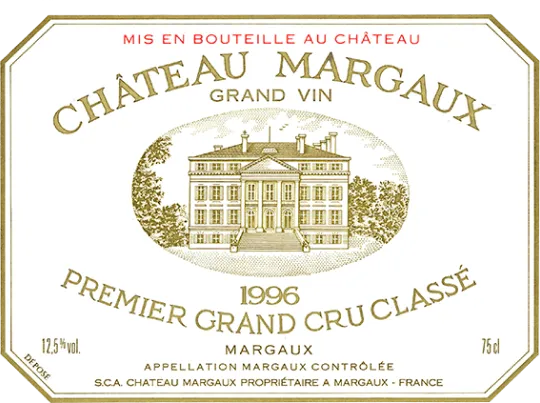
This complicated year taught us many lessons, as it diverged completely from the usual—perhaps overly simple—pattern of the great vintages. One might even wonder whether the heavy rains at the end of September, contrary to our fears, actually favoured the ripening of the cabernet sauvignon, as was likely the case in 1995.
Whatever the explanation, this vintage ended up producing a wine that will be remembered for its classicism and purity. Rarely has cabernet sauvignon reached such stylistic perfection and balance. Rarer still is the ability of a young wine, recently blended, to be so immediately impressive and moving—through the purity of its fruit, the density of its texture, and the harmony of its form. It is a dream of a Margaux, hard to resist now, yet endowed with immense ageing potential. (February 2025)
Climate
After a very quick flowering, the summer was unsettled, with alternating periods of hot and cool weather and stormy showers, though less heavy in the Médoc than on the right bank. As from the 1st September, cool and very dry weather set in for three weeks. It then rained and fine weather returned for the harvesting of the Cabernets. (The picking began on 23rd September)
Grand Vin du Château Margaux
1995
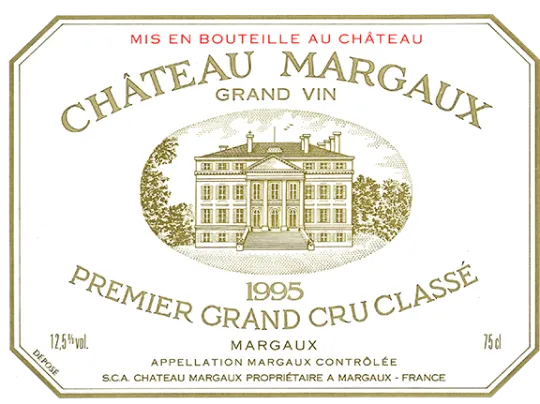
1995 is a truly great vintage displaying all the hallmark characteristics: power, depth, richness, complexity, subtlety and harmony. Today the nose is not exactly closed, but still rather restrained. The aromas are present, though somewhat veiled. On the palate, it is obviously the power that dominates; the tannic structure is dense, tight and firm without being hard. Ideally, this superb wine should be given a few more years before opening. Its balance promises a beautifully harmonious evolution. (October 2025)
Climate
After a very mild winter, the bud-break and flowering were early and even. The whole summer was one of a great vintage: hot and very dry. The quite heavy rain that arrived in the middle of September was without doubt of benefit to the ripening of the grapes. The weather was then superb throughout the harvest. (The picking began on 15th September).
Grand Vin du Château Margaux
1994
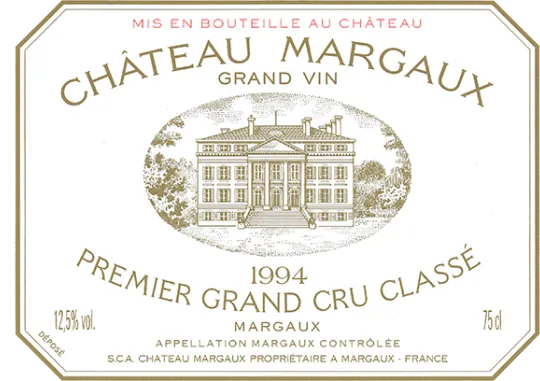
Perhaps in 1994 the cabernet sauvignon ultimately lacked a few extra days of sunshine. It produced very concentrated, tannic wines with a slightly firm finish.
Château Margaux 1994 is a dense and powerful wine, though still somewhat austere. Its tightly knit tannic structure has softened more than we had anticipated at the time of blending.
Today, the bouquet is developing well. Charm is slowly replacing power, and it is now ready to be enjoyed. (February 2025)
Climate
A particularly hot and dry summer and a very early harvest enabled the grapes to reach a remarkable level of concentration and richness. The heavy rain during the picking came too late to cause any real problems for the ripening of the grapes. (The picking began on 13th September)
Grand Vin du Château Margaux
1993
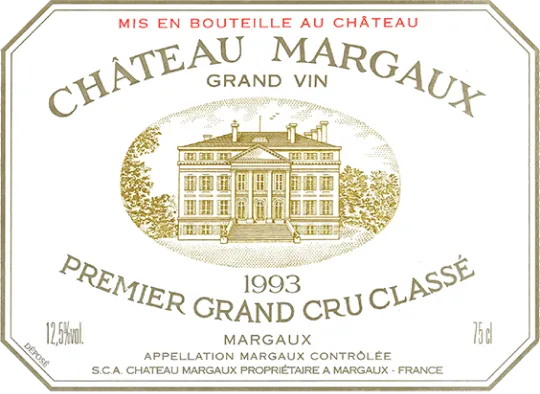
The bad weather during the harvest only slightly diminished our expectations of superb quality. Generally speaking, the month that truly determines the quality of a wine is August—or as the French say, "August makes the must".
This wine possesses the finesse, subtlety and charm of the very good vintages along with good overall balance. However, it lacks density and depth. It is very pleasant to drink now, but there is no rush. (February 2025)
Climate
After an earlier than normal bud-break, the weather conditions were very favourable for the flowering, which was particularly fast and even. July was very dry but cool ; August was very hot and dry. On 10th September, the quality potential was remarkable. Unfortunately, the harvest was very rainy. (The picking began on 19th September)
Grand Vin du Château Margaux
1992
Considerable work was required in the vines to compensate for the effects of the adverse weather conditions; first, to protect the vines, then to thin the crop which promised to be large, and finally to carry out particularly meticulous sorting at harvest time.
This wine, though relatively modest in scale, reveals great distinction and finesse, with a beautifully harmonious character. One might have feared insufficient tannin ripeness in this vintage, but their suppleness and roundness once again bear witness to the genius of the terroir.
Today, Château Margaux 1992 displays a lot of charm and finesse on the nose. On the palate, it is tender and refined, finishing on a very soft note. This wine may not impress, but it offers genuine pleasure.
It can be enjoyed now—though there’s no rush. (February 2025)
Climate
After a very dry winter, the weather was wet during the flowering, which was long and uneven. The summer was hot, but August was particularly rainy, which affected the health of the vines more than usual. Fine weather never really settled in after that. (The picking began on 29th September)
Grand Vin du Château Margaux
1991
The frost on April 21st struck the vineyard very unevenly. The merlot vines, mostly located on the clay-limestone soils in the lower part of the estate, were completely frozen. Fortunately our finest cabernet sauvignon vines on the gravelly slopes that "look out over the river" were entirely spared.
Right up until the harvest, we hoped that these conditions—ultimately quite similar to those of the 1945 and 1961 vintages—would lead to another great year. But at the last moment, rain tempered our expectations.
Nevertheless, it is a fine achievement and an excellent wine. On the rare occasions we've opened a few bottles from this very small harvest, we've been surprised by both the concentration and the smoothness of this wine. (February 2025)
Climate
1991 was the year of the great spring frost on 21st April. The cold delayed vine growth until the end of May. But an extraordinarily hot, dry summer allowed the vegetation to catch up and brought this very small harvest to an excellent level of ripeness. Unfortunately, heavy rain just before the harvest took the shine off what would have been a remarkable vintage. (The picking began on 30th September)
Grand Vin du Château Margaux
1990
The harvest lasted almost a month as the cabernets ripened much later than the merlot. We even interrupted the picking for 10 days at the end of September to allow the Cabernets to fully ripen. Luck was on our side, as the weather was exceptionally good. 1990 was the third in a run of very fine vintages with 1988 and 1989. After the classic 1988 and the rich, opulent 1989, the 1990 immediately caused great excitement with its charm and great finesse. It’s striking how two vintages with seemingly similar conditions—1989 and 1990—produced such different wines! A few days of intense heat, an untimely rainstorm or a lengthy period of drought can have a big influence! The wines of the 1990 vintage, whether merlot, cabernets or petit verdot, were immediately outstandingly attractive, rich and tender with a tight but soft grain. Today, all the aromas and flavours already mingle sweetly together in this wine whose perfect harmony conceals a power comparable with 1989. It is enjoyable now, just as it was shortly after its bottling, and will surely remain so for the next twenty, thirty, or even more years… to our greatest delight. (February 2025)
Climate
After a mild winter, the flowering was very early but quite long and uneven. As in 1989, the summer was exceptionally hot and so dry that at the end of August the young vines were really suffering from lack of water. The two rainy intervals in September were very beneficial to the final ripening of the grapes, which were harvested in very fine weather. (The picking began on 17th September)
Grand Vin du Château Margaux
1989
The harvest in 1989 was the earliest since 1893, beginning on August 17th at Château Margaux… Merlot, cabernets, and petit verdot reached an exceptional level of ripeness, which brought back memories of the legendary 1982. The sugar levels were even higher in 1989.
The wine’s development in bottle has confirmed the high expectations we had from the moment of harvest.
Richness, complexity and opulence could be the key words to describe this outstanding wine. We felt it was already enjoyable to drink from the day it was made—thanks to the exceptional ripeness of the grapes, which gave the tannins a smoothness usually acquired only after long ageing in bottle. A great wine that can be opend now, though there is no need to rush. (February 2025)
Climate
1989 will long be remembered as an exceptionally early vintage and a very easy one, from a vine-growing point of view. The flowering, then the colour-change and the ripening all took place in perfect weather, which was particularly hot and dry. Finally, there was not one single day of rain during the harvest. From beginning to end, then, 1989 was a dream year. (The picking began 11th September)
Grand Vin du Château Margaux
1988
The very deep colour, the rich, intense nose and the magnificent structure on the palate are very reminiscent of the 1986. They have the same powerful, ripe tannins, with perhaps a little less concentration, but also less austerity. Unlike 1986, however, 1988 is beginning to open up. It an therefore be enjoyed now, but there is no rush. (February 2025)
Climate
After a very mild winter and a wet spring, June and the beginning of July were particularly rainy. Then, from mid-July onwards, until the end of September, hot and very dry weather set in. Despite a few light rain showers at the beginning of the harvest, the picking was carried out in excellent conditions. (The picking began 3rd October)
Grand Vin du Château Margaux
1987
The greatest terroirs always reveal themselves when conditions are at their worst. Château Margaux 1987 displays a lot of finesse and aromatic complexity. It may lack the fatness and opulence of a great vintage, but the distinction and pedigree of a great wine are unmistakably present.
It is now reaching its peak and can be enjoyed, but there is no rush. (February 2025)
Climate
The weather was unsettled for the whole year. Hot weather and dry conditions never really set in, except for a ten-day spell in September, when it was very hot. The harvest began relatively late in difficult conditions with frequent rain showers. Fortunately, the weather was cold, which prevented any rot from developing. (The picking began 5th October)
Grand Vin du Château Margaux
1986
Another outstanding vintage, immediately after 1985. But while 1985 was full of charm, 1986 was austere. Seldom has a vintage—until the 2005 and the 2010—been from the start as powerful and concentrated. One would have to go back to the legendary 1961 to find a previous vintage with such richness and such balance.
1986 is an astonishing vintage; its very slow development reminds us, in some ways, of wines from a previous generation. Its tannic structure is very tight-knit and dense, softening only slightly from year to year. The bouquet is starting to open up; however, we feel that it still reveals only a limited part of its enormous potential. On the palate, it is full and rich, though still a little bit firm. Should we drink it now?... A great vintage, but one that seems to belong to another, older era. (February 2025)
Climate
The very fine summer weather was hardly affected by the brief spell of rain around 20th September, which in the end, may have been more beneficial than we first thought. Immediately afterwards, the fine weather came back and stayed with us for the whole of the harvest time, bringing the grapes to superb ripeness. (The picking began 1st October)
Grand Vin du Château Margaux
1985
1985 is an outstanding vintage, both in terms of quality and quantity. It has always been very pleasant to drink, almost right from the end of the fermentation. The nose remains still astonishingly fruity, fine and elegant and has become more developed and very complex. On the palate, one is immediately struck by the delicacy and charm of the particularly round and silky tannins, while the length and finish also reveal great concentration.
Today, 1985 stands as one of our most appealing vintages. It seems to be at its peak—though it may still surprise us in the coming decades. (February 2025)
Climate
After a quite cool and late start to the growing season, this vintage was influenced by very advantageous ripening and harvesting conditions, especially during the months of September and October, which were very hot and dry. The leaves on the vines refused to fall until late into November. This Indian summer will be remembered a long time. (The picking began on 26th September)
Grand Vin du Château Margaux
1984
The very low percentage of merlot in the blend, combined with, the hard-won ripening of the cabernet sauvignon, gave this vintage a certain austerity from the outset, along with a characteristic firmness on the finish.
Fortunately, the development in bottle has helped to soften the tannins. Today, the palate is softer and the nose quite remarkable. This wine is a great success for the vintage and now at its peak. (February 2025)
Climate
The cold and rainy weather during the flowering caused the worst case of "coulure" in history, i.e. preventing the flower from setting into fruit. Summer was quite hot and sunny, but heavy rain in September hampered the ripening of the grapes. Fortunately, the harvesting was carried out in sunshine, which enabled us to bring in sufficiently ripe grapes in this difficult vintage. (The picking began 1st October)
Grand Vin du Château Margaux
1983
The spectacular success of the Margaux appellation in this vintage partly remains an enigma—highlighting just how limited our understanding is of what makes a vintage truly great… It seems that the stormy rain showers in August were less heavy in Margaux than in other regions around Bordeaux. The 1983 Château Margaux is a very fine wine, that certain tasters find better than the 1982 vintage. We have followed this pair of vintages from the beginning with curiosity and sheer pleasure, never settling on a definitive judgment of their respective qualities. Over the years, one tasted better than the other and vice-versa…
Today, the 1983 is certainly one of the most classic Château Margaux of the past forty years. The bouquet has developed well, it has become rich, complex and mature. On the palate, the impression remains of great power, balanced by remarkable freshness. We are starting to detect some variability among the bottles, though the magnums are consistently remarkable. (February 2025)
Climate
After a very rainy spring, the month of June was hot and dry, making excellent conditions for the flowering. The summer was hot and humid, almost tropical, thus causing potential risks of disease. Then, as from the 10th September, very fine hot and sunny weather set in, helping the grapes to reach excellent ripeness levels. (The picking began on 29th September)
Grand Vin du Château Margaux
1982
This wine has opened up considerably in the last 10 years and when we have the chance to compare it to the 1983, it seems to be slowly starting to take the lead—although much depends on the bottle, and on personal taste.... Château Margaux 1982 is a very powerful, fleshy and complex wine. The bouquet is already remarkably rich, complex and dense. On the palate, it offers an impression of great power, roundness, and suppleness. Such balance is rare. A sublime wine—hard to resist even if there's no rush to drink it... (February 2025)
Climate
Throughout the whole year, the weather conditions were very favourable for the vines and for the ripening of the grapes. After an early flowering, the summer was particularly hot, especially in July and during the first two weeks of September. The grapes reached outstanding ripeness levels with, among other feats, a record concentration in sugar. (The picking began 20th September)
Grand Vin du Château Margaux
1981
A very good vintage, which today has perhaps turned out to be superior to 1978 and 1979. The nose reveals a lot of finesse, distinction, elegance and classicism. The balance on the palate is perfect and the finish is tender, soft and long. To be enjoyed now, before the tannins risk drying out. (February 2024)
Climate
The four previous years had been late harvests; 1981 then, was the return to a classic harvesting date. The flowering went quickly and evenly, August was very hot and dry, and after a few rain showers in September, the weather was very good for the whole of the harvest, which began on 1st October.
Grand Vin du Château Margaux
1980
Château Margaux's success in this vintage was unanimously praised. We were fortunate to harvest very late, after the rain, and to have done so under excellent conditions. Nevertheless, 1980 is not a great vintage: the wine has always been supple, aromatic, fine and well balanced, but has lacked power. It has developed beyond our expectations, but it is now starting to dry out slightly. To be enjoyed soon. (February 2024)
Climate
A disastrous cold, rainy spring held back the flowering, which only took place at the end of June. There was mixed weather in the summer, but fortunately September was sunny and hot. After a rainy start to October, dry, cold weather set in, enabling us to harvest, albeit very late, sufficiently ripe and perfectly healthy grapes. (The picking began 17th October)
Grand Vin du Château Margaux
1979
A fine vintage whose style has often been compared to the 1978; it seemed to us that when one of them opened up, the other started to close again—and vice versa... But the tannins have always been more tender and softer than those of 1978.
It also probably has less ageing potential, and we recommend drinking it now without waiting too long. (February 2025)
Climate
The weather conditions were very similar to those in the 1978 vintage: a wet spring, a hot summer in July and cool in August; and a very fine end to the summer. Once again, the grapes just managed to reach a very good level of ripeness. (The picking began 4th October)
Grand Vin du Château Margaux
1978
A classic, concentrated, rich, deep wine, with a mature, complex bouquet, displaying a touch of mint. Its very fine tannic structure still leaves a little firmness on the finish which is fortunately, softened by very fine perfumed flavours. We think this wine may have the potential to improve, but it may also dry out a bit. (October 2018)
Climate
The time lost through a particularly cool and wet spring was never made up during the summer, but an exceptional Indian summer enabled sufficiently ripe grapes to be picked in perfectly healthy condition. (The picking began on October 9th)
Grand Vin du Château Margaux
1977
This vintage, despite its mediocre reputation, produced a wine of surprising finesse and concentration at Château Margaux. This success is undoubtedly partly due to the vineyard's very low yield, but also to the joint involvement of André Mentzelopoulos—who took over the reins of the estate in July—and oenologist Émile Peynaud, whom he called upon his arrival to provide his invaluable advice during vinification and blending.
The colour is stunning, still very dark for the vintage. The bouquet is well developed, fine, complex and moderately rich. On the palate, it is quite smooth, not very powerful, finishing on a slightly firm note. It should be enjoyed now; the wine will not improve further though it can be kept for a few more years. (February 2025)
Climate
A sharp frost at Easter reduced the crop size, which was already small. The summer months were cool and wet. Fortunately, in September and October, the weather greatly improved, which allowed us to harvest reasonably ripe grapes late, but in good conditions. (The picking began 10th October)
Grand Vin du Château Margaux
1976
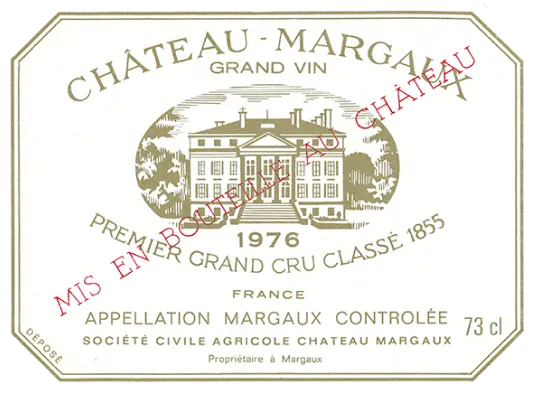
1976 will be remembered as the "drought year". This vintage could have been outstanding, but the rainy end to the summer diluted the grapes and then forced us to harvest quickly before rot set in.
Today, 1976 is a supple, almost smooth wine with a fine, distinguished and mature nose. It lacks complexity and a bit of power and acidity to be considered a truly great wine, but it is nontheless pleasant to drink and unique in its style. We look back with emotion on this period when Château Margaux, then owned by the Ginestet family, was up for sale and had not yet found a buyer.
1976 should be enjoyed now. (February 2025)
Climate
After an early bud-break, the weather conditions were particularly hot and dry during spring and the beginning of summer. August was very hot but there were heavy storms. September began in very fine weather but then became rainy during a part of the harvest. (The picking began 13th September)
Grand Vin du Château Margaux
1975
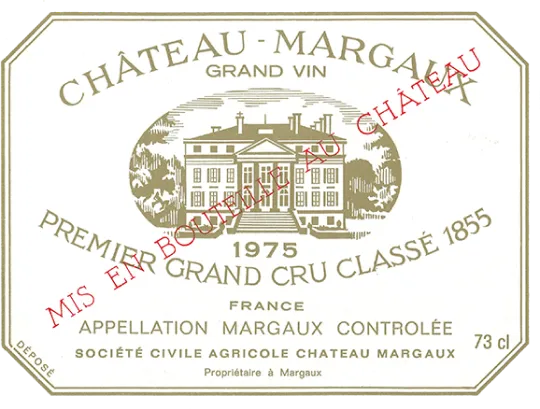
This vintage which was immediately acknowledged in Bordeaux as a great success, developed very slowly in bottle, especially for wines based on cabernet sauvignon, as is the case at Château Margaux. Since then, questions have been raised as to whether the cabernets were harvested at full maturity, given that the tannins remained very firm, even hard, for so many years. It is very likely that today such a vintage would produce a different wine, certainly just as concentrated but more accessible. 1975 came after three particularly difficult years (1972, 1973 and 1974). Perhaps the potential of this vintage was overestimated through understandable enthusiasm.
Château Margaux 1975 was not a great success. At the time, the estate— then owned by the Ginestet family—was about to be sold and certainly did not benefit from the same care as in the 1960s.
Today, however, the tannins have softened, the acidity has evolved into freshness, and some bottles surprise us with their complexity and finesse. (February 2025)
Climate
After a hot and dry summer, the month of September was unsettled, but fine weather returned for the harvest. From one end of the growing season to the other, the weather conditions were very favourable. (The picking began 26th September)
Grand Vin du Château Margaux
1974
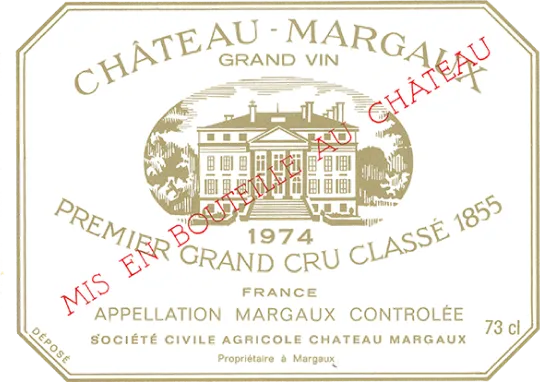
Another challenging vintage after 1972 and 1973, both in terms of wine quality and market conditions—unfortunately still heavily impacted by the consequences of the oil crisis.
Yet, when tasted in June 2024, this wine pleasantly surprised us. It is indeed rather light and somewhat vegetal, but it has benefited from half a century in bottle, developing a floral and complex bouquet, while its slightly green tannins have mellowed, adding a lovely complexity. Magnums, in particular, are surprisingly youthful. (June 2024)
Climate
After a reasonable summer, the month of September was rainy and cold and did not allow the grapes to reach a good level of ripeness. (The picking began 20th September)
Grand Vin du Château Margaux
1973
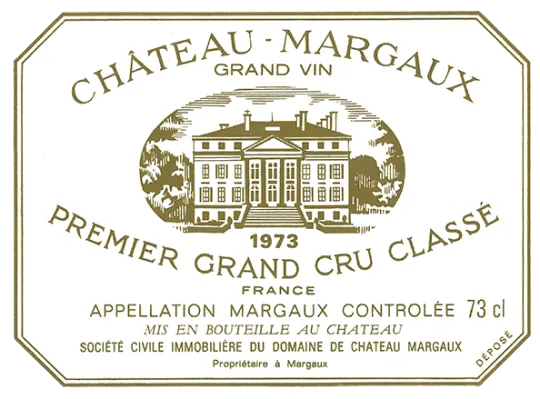
Château Margaux 1973 seduces with its finesse, delicacy and subtle aromatic bouquet. Admittedly light, it is pleasant to drink, though it would be wise not to wait too much longer. (May 2024)
Climate
After a rainy month of July, August was very hot (the hottest since 1949), then September was very rainy again. The crop was very large and so was partly diluted and was never able to finish off its ripening process correctly. (The picking began 26th September)
Grand Vin du Château Margaux
1972
1972 is a mediocre year marked by a greenness due to grapes that failed to reach full maturity. We thought this wine should be drunk fairly quickly, but a bottle tasted blind in 2017 astounded us. The nose was superb, very complex, reminiscent of some beautiful, whole-cluster Burgundies. The acidity was noticeable, but gave length to the wine. Impressive for the vintage! (2017)
Climate
An exceptionally cold and late year, particularly during September, which never allowed the grapes to ripen correctly. (The picking began 10th October)
Grand Vin du Château Margaux
1971
Recently tasted, this wine won us over with its finesse, aromatic complexity, and softness. What a thrill! (September 2025)
Climate
The 1971 growing season was affected by very serious "coulure" in the Merlot vines. This is when bad weather prevents the flower from setting into fruit. July and August were very hot and dry, but September was rainy, which did not stop this small crop from reaching a good ripeness level. (The picking began 1st October)
Grand Vin du Château Margaux
1970
It is hard to imagine today the excitement caused by this vintage whose abundance and generosity seemed all the more remarkable given how truly dreadful the two previous vintages—1968 and 1969—had been.
Most of the wines produced in the Médoc remained closed and rather austere for a long time. As with the 1975 vintage, it could have been a question of the cabernet sauvignon not being ripe enough when it was picked. In many estates, even in the greatest, the vat cellar equipment—in particular the number of vats—was not suited to such a large crop. Vinification conditions therefore were not ideal. It was the case at Château Margaux, where the 1970 reflected the quality of the vintage very well, but lacked a little concentration and flesh. The nose is complex, well developed, deep, and quite harmonious. On the palate, the impression is fine and pleasant, though a little short and dry on the finish. We believe this wine is ready to drink now, but it undoubtedly has good potential for ageing and even improvement as it tends to open up and improve in the glass. (July 2025)
Climate
This very big harvest had the advantage of excellent weather conditions throughout the whole of the summer up till the end of the harvest. (The picking began 26th September)
Grand Vin du Château Margaux
1969

The grapes were thoroughly washed-out by the heavy and almost continuous rain of September. Naturally they were unable to reach a proper level of ripeness.
1969 is a lesser, mediocre wine, which has sunk into oblivion. It should have been drunk by now... (March 2024)
Climate
After a normal start to the growing season, July and August were hot and dry, therefore favourable, but September was extremely wet and ruined all the hopes that had been built up about this vintage. (The picking began 29th September)
Grand Vin du Château Margaux
1968
1968 is the epitome of a poor vintage—one that occasionally raises concerns about whether it could happen again today…
From the very beginning, the wines were short, light, simple and lacking real interest. Over the years, a certain finesse has appeared: it is the privilege of great terroirs, whose quality manages to come through even in such conditions.
Today, 1968 is a tired wine that should have been drunk long ago. (March 2024)
Climate
The beginning of the growing season was normal, but the months of August and September were unfortunately extremely wet. The harvest had to be done very quickly as the grapes, which were not yet ripe, were already affected by rot. (The picking began 30th September)
Grand Vin du Château Margaux
1967
1967 Château Margaux is a very fine vintage and a good example of both the genius of the terroir and an era when the search for balance and finesse was paramount.
Today, this wine shows a particularly refined and distinguished nose—very ripe, very elegant, and so enjoyable! On the palate, smoothness prevails; the tannins fade into the background, leaving only the pleasure of drinking. A truly lovely bottle to enjoy now. (February 2025)
Climate
A rather dry year, without any particular problems. (The picking began 27th September)
Grand Vin du Château Margaux
1966
It is a rich wine with a very fine tannic structure, which has now developed lots of finesse and softness on the palate (although somewhat marked by the tannins on the finish). If it does not have the charm of the 1962, it is nonetheless excellent and remains one of the top three vintages of this decade. (February 2025)
Climate
After a rainy start to the growing season, August and especially September were hot and dry. September in particular was exceptionally hot, which allowed the grapes to ripen in excellent conditions. (The picking began 20th September)
Grand Vin du Château Margaux
1965
1965 was the only year in which no Château Margaux was produced. Wines of very mediocre quality were blended with batches from other vintages to produce a wine released under the label of " Château Margaux non millésimé" (Non-vintage Château Margaux). This decision may seem incongruous today, but it should be seen in the very difficult context of those time.
Climate
After a roughly normal start to the growing season, the month of August was almost favourable, but September was catastrophic, with continual rain showers. The grapes were soon affected and could not be picked in a correct condition. (The picking began 1st October)
Grand Vin du Château Margaux
1964
The 1964 vintage left its mark on the Bordeaux wine region: those who had finished harvesting before the rain felt vindicated in their habit of picking early; those who harvested afterward swore they would never be caught out again… This great fear led many winegrowers to bring forward the start of harvests for years to come—perhaps explaining why certain vintages like 1970 and 1975, harvested in haste, proved somewhat disappointing.
At Château Margaux that year, we rushed slowly... About half of the crop was harvested before the rain, the other half, unfortunately and painfully, in the rain. Château Margaux 1964 bears the mark of this mixed parentage: it is a very good wine, but could have been a great one.
Today, it displays a fine, deep, complex bouquet. Fairly long on the palate, it lacks a little density and flesh, but finishes with great freshness and elegance. To be enjoyed now. (February 2025)
Climate
After an early flowering, the summer was very favourable, with hot, dry weather. September was particularly hot, which allowed the grapes to reach an excellent level of ripeness. But as from 5th October, it did not stop raining for three weeks... (The picking began 21st September)
Grand Vin du Château Margaux
1963
Given its age and the very difficult climatic conditions of this vintage, we expected the worst when we had the opportunity to open two bottles in May 2019.
It is obviously not an exceptional wine, but it is pleasant nonetheless. Although the color is cloudy, the nose has a certain freshness preceding a rather light and acidic palate balanced by very soft tannins. (May 2019)
Climate
A cold and rainy year, in which the grapes were never able reach a good level of ripeness or sufficient concentration. (The picking began 26th September)
Grand Vin du Château Margaux
1962
This vintage is a rare example—especially for that era—of a successful late harvest year.
Unfortunately, coming so soon after the extraordinary 1961, the quality of this very fine wine was a little overshadowed.
Château Margaux 1962 is, along with 1961 and 1966, one of the best vintages of the 1960s, though it is true that the decade included many lesser vintages. A light color, wonderfully perfumed, this wine is well balanced, rich and mature; very pleasant to drink today. The magnums, in particular are remarkable. (February 2025)
Climate
1962 was a late-ripening year which nevertheless benefited from excellent ripening conditions for the grapes. (The picking began 3rd October)
Grand Vin du Château Margaux
1961
It has sometimes been said that 1961 was the greatest vintage since 1900. Our memory does not always serve us well, but there is no doubt that this vintage displays quite extraordinary qualities, which we would not find again until the 1982 vintage. 1961 not only benefited from remarkable weather conditions, but also from the first achievements of what came to be known as "modern oenology" inspired by Professor Ribereau Gayon and Doctor Emile Peynaud.
Château Margaux 1961 is a sumptuous wine: soft, harmonious, rich, dense, and remarkably fresh. Its bouquet is unique—beneath the scent of undergrowth, so typical of the great wines of that era, lies a layer of indescribable fruity and floral fragrance... Smelling this wine is a moment of unforgettable excitement, of pure emotion! On the palate, the sensations harmouniously mirror the aromatic festival on the nose: its tannic density asserts itself with smoothness and delicacy, and the finish is a powerful yet tender caress. A truly magnificent wine.
Today, the 1961 has lost none of its freshness, with magnums showing greater consistency than bottles. Of course, it can be opened now, but it was built for eternity... (February 2025)
Climate
A sharp spring frost and exceptional "coulure" due to an intensely cold spell at the end of May drastically reduced the crop size. Then, the wonderful weather conditions during the summer, which was particularly dry and hot, enabled this small crop to reach really extraordinary ripeness and concentration. (The picking began 19th September)
Grand Vin du Château Margaux
1960
Poor old 1960, caught between 1959 and 1961! It was surprisingly fine, yet so light… We didn't think it would stand the test of time. Tasted in March of 2017, it certainly lacked concentration and power, but revealed an unexpected elegance and charm. A delightful surprise. (March 2017)
Climate
After an early start to the growing season, summer was cold and rainy, just about until the end of the harvest... (The picking began 13th September)
Grand Vin du Château Margaux
1959
Even before the harvest began, this vintage was acclaimed as "vintage of the century". Indeed, the summer had been exceptionally hot and dry throughout France. Not only Bordeaux but also Burgundy and Champagne had great success. The heat-wave during the harvest made the vinification difficult—and at times perilous—since few cellars at that time had equipment to cool the fermenting musts. It has sometimes been said that 1959 was the last great vintage of a bygone age, with 1961 marking the beginning of the modern era.
Château Margaux 1959 is really a great wine with a powerful, complex, very fine and elegant bouquet, though slightly less profound and rich than the 1961. On the palate, it is very concentrated and powerful. Without a doubt, it is a great bottle which should be enjoyed now without further delay. The magnums today are showing greater freshness and can be kept for a few more years. (February 2025)
Climate
An exceptionally good summer brought the grapes to remarkable ripeness. It rained a little before the harvest, then the fine weather returned and got even hotter than before. (The picking began 24th September)
Grand Vin du Château Margaux
1958
As always, as the French saying goes, "August makes the must" or in this case, it was the undoing of it. Despite the very fine weather in September, the grapes were never able to acquire sufficient concentration after suffering during the month of August.
Château Margaux 1958 is an elegant, delicate wine that, when we tasted it in July 2026, charmed us with its complex, floral aromas, so emblematic of the Château Margaux terroir. To be enjoyed soon. (July 2026)
Climate
A late-ripening year, with a very rainy August and a fine, hot September. The harvest was carried out in beautiful weather. (The picking began 6th October)
Grand Vin du Château Margaux
1957
In its early years, Château Margaux 1957 was hard and very tannic, but today it impresses with its dark color, imposing structure and disconcerting youth. One almost hesitates to open it, tempted to wait a few more years for the slightly severe tannins on the finish to soften a little further... (February 2025)
Climate
It was a difficult start to the growing season, with some damage from spring frosts. The weather then became satisfactory, but cool, until the harvest. Record high temperatures were registered in October, which saved this late-ripening harvest. (The picking began 4th October)
Grand Vin du Château Margaux
1956
1956 was certainly a very challenging year—but isn’t it in such vintages that the greatest terroirs reveal their magic? Admittedly light, its elegance and delicacy won us over the last time we tasted it, in 2006, to celebrate the 50th birthday of Paul Pontallier, Managing Director of Château Margaux from 1989 to 2015. (2006)
Climate
The winter, which will be remembered for its record cold weather (it was -20°C in Bordeaux and the Garonne river had blocks of ice floating along it...), was fatal to numerous plots in the Bordeaux region -but not in Margaux, where the vines suffered very little. But the growing season got underway very late, and the cold and rainy summer finally sealed the sad fate of this vintage. (The picking began 8th October)
Grand Vin du Château Margaux
1955
1955 combined most of the characteristics that are necessary to produce a great vintage—in particular, a hot, dry August and excellent conditions during the harvest.
Château Margaux 1955 was a success: light in colour, it is a wine full of charm and freshness, delicacy and smoothness. The bouquet is superb, and the palate perfectly harmonious; it may lack a bit of density to be considered a truly great vintage.
It is perfect to enjoy now, although its development in bottle—and especially in magnum—may yet surprise us.
(February 2025)
Climate
After a rainy start to the summer, in June and July, the months of August and September were dry and hot. The fine weather carried on throughout the harvest. (The picking began 22nd September)
Grand Vin du Château Margaux
1954
Despite its reputation for being rather mediocre, this wine pleasantly surprised us with its soft texture and the finesse of its bouquet when we tasted it in July 2026. Best enjoyed without delay. (July 2026)
Climate
A particularly cold and rainy year, in which the grapes never succeeded in reaching good ripeness. (The picking began 12th October)
Grand Vin du Château Margaux
1953
1953 is one of the greatest vintages of Château Margaux. It expresses, in a particularly perfect way, the genius of its terroir. The wine displays an incomparable level of finesse and subtlety, combined with a richness which enables it to remain incredibly fresh today. The bouquet of this wine approaches perfection. The nose of undergrowth mingles with aromas of flowers, red berry fruit and leather, in an overall impression of extraordinary and moving delicacy. On the palate, we sense a measured, restrained power which has developed over the years to give a supreme level of refinement and smoothness. (February 2025)
Climate
The fantastic month of August, really very hot and dry, decided the privileged fate of this vintage. September was normal, and it rained a little during the harvest, but it was too late to affect the quality of the grapes, which were already ripe and concentrated. (The picking began 26th September)
Grand Vin du Château Margaux
1952
Château Margaux 1952 has kept an astonishing freshness. Its bouquet is very distinct and refined, with just a touch of austerity. On the palate, it is at first soft and silky, and then slightly firm tannins come through on the finish. It is still a very fine wine that you should, however, not wait too long before drinking. (February 2025)
Climate
Everything seemed to point towards an outstanding year, since the months of June, July and August had been hot and dry. Unfortunately, September was cold and very rainy and prevented the grapes from reaching an excellent ripeness level. (The picking began 15th September)
Grand Vin du Château Margaux
1951
This wine has practically disappeared not only from cellars but also from the memories of wine tasters...
It has always seemed light, without much body. Yet, tasted in October 2011, it pleasantly surprised us. It revealed elegance and delicacy, along with remarkable complexity. Time had finally revealed the finesse of the terroir! (October 2011)
Climate
A cold and rainy year. (The picking began 1st October)
Grand Vin du Château Margaux
1950
Château Margaux 1950 is a stunning wine which possesses an almost unique grace. Its bouquet shows a finesse reminiscent of the 1953 without quite having the same complexity. The impression on the palate is one of extraordinary delicacy, smoothness and harmony. 1950 may not have the length or the muscle of a great vintage, but it is a dream of a Margaux—an emotional rather than a sensational wine. We are amazed by its freshness which only a miracle could have saved in a wine so soft we once thought it was fragile. Wines like this prove that strength does not necessarily come from muscle. It is unlikely to improve further, and we believe it would be best to drink it now, so as not to miss this magical opportunity. (October 2024)
Climate
Very good weather conditions throughout the year, in spite of a little rain in September. (The picking began 18th September)
Grand Vin du Château Margaux
1949
1949 is one of the most concentrated vintages of Château Margaux; such tannic power would not appear again until 1961. Its colour is stunning, dense, very deep and still youthful. The nose is rich, clean, but does not have the same finesse as other more classic great vintages, such as 1953, 1955 and 1959. The power really comes through on the palate; we can feel just how concentrated the tannins are, and these still give the wine a firmness—even a touch of astringency—which is surprising in a wine of this age. The finish lacks a little smoothness, but overall, it is a remarkable wine.
It is difficult to say whether it should be drunk now or kept... We believe this wine still has the potential to improve, though it may eventually dry out a little. So, perhaps it would be better to drink it! (February 2025)
Climate
A dry and especially hot year, particularly in July and August. It was long remembered for the great fires in the Landes forest which took dozens of lives. (The picking began 28th September)
Grand Vin du Château Margaux
1948
The wine is no more remembered than the weather that year. A bottle tasted in March 2018 nevertheless proved to be excellent. Despite its cloudy color, the nose was ripe and very complex. The palate was pleasant and the acidity of the wine—probably a bit aggressive in its youth—now brings a lovely freshness and remarkably lengthens the finish. However, it quickly deteriorated in the glass and should therefore not be decanted or only at the very last moment before serving. (March 2018)
Climate
1948 was an "average" year with nothing particular standing out. Perhaps it suffered the great disadvantage of being completely overshadowed by great vintages before and after it : 1947 and 1949. It therefore left no specific trace in the memories of wine professionals. (The picking began 23rd September)
Grand Vin du Château Margaux
1947
Château Margaux 1947 is an outstanding wine, particularly powerful and still very fresh. The bouquet is intense and mellow with very ripe fruit coming through. On the palate, the power of the tannins comes to the fore, leaving a slightly dry impression which is quite typical of the wines of this generation.
This type of wine was made for long ageing. It can be enjoyed now, of course, but it can be laid down without any problem for many more years. (February 2025)
Climate
1947 was one of the hottest years of the century; it was one of a run of very hot years with 1945, 1946, and 1949. Was global-warming already with us ? (The picking began 16th September)
Grand Vin du Château Margaux
1946
Château Margaux 1946 has always been considered a wine of modest quality. At almost 80 years of age, it is finally beginning to show greater complexity with a pleasant nose—yet it still retains a very lively acidity. Will it ever soften? (February 2025)
Climate
In spite of a few very hot days in the summer, the conditions for ripening were quite poor, and the grapes did not ripen well. (The picking began 1st October)
Grand Vin du Château Margaux
1945

1945 is a legendary year! Symbolically, a great vintage came along to celebrate the end of the Second World War…
Château Margaux 1945 is a very powerful, concentrated and ripe wine, with a fine, complex bouquet—more elegant than the 1947 and 1949 vintages, which seem to have been more affected by the extreme heat of the summer. This wine possesses all the attributes of a great vintage of its generation. The tannic freshness remains present on the palate and will very probably enable it to age even longer. Having remained very young for so long, it now seems to us to be at its peak. (February 2025)
Climate
After an early bud-break, a terrible frost on 2nd May severely reduced the crop size. Then, from the beginning of the summer until the end of the harvest, the weather was extremely favourable. (The picking began 12th September)
Grand Vin du Château Margaux
1944
1944 is now a forgotten wine. It was once rather fine, elegant, and appealing, but it has faded over time. It should have been drunk by now. (September 2024)
Climate
The weather conditions during this year did not make much of an impact on people's minds, more preoccupied very probably by other events... It would appear that the weather was about normal, with no particular extremes. (The picking began 26th September)
Grand Vin du Château Margaux
1943
This vintage was a tremendous success. It was the best wine produced at Château Margaux, and in Bordeaux in general, since 1934. We look back on those difficult times and conditions during the war with great sympathy. Many things were lacking: staff, horses, products for vineyard treatments, raw materials, and so on.The success of this vintage makes it all the more moving.
Château Margaux 1943 is very good to drink today. Its bouquet is very fine, very elegant, closer to the great vintages of the 1950s, such as 1953, than to the other great wines produced in the 1940s. On the palate, it is tender and harmonious, finishing on a smooth note. This wine is delicious to drink now and can still be kept for several years more. (February 2025)
Climate
After an early bud-break, the flowering went quickly and was over by the end of May. The summer was then hot and dry. The weather conditions were, on the whole, excellent. (The picking began on 16th September)
Grand Vin du Château Margaux
1942
A long-forgotten vintage, once rather tannic and acidic in its youth, but it astounded us when tasted in 2011. The nose was remarkable, complex and rich. On the palate the wine was powerful, full-bodied, opulent with a finish that was incredibly smooth. Excellent! (2011)
Climate
A wet and difficult year, which left very little trace.
Grand Vin du Château Margaux
1941
A completely forgotten wine. All that remains is the emotional memory of the harsh production conditions of the time—marked by war and a lack of equipment. (February 2024)
Climate
A cold and wet year. The harvest was late.
Grand Vin du Château Margaux
1940
With the German invasion, could anyone truly have thought about grapes during the summer of 1940?
This wine has slipped into the oblivion of history, leaving behind no memory but that of defeat. (February 2024)
Climate
Few wine-growing memories remain from this terrible year. The natural conditions do not appear to have been really disadvantageous, but the follies of mankind broke loose at this time to make it a very difficult year.
Grand Vin du Château Margaux
1939
The wines of 1939 were, overall, fine and very light. Today, Château Margaux 1939 displays a very evolved colour, yet the nose remains fine and astonishingly fresh. On the palate, it is rather light and pleasant. In fact, this is quite an amazing wine, which can bring a lot of enjoyment if you are fortunate enough to open a well-preserved bottle... (February 2024)
Climate
A late, but bumper year, the summer of which will always be remembered for the international events which led on to the Second World War.
Grand Vin du Château Margaux
1938
1938 produced light but pleasant wines, full of charm and delicately perfumed— without any greenness. However, they had to be drunk fairly quickly. (February 2024)
Climate
An average year in terms of weather conditions. Very little trace was found in our records.
Grand Vin du Château Margaux
1937
Very tannic in its youth, Château Margaux 1937 has since softened and the last bottle tasted in 2011 was very pleasant. The nose was superb, showing beautiful complexity and remarkable freshness. On the palate the wine remains youthful and still a bit tannic and slightly acidic. (February 2024)
Climate
A warm year which helped to make very good Sauternes wines but did not result in very good red wines.
Grand Vin du Château Margaux
1936
1936 has completely disappeared from cellars as well as from the memories of most wine professionals. The wines appear to have been unripe and acidic in their youth. We have tasted it only once, in 2011, and sadly, it was past its prime. (2011)
Climate
This particularly mediocre year resulted in insufficiently ripened grapes.
Grand Vin du Château Margaux
1935
1935 produced wines that were supple and elegant. They were certainly light but not green. Unfortunately, their ageing capacity was limited. (February 2025)
Climate
A mediocre year, producing a rather large volume.
Grand Vin du Château Margaux
1934
At last—a truly fine vintage! The only one in the 1930s…
Château Margaux 1934 is still superb. It displays a deep, dense colour and a fine, fresh, complex bouquet. On the palate, it is powerful and rich with tannins that are very present though slightly dry on the finish.
Bottle quality has become inconsistent, but most magnums remain excellent. It is obviously a wine to enjoy now, as it can only lose the wonderful qualities it still possesses. (February 2024)
Climate
The hot and dry summer was followed by excellent weather conditions during the whole of the harvest and allowed this bumper crop to reach an excellent level of ripeness. (The picking began 14th September)
Grand Vin du Château Margaux
1933
Although the weather conditions were quite challenging in 1933, the last bottle tasted in 2011 was very pleasant and still quite tannic! (2011)
Climate
This year was quite warm, but wet, producing rather mediocre, quite light wines.
Grand Vin du Château Margaux
1932
1932 is probably one of the most challenging vintages we have ever known. The harvest came late—starting in mid-October—but was unfortunately carried out in the rain, resulting in light wines meant to be drunk quickly. (February 2024)
Climate
A cold and very rainy year. Downy mildew broke out in many vineyards, very often leading to disastrous wines.
Grand Vin du Château Margaux
1931
Born under difficult economic conditions, the 1931 vintage produced light wines—slightly green, yet very perfumed in their youth. Unfortunately, their ageing potential proved rather limited. (September 2024)
Climate
Along with 1930, 1932 and 1933, 1931 was one of a run of cold, rainy years, in which the outbreak of vine disease was commonplace and the ripeness of the grapes never attained.
Grand Vin du Château Margaux
1930
Never has Bordeaux experienced such a challenging sequence of four vintages as between 1930 and 1933. The first of these, 1930, produced light wines, ready to drink quickly and fortunately without any greenness. (September 2024)
Climate
Along with 1931, 1932 and 1933, 1930 is one of a run of cold, rainy years, in which the outbreak of vine disease was commonplace and the ripeness of the grapes never attained.
Grand Vin du Château Margaux
1929
Ah, 1929! That legendary year will always be remembered as the vintage of the century. Its reputation was only magnified by the catastrophe that followed—the bleak 1930s and the outbreak of war. It was not until 1945 that anything comparable in quality was produced.
Château Margaux 1929 is indeed a marvelous wine whose bottles have unfortunately become inconsistent over time. A few years ago, we had the opportunity to open several at once: about one in three was in decline, another was fine but a bit tired, and the last one... simply sublime! An incomparable, indescribable finesse—a silky, long, delicate feeling on the palate... Sheer happiness and emotion... (September 2024)
Climate
A hot and extremely dry year, the driest up till then that century. It rained a little during the harvest, then the fine weather came back and stayed until the end. (The picking began on 26th September)
Grand Vin du Château Margaux
1928
1928 and 1929, what a fabulous pair of vintages! To find successive years of such high quality, we had to wait about sixty years until 1989 and 1990; though, at Margaux, we could also mention 1982 and 1983, 2009 and 2010, 2015 and 2016, or 2018-2019-2020.
The wines made in the 1928 vintage were, right from the start, incredibly powerful and concentrated—often even hard and austere—which explains why 1928 was overshadowed by 1929, a vintage with almost immediate appeal.
Château Margaux 1928 is an outstandingly great wine and is today perhaps superior to the 1929 since it has, on the whole, aged better. There is more consistency in the bottles. The wine has lost its hardness, but retained an absolutely extraordinary freshness and richness. It may not have the great finesse of a bottle of 1929, but its freshness is far greater. Without going so far as to say that we still have to wait to drink it, we believe its ageing potential remains nearly intact. Like 1870 and 1900, this wine seems to have been made for eternity... (April 2024)
Climate
It was marvellous weather, practically from the flowering to the harvest, which allowed the grapes to attain an outstanding level of concentration as well as ripeness. (The picking began 25th September)
Grand Vin du Château Margaux
1927
The 1927 vintage, wedged between the great years of 1926 and 1928–1929, was quickly overshadowed. Little praised by critics at the time and born into an uncertain economic context, it never managed to establish itself among the benchmark vintages of the decade.
Climate
A very mediocre year.
Grand Vin du Château Margaux
1926
Château Margaux 1926 is a superb wine—very powerful and rich—that must have remained hard and austere for many years. But today, much like the 1928, it is very pleasant and has retained astonishing freshness. It’s a marvellous wine to enjoy when fortunate enough to open a well-preserved bottle or magnum. (April 2024)
Climate
The flowering took place in difficult weather conditions. The hot and dry weather which then followed in the summer continued throughout the harvest, albeit a late one. The crop was very low; however, the grapes reached an excellent level of concentration and ripeness. (The picking began 4th October)
Grand Vin du Château Margaux
1925
The large crop never reached full ripeness. The wines were rather green, acidic and light—pleasant to drink in their youth, but they faded prematurely. The last bottle tasted in 2011 was a pleasant surprise. Even if the wine was a bit acidic and tannic, the nose was still remarkable and the finish quite pleasant. (2011)
Climate
A poor, rainy year.
Grand Vin du Château Margaux
1924
This very abundant harvest produced pleasant, harmonious, refined wines that showed remarkable ageing potential. Today, the wine in bottles are tired, but the magnums have kept some freshness and are very pleasant to drink. It was with this vintage that the first Crus Classés decided, for the first time, to bottle their entire harvest at the château. However, it was not until a few years later—after the poor vintages and economic turmoil of the thirties—that this practice was finally adopted. (February 2024)
Climate
A fine vintage, in spite of a relatively rainy August. (The picking began 19th September)
Grand Vin du Château Margaux
1923
This vintage seemed to possess great charm in its youth but its lack of structure probably destined it to evolve quickly. We were therefore somewhat concerned when we had the chance to taste a bottle in April 2023. The nose was certainly evolved—slightly maderized—but the palate was surprisingly smooth and fresh... It even improved with aeration, revealing an increasingly complex floral nose. What a wonderful way to celebrate its centenary! (April 2023)
Climate
The weather was unstable and rather poor throughout the whole year. (The picking began on 1st October)
Grand Vin du Château Margaux
1922
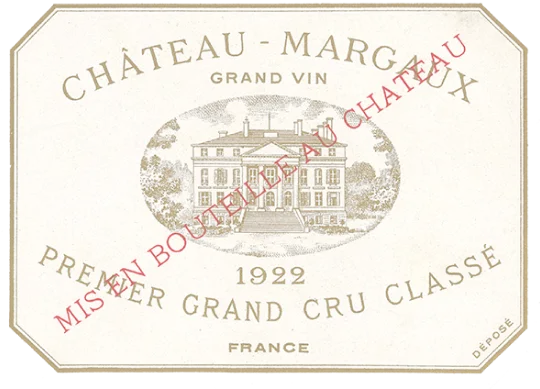
In its youth, this wine was light and diluted. It faded quickly and the most recent bottle opened in 2016 was elegantly perfumed, though sadly tired on the palate. (2016)
Climate
1922 was above all an exceptionally abundant year; the weather conditions were average and not very favourable.
Grand Vin du Château Margaux
1921
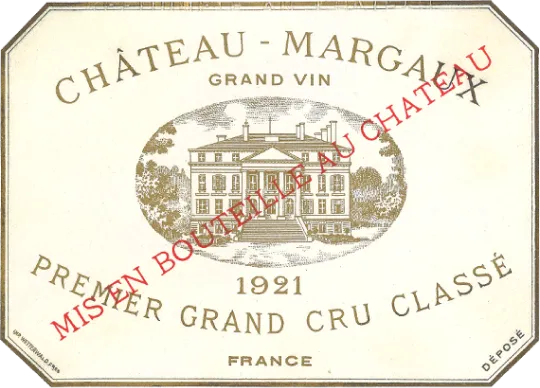
1921 was an especially great vintage for the wines of Sauternes. For red wines in general, it was a fine vintage, elegant and well-structured since the harvest was of modest volume.
The last bottle tasted in 2011 was a marvel! The nose was simply enchanting with remarkable complexity and freshness. The palate, perfectly balanced, offered finesse, softness and elegance. A perfect illustration of the inimitable charm of Château Margaux... (2011)
Climate
Exceptionally high temperatures were recorded during the harvest this year and caused great problems during the vinification in many estates. (The picking began 15th September)
Grand Vin du Château Margaux
1920
On the whole, the vintage was a success. The wines were fine and harmonious, though not very powerful. They evolved quickly and are now past their prime. (February 2024)
Climate
The summer was rather favourable, the month of September excellent. (The picking began 22nd September)
Grand Vin du Château Margaux
1919
The 1919 harvest was plentiful and produced quite light wines, which probably evolved quickly, most of them now past their prime. Yet, a bottle tasted in 2014 reassured us: it showed beautiful freshness and complexity even if lacked a bit of concentration. (2014)
Climate
We have very little information about the weather conditions for this vintage.
Grand Vin du Château Margaux
1918
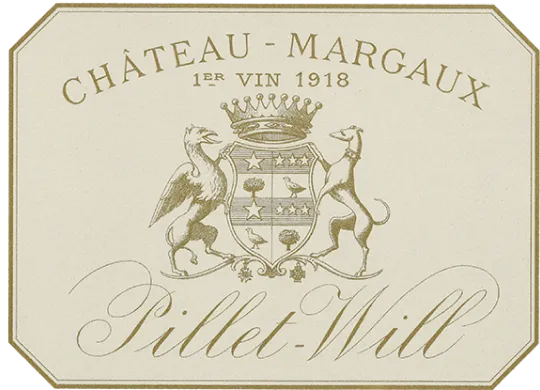
This good quality harvest produced a powerful wine—tannic and austere in its youth.
Tasted in 2011, and again more recently in 2023, the nose remained closed, but the palate impressed with its density and freshness. It still seemed so young… How moving to think this wine was produced during the war! (2023)
Climate
Very fine weather generally throughout the whole year, including the harvest. However, it would appear that the ripeness did not reach optimal levels. Perhaps everybody was in as much of a hurry to harvest as they were to see the end of the bloody war that had been raging in Europe for four years. (The picking began 20th September)
Grand Vin du Château Margaux
1917
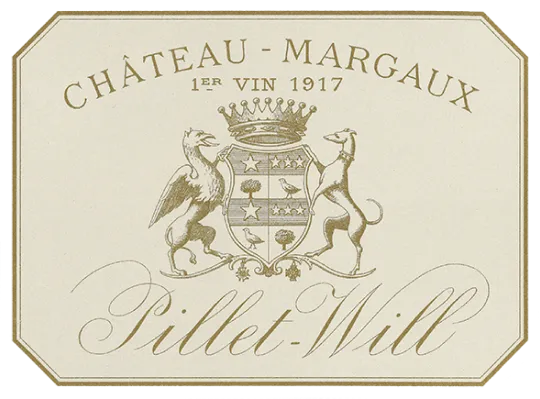
The quality of this wine, from a rather small harvest, had long been considered merely average. However, the most recent bottle opened in 2011 was a pleasant surprise. The wine displayed a lovely color, with a nose that was both complex and seductive. It preceded a very fleshy, powerful palate—perhaps only marred by a slightly tannic finish. (2011)
Climate
The weather during the summer was unstable, but the harvest was carried out in fine weather. (The picking began 22nd September)
Grand Vin du Château Margaux
1916
There is now very little trace of this vintage, which appears to have produced solid, full-bodied wines that lacked a bit of charm.
Climate
Quite a good vintage, which benefited from fine weather during the harvest. (The picking began 23rd September)
Grand Vin du Château Margaux
1915
A mediocre wine from a vintage that was quickly forgotten. The last bottle tasted in 2015 had sadly passed its prime. (2015)
Climate
A very poor year. Was it due to the weather conditions, or the consequences of the war, which people were starting to realize was going to last longer than they had expected ? (The picking began 22nd September)
Grand Vin du Château Margaux
1914
It is hard to imagine today the level of disorganization that must have prevailed at the time during the harvest due to the outbreak of war: no more men, no more horses etc. To make matters even more difficult, the crop was huge. The wines were generally quite good, but they developed quickly and have, of course, completely declined by now.
Climate
In August, everybody expected the men to be back for the harvest... They only came back four years later, at least those who were lucky enough to escape with their lives during the terrible war that broke out in August ! (The picking began 15th September)
Grand Vin du Château Margaux
1913
The harvest was plentiful and the wines rather light. They faded quite quickly.
Climate
An average year, on the whole. The weather was fine during the harvest, which started on 25th September.
Grand Vin du Château Margaux
1912
This wine left little impression in people's memories. The wines were light and easy-drinking, but they did not age very well.
Climate
A large crop which did not ripen well, as in 1913. (The picking began 23rd September)
Grand Vin du Château Margaux
1911
1911 was a small crop that, from the start, enjoyed an excellent reputation, as it came right after the catastrophic 1910 vintage. The wines were very pleasant to drink for many decades but they are now tired.
Climate
After an early flowering, the summer was hot and so very advantageous to the ripening of the grapes. It was also very fine weather during the harvest. (The picking began 18th September)
Grand Vin du Château Margaux
1910
As one might expect given the weather conditions, the wines were mediocre and the last bottle tasted in 2011 reflected the vintage: rather light and acidic, yet not without a certain charm. (2011)
Climate
Let us quote the notes made by the cellar master of the time : "Extraordinarily wet year, outbreak of downy mildew, the likes of which we have never seen before, great damage caused by the eudemis moths in September." The picking began 6th October and ended 19th October.
Grand Vin du Château Margaux
1909
Like the 1905, we did not expect this wine—elegant yet light in its youth—to stand the test of time. We were once again mistaken. Tasted in 2011, the wine has retained all its elegance and balance, with a complex and charming nose followed by a soft and charming finish. (2011)
Climate
There are few details to be found about 1909, except that it was generally fine weather during the harvest. (The picking began 29th September)
Grand Vin du Château Margaux
1908
We recall this wine as being of rather good quality, but the last bottle tasted in 2011 lacked some charm. The tannins and acidity dominated the wine a bit too much. (2011)
Climate
The cellar master wrote, "the frosts on 21st and 26th April together with the eudemis moths are the reason for the small crop size." It was very hot during the harvest. (The picking began 23rd September)
Grand Vin du Château Margaux
1907
It is interesting to note the cellar master's commentary: despite continuous rainfall, the harvest remained healthy which should not surprise us, as we recently experienced a similar situation.
When tasted in 2011, the wine showed very pale colour, almost that of a rosé. With beautiful complexity on the nose, it reminded us of a nice Pinot Noir. However, while the palate was pleasant, it was less impressive than the nose and was marked by a certain acidity. (2011)
Climate
In spite of continual rain from 27th September, the grapes remained perfectly healthy. There were quite serious invasions of eudemis moths during the summer. (The picking began 26th September)
Grand Vin du Château Margaux
1906
A very powerful and exceptionally concentrated wine, considered at the time to be a great vintage. We have not often had the opportunity to taste this wine, which should still be of great quality.
It was also the year when the second wine of Château Margaux was named "Le Pavillon Château Margaux". (March 2025)
Climate
A small crop size because of a new invasion of eudemis moths during the first two weeks of July. It was very hot and very dry in the summer as well as during the harvest, which began on 12th September.
Grand Vin du Château Margaux
1905
The wine, while very light and elegant in its youth, did not seem to be one for ageing. How wrong we were! When we tasted it in 2011, its youth and complexity were remarkable. The wine is powerful, balanced with incredible length. What a Château Margaux! A true wonder. (2011)
Climate
The comments of the time were, "rain right throughout the harvest, except the first two and last two days. Perfectly healthy grapes, if wet." (The picking began 21st September)
Grand Vin du Château Margaux
1904
Quite a large crop. The wines were rather good and immediately enjoyed an excellent reputation after three previous poor vintages (1901, 1902 and 1903). Perhaps the reputation of this vintage was slightly exaggerated... (March 2025)
Climate
Very fine, dry weather with only one day of rain during the harvest. Perfectly healthy grapes. (The picking began 13th September)
Grand Vin du Château Margaux
1903
A very small crop and a vintage that left little impression on people's memories. Overall, the wines were of poor quality, yet Château Margaux appears to have enjoyed a great success with enthusiasts. (March 2025)
Climate
This vintage seemed to be slightly jinxed : first, there was a succession of spring frosts on the 11th, 15th and 18th April ; then a hailstorm on 17th July... The summer was generally mediocre, but in the end the weather was fine and hot during the harvest. (The picking began 1st October)
Grand Vin du Château Margaux
1902
Produced from a generous harvest, 1902 was nonetheless a challenging vintage; the wines, while not green, lacked maturity and vinosity. (March 2025)
Climate
A large crop, which was not able to ripen well because of a mediocre summer. Although the weather was sunny during the harvest, it was also very cold. (The picking began 29th September)
Grand Vin du Château Margaux
1901
A wine that has become mediocre and light. Although it showed considerable elegance in its youth, it has now passed its peak. (September 2024)
Climate
A generally rainy year resulting in an abundant crop. According to the notes taken at that time, "rainy and warm weather throughout the harvest". (The picking began 26th September)
Grand Vin du Château Margaux
1900
The legendary 1900! The century began with an extraordinary harvest both in terms of quantity and quality.
1900 was, first and foremost, a record-breaking vintage in terms of volume—matched only in 1982!
1900 was, above all, a year of legendary quality! Despite very high yields, the wine possessed a power and concentration rarely equaled. This vintage aroused immediate excitement and eclipsed the fantastic 1899. How thrilling it was to rediscover, a hundred years later, a comparable quality with the 2000 vintage…
Today, Château Margaux 1900 still retains an extraordinary freshness. It is one of the greatest wines we have ever tasted. The bouquet offers incomparable finesse, with stunning notes of fresh fruit. On the palate, it delivers a fabulous impression of richness and smoothness, with a finish that is long, delicious, and refreshing. Simply wonderful... (September 2024)
Climate
A wonderful year, which benefited from a very hot summer as well as very fine weather during the harvest. (Picking began 24th September)
Grand Vin du Château Margaux
1899
1899 and 1900, formed a fabulous pair of vintages, matched later only by 1928-1929 and 1989-1990. The wine of 1899 was of remarkable quality but was a little overshadowed by 1900, which was immediately more powerful and carried a more symbolic vintage year…
Château Margaux 1899 is a wine of great harmony, exceptional finesse and amazing freshness. While less powerful than the 1900, its bouquet is at least as complex and elegant. On the palate, it shows extraordinary smoothness and delicacy. It remains a remarkable wine to enjoy today. (September 2024)
Climate
The summer was very dry. The cellar master noted at the time, "Hard summer. Excellent crop despite the drought. Good morning dews." (The picking began 21st September)
Grand Vin du Château Margaux
1898
A wine that has become mediocre and light. Although it showed considerable elegance in its youth, it has now passed its peak. (September 2024)
Climate
Year generally rainy and abundant harvest. It was noted at the time: "rainy and warm weather all the time during the harvest." (Harvest on September 26)
Grand Vin du Château Margaux
1893
This vintage likely benefited from the most extraordinary weather in three centuries. Never before had the harvest begun so early in the year (August 17th), and it hasn't happened since!
1893 was also the largest crop ever recorded at Château Margaux—402 casks! Even in the 1980s, we never harvested such a huge volume. As the cellar master mentioned, the picking had to be interrupted for six days because there were not enough vats...
Château Margaux 1893 is a remarkable wine, considered the finest of the century (the 19th, of course). Even today, this wine displays astonishing power and freshness. How did they manage that? Producing such a huge quantity while achieving such exceptional quality remains a mystery—we do not have enough information to explain it. (September 2024)
Climate
Let's quote the cellar master's notes, "Hot weather lasting from 1st March until the harvest. An excessively hot summer. Without rain. Vines flowered 20th April. Grapes changed colour 21st June. An extremely early and very abundant crop." (Picking began 17th August, finishing 12th September)
Grand Vin du Château Margaux
1870
This quite large crop (though much smaller than 1893) was of truly exceptional quality. Even today, it remains one of the greatest bottles of Margaux we have ever had the priviledge to taste. This wine displays astonishing freshness, remarkable length and smoothness. You would never guess that this wine is over 150 years old! (September 2024)
Climate
This very early vintage benefited from excellent weather conditions throughout the whole of the ripening process. The cellar master noted, "Picking began on 10th September and finished on 23rd of the same month. Rain on the first day ; the rest of the time : heat."
Grand Vin du Château Margaux
1868
Described as very powerful, tannic and lacking a bit of finesse in its youth, this wine—like the 1855—left us speechless when we tasted it in 2016. With remarkable aromatic complexity, it surprised us with its youthfulness, softness, and charm. Extraordinary! (February 2016)
Climate
A very early vintage. The cellar master noted, "Picking began on 7th September and finished on 18th of the same month. Excessive heat for nine days."
Grand Vin du Château Margaux
1865
Excellent quality. A very powerful wine, which took a long time to come around. (February 2025)
Climate
The harvest was very early, starting on 5th September, and was carried out in boiling sunshine. The crop was rather large.
Grand Vin du Château Margaux
1864
1864 was the first significantly large crop after the devastation caused by powdery mildew which appeared in 1852 and was brought under control beginning in 1860 thanks to sulphur sprays.
This vintage enjoyed an excellent reputation. The wines were both powerful and mellow, much more attractive than the great majority of wines of that era. (February 2025)
Climate
The picking began on 17th September and finished on 1st October. During this time it rained seven days.
Grand Vin du Château Margaux
1855
A complicated vintage and a small harvest producing only 40,000 bottles, this wine was enormously impressive when we tasted it in 2014. The tannins had given way to an extraordinary softness as if the wine had transformed into a caress with a wonderful array of aromas. (February 2014)
Grand Vin du Château Margaux
1848
This rather large crop was of remarkable quality—so much so that when Friedrich Engels was asked what his idea of happiness was, he replied, "Château Margaux 1848." This wine today still has an unforgettable freshness. Simply wonderful! (February 2025)
Climate
The picking began on 21st September and finished on 1st October. Magnificent hot, dry weather.
Grand Vin du Château Margaux
1847
Together with 1848, this vintage made up a pair of both abundant and high-quality years. 1847 was softer and less powerful than 1848; it did not last as long.
Climate
The picking began on the 25th of September and finished on the 7th of October. Magnificent dry, hot weather.
Grand Vin du Château Margaux
1791
"Considered the best that France has produced in many years, it is difficult at this moment to find anything comparable."
(Extract from Christie's wine catalogue of 23rd May 1797).
Grand Vin du Château Margaux
1771
The first Bordeaux vintage to appear in a Christie's catalogue, in 1776. "An excellent claret with a fine flavour, from the 1771 vintage."
Through the vintages
Rediscover Grand Vin du Château Margaux through its vintages
Select your year
Grand Vin du Château Margaux
2025
Years ending in '5' have been consistently successful in Bordeaux, and 2025 follows in the footsteps of the great vintages of 1985, 1995, 2005 and 2015. The quality is outstanding, but yields, at 22 hl/ha, were among the lowest in the last hundred years, mainly due to the dry summer. The volumes produced were just over half those of a normal year.
At the start of the harvests, the excellent weather conditions suggested that the proportion of grapes selected for the Grand Vin would be higher. However, this was not to be: the batches from our best plots were so magical that the wines from other plots, while superb, did not make the cut! This resulted in only 37% of the harvest being allocated to Château Margaux.
The 2025 vintage bears some similarities to 2022, with similar summer conditions, but the rain in late August and early September helped to develop the wine’s style, bringing more freshness and balance. Our decision not to rush the harvest meant that we were able to pick perfectly ripe grapes and extract dense, silky tannins.
Château Margaux 2025 reveals a very powerful, complex nose. Creamy, velvety and dense, it unfolds with superb length. The deeply expressive tannic structure and texture give the wine its unique character. Destined for long ageing, it will also be highly enjoyable in its youth.
Blend: 89% cabernet sauvignon, 6% merlot, 4% cabernet franc and 1% petit verdot.
Climate
Le millésime 2025 est marqué par une saison contrastée, avec un printemps doux et équilibré, sans excès ni déficit, suivi d’un début d’été et d’une période estivale plutôt secs, rappelant le profil de 2022. Le débourrement intervient avec une semaine d’avance, précocité que l’on retrouve également dans la floraison. Celle-ci se déroule de manière rapide et homogène, dans des conditions climatiques particulièrement favorables, sans coulure ni millerandage.
La pluviométrie reste faible au début de l’été, installant progressivement un déficit hydrique. Le mois d’août est dominé par un épisode caniculaire, entraînant une accélération des maturités, notamment sur le sauvignon blanc.
En fin d’été, près de 60 mm de précipitations tombent entre fin août et début septembre. Ces pluies, attendues, apportent un rééquilibrage hydrique et une baisse des températures, permettant une maturation plus régulière et homogène en fin de saison. Malgré quelques épisodes pluvieux ponctuels en septembre, les conditions sanitaires demeurent très bonnes.
Dans ce contexte climatique, le choix a été fait de ne pas avancer les dates de vendanges afin d’atteindre une maturité optimale, en particulier phénolique. Cette décision, assumée mais engageante, a permis d’atteindre un niveau de qualité particulièrement élevé, avec des raisins récoltés à parfaite maturité, exprimant pleinement le potentiel du fruit et du millésime.
Grand Vin du Château Margaux
2024
The production of Château Margaux 2024 required constant attention. This particularly technical vintage demanded heightened precision all the way through to the harvest, in which every decision played a vital role in preserving the balance and aromatic purity that characterise the Grand Vin. Harvesting conditions were not ideal, with several rainy spells punctuating the picking. Despite the risk of botrytis, we maintained our commitment to wait for each plot to reach optimal ripeness, so as to preserve and fully express the identity of the terroir. The harvests took place in two stages: from September 23rd to 29th with our small team, then from September 30th to October 8th with our large team of pickers. Château Margaux 2024 represents 46% of the harvest, a slightly higher percentage than in previous years. This was due to the best cabernet sauvignon plots which, being less susceptible to downy mildew, produced the vineyard’s highest yields. The blend, true to Château Margaux’s identity, is dominated by 93% cabernet sauvignon, giving it structure and depth. The remainder is made up of 5% merlot, 1% cabernet franc and 1% petit verdot, enriching its aromatic complexity and refining its balance.
This vintage stands out for its wonderful finesse, lively freshness and elegant tannins. Its delicate, refined aromatic expression perfectly reflects the precision and purity we seek in our wines. Château Margaux 2024 illustrates once again the extraordinary capacity of our terroir to express, even in the most challenging years, exceptional grandeur and timeless elegance. (April 2025)
Climate
Weather factors impacting the 2024 vintage began in 2023 with exceptional amounts of rain. From autumn onwards, there was an unusually intense accumulation of rainfall for several months. Between the 18th of October and the 28th of March, more than 1,000 mm of rain fell in the vineyard, surpassing the previous record for rainiest vintage by 300 mm. With mild winter temperatures, 3°C higher than historical averages in March, the abundance of water and warmth provided ideal conditions for the vines to start their growth cycle well ahead of schedule. Bud break occurred between the 22nd and 25th of March, 7 to 10 days earlier than in recent years. However, the wet weather continued, setting the pace for the entire growing season. While some past great vintages, such as 2000, had similar rainfall, what set 2024 apart was the frequency of rainy days. Access to the plots became a constant challenge, and the omnipresent threat of downy mildew meant that teams had to remain vigilant at all times. In this challenging context, flowering was slightly delayed, spanning from the 31st of May to the 7th of June.
Véraison, when the grapes change colour, took place between the 9th and 23rd of August, and was reminiscent of vintages such as 2014 and 2016, confirming a growth cycle significantly influenced by wet weather. Faced with these conditions, the vines reacted in contrasting fashions. Plots with very cool, deep soil suffered from downy mildew, particularly affecting the volumes destined for our third wine, Margaux du Château Margaux. Conversely, our gravelly terroirs, with better drainage and earlier ripening, were able to preserve their potential and produce some of the finest grapes of the vintage.
While the weather conditions put the vines to the test, they did not compromise the exacting stan - dards and precision with which our teams work on every Château Margaux vintage. With an average yield of 30 hl/ha, the sorting carried out by our pickers in the vineyards was more rigorous than ever, highlighting the most resilient terroirs and offering an optimal balance between concentra - tion and finesse.
Grand Vin du Château Margaux
2023
Harvesting required more delicate work than usual and therefore took longer, but this extra care was necessary to achieve the aromatic purity that characterises Château Margaux’s wines. The red grape harvest began on September 11th with the first plots of merlot. The great cabernet sauvignon plots were picked on September 22nd. Harvesting was completed on October 5th.
Château Margaux 2023 is a fine, precise, complex wine. It represents 41% of the total volume of the harvest. Although it cannot match the exceptional density of its predecessor, it has the same aromatic style and the same silky tannins.
In some respects, it has exceeded our expectations after the rain in September. This vintage shows us once again how great terroirs are capable of adapting and expressing their exceptional quality in the wines.
The Château Margaux blend is still mainly composed of cabernet sauvignon (89%). 5% merlot, 4% cabernet franc and 2% petit verdot make up the rest of the blend. (April 2024)
Climate
The winter of 2022-2023 was relatively mild, although there were about ten days of real winter temperatures in the first half of February.
There was also not much rain during the first few months of 2023: 196 mm in Margaux, allowing only a very light replenishment of groundwater reserves after an extremely hot, dry 2022 vintage. In these conditions, bud break occurred between the 3rd and the 10th of April.
Fortunately, spring did not bring any of the feared frosts. Rain was sparse but frequent during the growing season. There were just two weeks of sustained rain in June (72 mm). However, these conditions made it potentially difficult to keep the vines healthy. The high relative humidity in the air created very favourable conditions for downy mildew. Our vineyard teams succeeded in main¬taining healthy foliage to ensure good-quality ripening of the grapes and a successful harvest.
The vines flowered between the 31st of May and the 5th of June in good conditions, with no signs of coulure or millerandage.
2023 was markedly different from the previous vintage in terms of temperature. In 2022, there were very early heatwaves. In 2023, we had just one real heatwave, between the 17th and the 24th of August, the period when the grape skins mature, becoming thinner and more sensitive to the com-bined action of high temperatures and sunshine. The berries that were most exposed to the sun suffered scalding, forcing us to do a lot of sorting during the harvest.
Grand Vin du Château Margaux
2022
Château Margaux 2022 is undoubtedly as extraordinary as the weather conditions themselves. Extraordinary, first and foremost, for its concentration: due to the very dry summer, the cabernet sauvignon berries were almost 35% smaller than in a normal year. Particular care had to be taken during vinification and the running off, during which only the silkiest tannins were extracted. Another less fortunate consequence of the small berries was the lowest yield since 2013.
The wine is also extraordinary for the freshness of its flavours: we had expected wines with ripe notes. We might have expected them to be lacking in acidity. But this was not the case. The nose reveals a delicate blend of fruity and floral notes. The wine’s length remains supported by a remarkable acidity, nicely balancing the higher-than-usual alcohol levels.
The blend is more classic, predominantly composed of cabernet sauvignon (92%). This enabled the wine not to be too high in alcohol, at 14.5%, despite the weather conditions. 6% merlot and 2% cabernet franc complete the blend. Château Margaux represents 40% of the harvest. (April 2023)
Climate
The description of the weather conditions has begun the same way almost every year for the last ten years: 2022 was once again the hottest year on record... and to this, we must add another climate phenomenon: a severe drought. However, these two factors impacted the harvest in such a way as to produce an extraordinary vintage.
Apart from some frosts in mid-January, the winter of 20x22 was mild and relatively dry, with just 150 mm of rain. Nationally, the spring of 2022 was the third warmest (13.2°C) since 1900, close behind 2011 and 2020. It was the same in Margaux, with record temperatures during June, sometimes exceeding 40°C. Fortunately, in typical Bordeaux fashion, there was regular rain throughout the spring, with 182 mm in Margaux. Summer brought further extremes: three long, intense heat waves; the thermometer again recorded temperatures over 40°C several times, and over 35°C for more than 14 days in July and August. Slightly more than six long weeks passed without a single drop of rain. The 20 mm that arrived at the end of August was welcome, but its effect was more to cool the air than to significantly rehydrate the surface soil.
In these conditions, budburst was relatively spread out, between March 28th and April 13th, depending on the grape variety and the nature of our diverse terroirs. Conditions were sufficiently good that no coulure or millerandage was observed in our plots during flowering, which took place in the week of May 24th, indicating an early vintage.
The summer weather then reinforced the early nature of the vintage. The white grape harvest took place extremely early, on August 18th.
For the red grapes, it lasted from September 8th to 27th, with normal temperatures in September and optimal harvesting conditions. The first autumn rains began on the last day of the harvest.
Grand Vin du Château Margaux
2021
The 2018, 2019 and 2020 vintages were so exceptional that it would be difficult for the 2021 vintage to claim any comparison with them. During the wine-making process, we did not want to artificially extract tannins for fear it would increase the astringency. We opted instead for a gentle extraction process, and were quite pleasantly surprised at the concentration we achieved despite such a difficult growing season.
The initial tastings from the first batches of our vineyard selections, just after the fermentation process, amazed us with their density. The polyphenol content was close, if not equal, to those achieved in vintages considered "warm" years.
Merlot makes up 8% of the blend while cabernet sauvignon remains the heart of the Grand Vin, accounting for 87%. cabernet franc (3%) is delicious and its elegant structure integrates seamlessly into the blend. Petit verdot (2%) completes the composition. Château Margaux 2021 represents 36% of the harvest. (February 2025)
Climate
The winter of 2021 was relatively mild, although quite wet, with more than 230 mm of rain falling in the first two months of the year. With the month of March being drier and warmer, our vines flowered between the 23rd and the 30th of the month. Spring was marked by frequent and severe episodes of frost, testing the frost protection sprinkling systems on our white grape vineyards like never before. Temperatures fell so drastically that we lost close to a hectare's worth of our white harvest. On the other hand, our red grape vineyards were less affected by the cold, with only a few vines hit by some morning frost.
May and June recorded quite a bit of rainfall, and we had to be watchful to prevent the spread of fungal diseases. The determination of our team eventually paid off and we were able to maintain the grapes and leaves in good health. Budbreak occurred between the 1st and the 6th of March in average conditions, however the fruit-set was excellent, with only a few of the older plots falling prey to coulure or shatter.
After a rainy month of July, August and the first half of September were extremely dry. Just after we had finished picking the white grapes, we had about 45 mm of rain, raising concerns of a poor red harvest.
As in the 2017 vintage, we were faced with the following choice: pick grapes that were not fully ripe before they could potentially be attacked by Botrytis, or wait till the end of September to harvest the grapes when they would be riper and more concentrated from the additional sunshine. And as in that year, the decision was made to prioritise the quality of the grapes. The early Merlot plots were harvested on the 24th of September while the later Cabernet harvests only began by the 4th of October. The harvest was completed by the 13th of October. The season definitely presented its fair share of challenges, but the quality of our work and attention ensured we had an elegant and dense vintage.
Grand Vin du Château Margaux
2020
Château Margaux 2020 follows in the footsteps of 2018 and 2019. It is very rare for three consecutive years in Bordeaux to be so homogeneous and of such high quality. It now seems almost presumptuous to regard so many vintages produced over the past six years as exceptional. The future will bring us more discernment.
The final blend is very similar to those of the latest vintages: it consists of 89% cabernet sauvignon, 8% merlot, 2% petit verdot, and 1% cabernet franc. The Grand Vin represents 36% of the harvest. There is a perfect balance between density and fine tannins.
Several factors contributed to making this a superb wine: homogeneous flowering, summer conditions that favoured small berries and therefore concentrated wines, and excellent harvesting conditions. The only disappointment was the yield. The vine fertility was lower than in previous years, with 1.6 bunches per shoot, compared to 2 in 2019. The average yield on the estate was therefore 36 hl/ha. Château Margaux 2020 is a wine built to last for eternity—one that deserves to be awaited with patience. (February 2025)
Climate
As in the preceding vintages, 2020 saw average temperatures that were among the highest ever recorded due to a series of heatwaves and an exceptionally dry summer.
After abundant rainfall at the end of 2019, there was very little rain in the first quarter of 2020, 80 mm (3.15 inches) less than the thirty-year average. Winter 2020 stood out for its mild temperatures. Average temperatures were 3°C (37°F) above the thirty-year average and temperatures in February sometimes exceeded 20°C (68°F). Only four light frosts occurred in what was otherwise a mild winter. As a result, bud break was extremely early, from the 22nd to the 26th of March depending on the grape variety, approximately ten days earlier than average. The 2020 vintage promised to be an early one.
The spring was also very mild. Temperatures in April were among the hottest since 1962. Flowering occurred between the 21st and the 26th of May, in excellent conditions. There were no signs of coulure or millerandage. The spring was particularly wet, which meant a greater risk of disease that we nonetheless managed to control (very few signs on the leaves and none on the bunches).
The summer brought long and intense heatwaves between the 23rd of June and the 12th of August, as well as significant drought, with no rain at all between the 19th of June and the 10th of August. Ripening occurred between the 23rd and the 26th of July. It was only during the second ten-day period of August that rainfall helped limit potentially excessive hydric stress. Nearly 80 mm (3.15 inches) of rain fell on August 13th. In spite of the thunderstorms that followed, the rainfall did not significantly penetrate the soil. However, the storms did cause the temperature to decrease and limit sun exposure thus contributing to maintaining good acid potential in the berries.
Conditions in September were also ideal for the grapes, with glorious sunshine by day, cool nights and only 14 mm (0.55 inches) of rain. We began to harvest our early Merlots on September 10th. There were just a few days in mid-September when it became too hot to harvest during the afternoon. The harvest began on a larger scale on September 21st when all our grape-pickers arrived and immediately began picking our Cabernets. The harvest ended on September 30th.
Grand Vin du Château Margaux
2019
Château Margaux 2019 is one of the greatest vintages in our history and joins the list of exceptional wines we’ve been fortunate to produce this decade: 2015, 2016, 2018, and now 2019...
Cabernet sauvignon still forms the heart of Château Margaux, accounting for 90% of the blend. Merlot accounts for 7%. In addition to our emblematic plots, this year we have added the merlot from the plot known as "Haut-du-Jardin" which bring body and charm to the wine as a whole. Cabernet franc (2%) and petit verdot (1%) complete the blend. Château Margaux represents 37% of the harvest. Ideally, it should be kept for many more years, but it's already hard to resist!
Château Margaux 2019 will be the first to fully benefit from the new facilities in the second-year cellar, the construction of which was initiated by André Mentzelopoulos at the end of the 1970s. Following numerous interventions over the years, a major refurbishment was required, and we are delighted to complete it just as his grandson, Alexis Leven-Mentzelopoulos, joined the Château Margaux team. He and his sister Alexandra Petit-Mentzelopoulos now represent the future of the estate. (February 2025)
Climate
Globally, 2019 was the warmest year on record. In France, the average temperature was 13.7°C, 1.1°C to 1.2°C higher than usual.
In Margaux, the winter of 2019 was mild at 1 to 2 degrees above the 30-year averages, with limited rain (30 mm less than the 30-year averages) and only three days of frost. Under these conditions, the date of bud-break ranged from March 29th to April 4th.
Spring was mild and temperatures were near-normal for the season, with abundant rainfall at the end of April and again between June 5th and June 18th. Flowering occurred between the 1st and the 9th of June and went relatively well. Only some older parcels of Merlot showed some signs of coulure. The rain, which risked causing occasional outbreaks of mildew, had no sanitary impact and the vineyards remained in a very good state throughout the year.
The summer stood in sharp contrast to the rainy spring. Anticyclonic conditions prevailed and only 64 mm of rain fell between June 21st and September 21st. However, the summer of 2019 will be best remembered for two heatwaves at the end of June and then from July 22nd to 24th when the temperature reached 39.9°C in Margaux!
The red grape harvest began on September 18th in ideal conditions, and the Merlot grapes were perfectly ripe and concentrated when picked. A weather disturbance between September 22nd and the 29th did not affect the health of the grapes and allowed them to ripen more slowly under conditions that were less aggressive for the vines, better preserving the acidity levels, with ultimately not too high levels of alcohol. The grapes picked between the end of September and the beginning of October benefited from the concentration developed after veraison (August 5th to the 10th), without being significantly affected by low slight dilution from the rain.
The harvest ended on October the 10th.
Grand Vin du Château Margaux
2018
Château Margaux 2018 is one of the very best wines produced on the estate in recent years even taking into account the extraordinary quality of the 2015 and 2016 vintages!
Château Margaux 2018 is incredibly concentrated, given the small berry size and relatively low yields. These exceptional tannin levels, however, don't add any aggressiveness or exuberance, but rather give this wine remarkable length.
Fairly early in the wine-making process, we understood this tannic potential and thus moderated our extraction programs including for our merlot plots, which are usually less dense than our fine cabernet sauvignon wines. The latter still form the heart of Château Margaux, accounting for 90% of the blend. They also help limit the alcohol content to 14% under such weather conditions. This wine’s blend, which represents 36% of the harvest, is completed by 4% merlot, 4% cabernet franc and 2% petit verdot. The power and softness of this wine already make it very impressive, but it is best to wait patiently to fully enjoy all its qualities. (February 2025)
Climate
The warmest year since the beginning of the 20th century, temperatures in 2018 were 3.24°F above the national average. In Margaux, the year began with a relatively mild winter with below-normal temperatures and occasional frosts in February which had no impact on our vines. The rest of the year was hot, sometimes very hot, compared with seasonal averages, marked by record-breaking temperatures in the last ten days of June and the first ten days of August, more than 7.2°F above the 30-year average.
Rainfall in the first half of the year was heavy with nearly 25 inches in Margaux between January 1st and July 10th, making growing conditions challenging. Each rainy day made a good vintage less likely. But dry and warm summer conditions eventually reached our region and remained until the end of the harvest. Rainfall was very low between mid-July and late September at 2 inches. This rainfall pattern is reminiscent of 2009.
Under these conditions, budbreak was relatively late between the 4th and the 10th of April. The vines flowered between the 25th and the 28th of May and, despite fairly poor conditions, we did not note, even in the relatively sensitive Merlot plots, poor or failed fruit-set. The greatest challenge was mildew which this year led to slightly lower yields than hoped for after the fruit-set.
The white grapes were harvested the week of August 27th. The red harvest took place from September 17th to October13th in ideal conditions. Again this year, we were able to choose the best time to harvest our grapes – no Botrytis symptoms, mild weather, ripening conditions sufficiently spread between the earliest Merlots and latest Cabernets – and we had time to take the necessary care with each wine-making vat. Nearly a hundred different batches were converted into wine this year, demonstrating our continued efforts for better and more precise selections.
Grand Vin du Château Margaux
2017
The quality of Château Margaux 2017 comes close to its illustrious predecessors without claiming to rival the generosity of 2015 or the elegance of 2016. However, it is in line with the great vintages produced at the estate: it is deep, complex, intense and long. In some respects, it even exceeds our expectations after the September rains and demonstrates once again to what extent great terroirs are capable of adapting and transmitting all their best qualities into the wine.
The first tastings in the winemaking process offered a moment of astonishment. The merlot batches are remarkable: fruity and soft aromas, a roundness on the palate and rich volume allowed them to account for 8% of the Grand Vin. Cabernet sauvignon has always formed the heart and backbone of Château Margaux, accounting for 89% of the blend. Upon tasting, the tannins were perfectly ripe, which reassured us that our decision to wait a few more days before harvesting was the right choice. The wine’s structure remains a rare combination of power and refinement. Cabernet franc (2%) and petit verdot (1%) complete the blend. Château Margaux represents 37% of the harvest. It is best to wait patiently, even though it already offers great pleasure. (February 2025)
Climate
After a relatively dry 2016, the first months of 2017 brought the necessary precipitation to keep the water table balanced. Winter temperatures weren’t particularly cold. The vines budded around April 4th, but we weren’t wary enough of the spring-like temperatures and a frost on the nights of April 27th and 28th served as a reminder that, above all, winegrowers are dependent on nature. The choice location of our vineyard plots allowed us to limit frost damage: only 10% of our red vines were affected.
In the whole growth cycle, only the last week of June saw heavy rainfall. The vines had already flowered between May 25th and 30th in the most favorable conditions for efficient, homogeneous pollination. Summer 2017 more or less resembled summer 2016: warm and very dry through July and August. Light rainfall in early September was the only thing that disrupted a rare opportunity to produce a third great vintage after 2015 and 2016; we had just harvested our white grapes when heavy precipitation dashed our hopes of a truly standout year.
We then had to make a crucial decision: to harvest quickly grapes that were not yet ripe enough for fear that Botrytis would ruin them, or wait for the sun’s return and harvest riper, more concentrated grapes later in September. In keeping with our high standards of quality and reassured by optimistic weather forecasts, we chose the latter and harvested the reds between September 12th and October 3rd in exceptionally fine weather conditions.
Grand Vin du Château Margaux
2016
How difficult it is to follow a vintage as extraordinary as 2015! And yet, Château Margaux 2016 clearly ranks among the greatest vintages of this early century!
The nose is particularly delicate, complex and deep. On the palate, the wine reveals incredible volume, softness and, above all, length. It is, of course, our finest cabernet sauvignon plots that lend this wine its elegance, making up 94% of the blend. Merlot and cabernet franc, at 2% and 3% respectively, contribute significant complexity—both aromatically and through the softness of their tannic structure. Finally, petit verdot, despite its small quantity (only 1% of the blend), adds considerable density and volume.
Despite the dry and sunny summer conditions of this vintage, this wine has retained all its acidity—promising fabulous ageing potential. Château Margaux 2016 is an exceptional wine, the result of a combination of outstanding weather conditions, deep knowledge of our terroir and a rigorous selection process (28% of the harvest). It is, however, important to wait patiently, given its immense ageing potential. (February 2025)
Climate
The wet and relatively mild winter led to quite early sprouting in the last week of March. The 400 mm of rain during the first 3 months of the year helped to replenish the ground water after a rather dry 2015. The spring rains came very close together and thus gave the impression that they had been plentiful, whereas in fact, the total of all the rain only amounted to the average of the last 30 years. The vines nevertheless managed to find a few rare, beautiful sunny days to blossom between June 6th and 8th.
The contrast with the summer drought was just as striking. Only 8 mm of rain fell during July and August. Even though the very young plants showed a few marked signs of hydric stress, our old vines behaved perfectly, once again demonstrating this species’ incredible capacity to adapt to the climate. Although dry, the summer wasn’t exceptionally hot. Only the second half of August was marked by higher than normal temperatures. The combination of these factors caused the colour change to be quite spread out. September, with its dry days and cool nights, enabled the grapes to complete their ripening process in optimal conditions.
The harvest of the reds, which was the most staggered in the history of the Estate, took place from September 23rd to October 18th.
All through the summer, with every passing day, we felt a little more excited at the thought of a great new vintage taking shape…
Grand Vin du Château Margaux
2015
2015 was a historic year—literally—for Château Margaux. We celebrated both the bicentenary of the estate’s buildings dating from 1815, and the inauguration of the new facilities designed by architect Norman Foster. It is easy to imagine how much we dreamed of 2015 becoming a great vintage!
Part of the result is undoubtedly due to the decisions made during blending: only 35% of the harvest went into the Grand Vin—a record level of strictness for a vintage of this quality. As usual, cabernet sauvignon forms the backbone of the blend, accounting for 87%; in addition to its concentration and finesse, it displays unusual vigour and strength this year. The merlot has nothing to be ashamed of, at least in the best plots, and makes up 8% of the Grand Vin. Cabernet franc (3%) and petit verdot (2%) also earned their place in this highly selective blend, confirming that truly great vintages generally allow all grape varieties to express their full potential.
How does 2015 compare to its predecessors? It is a thankless—and somewhat futile—task, when it comes to the greatest vintages. There are, of course, similarities and resemblances, along with some unexpected differences… But one can evoke a combination of the strength of 2005, the flesh of 2009, the subtlety of 2010, and the inimitable charm of Château Margaux. Still, it is best to wait patiently, as its potential is immense.
Fittingly, the final vintage overseen by Paul Pontallier, Managing Director of Château Margaux from 1989 to 2015, expresses the estate’s most beautiful qualities.
For all these reasons, Château Margaux chose to create a special design for its 2015 Grand Vin.
A unique case was designed and adorned with a magnificent screen print, specially conceived for this vintage, and affixed directly to the glass in place of the usual labels. The vintage seems to have been built for eternity. (March 2025)
Climate
Winter, which was appreciably colder than those of the previous years, caused late, but perfectly regular blossoming. Dry and sunny weather in the spring made for optimal conditions, so flowering took place very quickly and homogenously. This hot, dry weather persisted throughout the months of June and July, to a point where we were afraid there could be water stress, at least in the most sensitive plots. Fortunately a little rain in August arrived just in time to ensure a quick and regular colour-change. The drought, which arrived again in September, together with very warm days and cool nights, enabled the grapes to balance their richness in sugar with good acidity, to render their tannins more silky and to make their aromatic potential more complex.
The harvest of the reds took place from September 18th to October 6th. The small size of the grapes and their thicker skins indicated a very high concentration of tannins. The 2015 weather conditions are, in fact, the feature of very great vintages, like 2005, 2009 and 2010.
Grand Vin du Château Margaux
2014
What a relief after the difficult moments we experienced in 2013! This succession of very different vintages makes Bordeaux a unique place, where one can rely on experience without ever being tempted to repeat it! In 2014, we went back to—almost—normal quantities, certainly higher than in 2013, but yet not at the level we hope to reach. As usual, when conditions are not those of a great vintage, the gap widens between the best terroirs and the others, which, despite a beautiful September, could not fully catch up on the time lost in August. Only our emblematic plot of merlot, called « l’Eglise », could be included in the Grand Vin, representing only 5% of the merlot in the blend. But it is superb and ranks among the best successes of the past ten years. All the great cabernet sauvignons are exactly where they belong—at the top! They account for 90% of the Grand Vin. 3% cabernet franc and 2% petit verdot complete this blend, which has become fairly classic in recent years.
Château Margaux 2014 represents 36% of the harvest—the core of true quality. It’s a powerful, fleshy wine, whose silky tannins almost make one forget its great concentration and fine acidity. It may not rank among the greatest vintages of this century, but can certainly claim a place just behind them. Ideally, it is best to wait a few more years before opening. (February 2025)
Climate
After a very wet and mild winter, without any significant cold spells, spring was « normal »: May was rather cool and June was quite warm, so flowering happened on the usual dates, and under very favourable conditions; it was therefore very quick and homogenous, contrary to the previous year.
July didn’t bring us any great surprises, but August was particularly cool, without doubt one of the coldest we have seen in recent times. These low temperatures made it difficult for the grapes to change colour, which took a long time. Fortunately it didn’t rain much, but in neither July nor August did we have a really dry spell. As it often happens in Bordeaux, at the end of August anything was still possible; a prospect of a good vintage as well as of a mediocre one… The really fine sunny weather of September brought us exactly what we were hoping for: the heat and drought enabled the grapes to ripen perfectly, and the harvest to take place under ideal conditions. The complete opposite to what happened in 2013… The white harvest took place from the 15th to the 19th of September, and the red harvest from the 29th of September to the 10th of October.
Grand Vin du Château Margaux
2013
It’s in the challenging vintages, in one way or another, that truly great terroirs reveal their incredible supremacy. 2013 is no exception to this rule, whose inner workings remain partly mysterious. Precocity is one of the reasons: our best cabernet plots had already reached a very good level of ripeness before the harvest was hastily carried out, and it came close, within four or five days, to reaching excellence. The other reasons remain, and will remain, unclear for a long time yet; the genius of great terroirs is difficult to fathom.
Whatever it is, all the large cabernet plots have, without exception, produced magnificent wines, so clearly above all the others that the Château Margaux blending was, in fact, easy to decide. It consists of 38% of the harvest, a very classic figure. However, the proportions of the grape varieties are unusual: 94% cabernet sauvignon, the largest proportion ever; 5% cabernet franc, 1% petit verdot and… no merlot at all. Even our best plot, which we had the luxury of harvesting with great care, turned out to be disappointing.
So we can expect a wine dominated by cabernet: it is indeed, but not the way in which we would have thought. When ripe enough, Margaux cabernets have a balance and softness that are otherwise characteristic of merlot; and of course this charm and finesse belong only to their terroir.
Château Margaux 2013 cannot claim to be a great vintage: we know very well that it was born under difficult conditions. But we are immensely privileged to have produced it at the beginning of the 21st century when all the care and attention, all the sacrifices, are possible; this wine justifies all of these efforts. We can start drinking it, even though, of course, there is no rush. (February 2025)
Climate
The particularly cool temperatures at the end of winter and into spring delayed the shooting and then the flowering by a good ten days compared to the average. And as it also rained a lot during this period, the flowering was slow and the formation of the grapes difficult which caused a generalised “millerandage” and a bad problem of “coulure” - falling of underdeveloped fruit - in the Merlots. This latter phenomenon turned out to be more moderate for the Cabernets. Straightaway, we knew that the 2013 vintage wouldn’t be plentiful…
Fortunately, the summer drought enabled the grapes to catch up some of their lateness: at the moment of changing colour, we didn’t find the same heterogeneity as at the moment of flowering. It is also possible that their low quantity accentuated the catching up. At the beginning of September hope was growing for a harvest, certainly small, but that seemed to be ripening under excellent conditions.
September was paradoxical, relatively dry, but damp at the same time. Frequent small bursts of rain, in fact, maintained a raised ambient humidity without causing too much precipitation. So there was everything to play for until the end of the month when a sudden development of Botrytis led us to a quick start of the harvest ; in the end, the grapes would lose just a few days’ ripening, enough to dash the hopes of a great vintage, not enough to take away all its promises.
The harvest of the whites took place from the 19th to the 27th of September, and that of the reds, from the 30th of September to the 11th of October.
Grand Vin du Château Margaux
2012
The rigorous selection—a little less than 34% of the harvest in the Grand Vin—can largely be explained by the heterogeneity of the 2012 vintage, mainly due to water stress affecting young vines and sensitive terroirs. What a disappointment not to have been able to include that fabulous 13-year-old cabernet plot, which had performed so well in 2010 and 2011! But what a joy to see our greatest plots of mature vines reach such heights of concentration and elegance! The cabernet sauvignon (87% of the blend) is remarkable: powerful, dense, fleshy and refined. The two usual batches of merlot (10%) as well as the small batch of cabernet franc (2%) that usually join them didn’t disappoint, but weren’t better than in 2011. As for our only old plot of petit verdot, it produced a superb wine, quite different from the younger ones.
Our best press wines, which are the result of a stringent selection, bring remarkable density and flesh to this year’s blend, without sacrificing the slightest finesse. We sometimes forget that they are the concentrated essence of both the strengths and weaknesses of the free-run wines, and that rigorous work is all it takes to reveal their fantastic potential.
Château Margaux 2012 is a perfect example of the softness, delicacy, charm, and balance that have been the hallmarks of our wines for centuries. In the end, all it needs is a little depth and density to be a great vintage. The softness of its tannins also makes it delicious even today, though reason would suggest waiting a little longer before drinking it... (February 2025)
Climate
2012 marked the return of a great climatic classicism: a cold winter, especially in February, followed by a very wet spring, then a very dry summer before a return to rainy weather as from September 20th.
The heavy rain which lasted until July 15th, created very favourable conditions for the development of mildew. However this year we intensified our organic programme with great success: not only have we not used any insecticide on the estate for 10 years, but in 2012 we only used one chemical treatment, as opposed to the usual 7 or 8 on the great wine plots. We’re almost there…
From July 15th onwards, the weather was dry and moderately warm but punctuated by a few very hot days. Such conditions are typical of great Bordeaux classic vintages: they allow for the simultaneous ripening and concentration of the grapes. Only the less good terroirs and young vines suffered from the sudden transition from a very wet spring to a very dry summer.
The weather changed again from the first day of autumn: the moderate rains, which fell regularly from September 20th onwards, arrived too late to greatly upset the ripening or health of the grapes, but probably prevented, by a few days, 2012 from being the great vintage it should have been.
The harvest of the whites took place between the 10th and the 14th September, while the harvest of the reds was carried out between the 25th September and the 16th October, just before the weather really deteriorated...
Grand Vin du Château Margaux
2011
Whatever the conditions of the vintage, the "core" of the quality—that is, all the plots which make up the basis of the Château Margaux blend—has been remarkably stable for more than three hundred and fifty years... These very great terroirs withstand rain, drought, disease, and sometimes even human inconsistency better than others. 2011 is no exception to this rule: 38% of the harvest went into the Grand Vin, the same proportion as the previous year. Naturally, the cabernet sauvignon still largely dominates with 86% of the blend. This year, it shows uncommon strength, vigour, fortunately balanced by remarkable softness. Then comes the merlot (10%), petit verdot (2%) and cabernet franc (2%). Château Margaux 2011 is the most concentrated wine we have ever produced. And yet, we barely notice its tannins... It can be enjoyed now, provided it is decanted in advance, but ideally it should be kept for a few more years. (February 2025)
Climate
The wine-growing year started with a virtually summery climate, the months of April and May being a lot hotter and drier than normal. The start-up and growth of the vines was, therefore, very quick and flowering was particularly early. Following that, the months of June, July and August were rather cool, but not wet enough, especially at Margaux, to really change the drought status of the vineyard, a characteristic of the vintage. The 26th and 27th of June were hotter than we had ever seen: numerous bunches of grapes, ready to ripen, taking into account the precocity of the vintage, were subjected to intense heat which caused some damage, particularly in the not very vigorous cabernet sauvignon parcels. The dryness of the vineyard after three months of drought probably amplified this phenomenon, of which the consequences remain generally limited. The harvest, which started on the 25th August for the whites, and the 5th September for the reds, benefited from generally hot and dry weather, which allowed plenty of time for the various sorting operations made necessary by the problems of intense heat. Our only disappointment is the quantity: with a yield of 29hl/ha, the 2011 vintage is the smallest harvest for 20 years!
Grand Vin du Château Margaux
2010
As unbelievable as it may sound, 2010 is at least as great a vintage of Château Margaux as 2009! As always, the cabernet sauvignon made the most of this very dry and cool year. With as much as 90% in the blend, the cabernet "makes" the wine, providing it with exceptional aromatic finesse, restrained power and subtle freshness. There is not much room left for the merlot (7%), cabernet franc (1.5%) and petit verdot (1.5%). The genius of these cabernet plots is astounding.
Château Margaux 2010 is a giant, but it is not monstrous. It is sheer magic—both classic and extraordinary. Classic in its purity, finesse, and soft, refreshing finish; extraordinary in its astonishing aromatic complexity and exceptional power. It's a “modern” wine in the sense that it represents the culmination of today's technology and selection efforts, but it's also timeless, as its stature and charm will transcend time and fleeting trends. However, it is best to wait patiently before drinking it... (February 2025)
Climate
Winter was quite cold and dry, causing some delay in the budding. Mixed weather conditions in the spring made the flowering process uneven and caused a little coulure in some of the older Merlot plots. Yet, as always, the great terroirs appear to have set their own agenda and ignored the vagaries of the weather, enjoying a fast and homogenous flowering process with perfect results. Then again, the Cabernet Sauvignon, which is so well suited to these lands, is not very prone to coulure.
From the end of June until the last grapes were harvested in October, we experienced, once again, the type of drought typical of great Bordeaux vintages. Indeed, while on the one hand, the vines were spared any excess of water, thereby preventing unwanted foliage, they benefited from just enough moisture to favour ripening as well as enhance concentration in the grapes.
While the 2010 weather conditions were reminiscent of 2009 and 2005, vintages are never completely alike. The summer of 2010 was as dry as 2009, yet cooler. The absence of extreme heat combined with cool nights compensated for the drought and probably allowed some of the great terroirs’ young plants to reach a new quality threshold. It also favoured the aromatic character in all grape varieties, particularly in Sauvignon Blanc and Cabernet and enabled the maintenance of excellent acidity levels – the perfect foil for high levels of alcohol. (The picking began on 22nd September)
Grand Vin du Château Margaux
2009
2009 may well be the greatest young Château Margaux we have tasted over the last 30 years.
Mother Nature could not have done it all by herself; barely 36% of the crop (just 31% at bottling) went into the Grand Vin—a drastic selection for such a vintage. Still, in 2009, Mother Nature surpassed herself, allowing grapes from the finest terroirs to reach an exceptional level of concentration, finesse, balance, and freshness.
The cabernets (87% of the blend) are only rivaled by those of 2005, though they are softer; the two merlot lots retained (9%) are simply unmatched. The cabernet franc (2%) and petit verdot (2%) are also at their very best.
Château Margaux 2009 is an extraordinary wine—defined both by its tannic power and breadth, reminiscent of 2005, and by its softness, which evokes 1990. And with an alcohol level barely above 13%, its finish remains fresh, flavorful, and memorably long.
When to drink it? That’s a tough question: it’s already charming and irresistible, yet its ageing potential is immense.
(February 2025)
Climate
After a cold, dry winter, the weather turned rainy and cool in April, causing a rather late bud-break and a somewhat slow growth of the vine shoots. As from May 1st however, temperatures rose quite sharply and settled above the seasonal norms, without ever reaching excessive highs. This allowed a quick and successful flowering that promised a very even ripening of the berries.
By then a drought had begun to set in, though in these early days we had no idea of how severe and long it would actually be. Very few vintages (apart from the 2005) have been so dry. It hardly rained from July 10th until the end of the harvest on October 14th!
Such dry weather is particularly beneficial to the great terroirs which can regulate the water supply to the vines, and also to Cabernet Sauvignon because it is less affected by drought than Merlot. Still, some of the vines planted in lighter and less clayey soils struggled to get their grapes perfectly ripe.
While these very dry months had some very hot days, the nights remained rather cool. This contrast helped the tannins and anthocyanins to concentrate in the skins of the red. All the pieces were gradually falling into place to make 2009 a really outstanding vintage. (The picking began September 24th).
Grand Vin du Château Margaux
2008
No vintage between 2004 and 2008—with the notable exception of 2005 of course—enjoyed a glorious August. And yet, the grapes managed to ripen well each time, at least in the finest terroirs, thanks to the excellent conditions in September. But also due to so many other factors whose influence we still do not fully understand!
In 2008, it’s likely that the July drought helped mitigate the effects of the August rains—light but regular. The fine weather from mid-September onwards would have further limited their impact. There’s no miracle here, only our ignorance…
As always, it is the rigor of selection that reveals the sometimes hidden spirit of the vintage. 2008 is no exception: the Grand Vin represents only 36% of the harvest (and this proportion will drop to just 31% at bottling, once the lees wines produced during barrel ageing are removed). Each grape variety finds its place harmoniously: our best merlots, accounting for 10% of the blend, bring power, roundness and flesh they lacked in both 2007 and 2006.
The cabernet cauvignons, at 87%, are, as usual, the heart of the wine: they give it life, and make us feel it deeply…
Let’s not forget the 1.5% cabernet franc and 1.5% petit verdot; their modest presence surely belies their true influence.
This 2008 vintage is a beautiful Château Margaux, with a nose of great finesse and purity, as deep and charming as the 2004.
What's surprising is its power on the palate. We didn’t expect it to be so dense, so long, so rich.
What magnificent tannins! They give Château Margaux 2008 a tight texture, great length, and ultimately a more classic character than we had imagined. Ideally, it should be kept for a few more years.
(February 2025)
Climate
After quite a dry winter, spring was cool and damp; in fact it was so chilly at the beginning of April that we used our anti-frost sprays on April 7th at Virefougasse, our Sauvignon Blanc plot. May was particularly wet, which heightened the risk of downy mildew at a time when the vines were most vulnerable, so that for the second year in a row, we had to carefully monitor the health of the vines. Nevertheless we continued our research on alternative solutions to chemical sprays; the conditions provided us with an ideal opportunity to do so. The flowering began at the very beginning of June, right on the normal date, although it was partly affected by heavy rains, which were no doubt responsible for the coulure and millerandage observed in some of the Merlot plots. Also, the vines showed fewer potential grapes than last year, so we knew that we were in for a smaller crop. The weather was cool throughout the summer, with temperatures around two degrees below average in July, August and September. July, however, was very dry with barely 10 mm (0.4 of an inch) of rain, whereas in August and up till September 15th, it rained regularly. This chilly and humid weather slowed the colour transformation of the grapes and their ripening process while it gradually affected our spirits…
Grand Vin du Château Margaux
2007
By talking too much about miracles, we can simply forget that nature is capricious—especially in Bordeaux… But it is precisely the succession of vintages, so different and so unpredictable, that gives Bordeaux a little of its charm, part of its interest and above all, lends our wines a genius like no other. Who would have thought, at the end of August, that they could reach such a level of quality? Ah, that famous Indian summer that we always dream of, which sometimes eludes us, but when it deigns to appear, lifts our hearts with wild enthusiasm! 2007 is one of those vintages marked by a succession of emotions — worry, sometimes anguish, hope, enthusiasm, doubt, and serenity. Yet our most consistent reaction in the end this year was... severity—particularly during blending, with only 32% of the crop selected for the first wine—the most rigorous selection ever made at that time. All our great plots are nonetheless present, some of them at their very best: the cabernets, of course, so noble, with such pedigree, both fine and dense. Representing 87% of the blend, they dominate, as usual, the personality of Château Margaux 2007. The merlot (11%) finds a better place this time, thanks to its full, tender and rich texture, along with the cabernet franc (2%) which clearly benefited from the conditions of the vintage. In the end, only a few late-ripening cabernets and our petit verdot did not make it into the blend, their ripening having proved too difficult. Already so charming, it's hard to resist—even if wisdom would suggest waiting a few more years. (February 2025)
Climate
The especially mild and dry winter brought about an early bud-break for the vines, at least two weeks ahead of an average year, such as 2006. Then, the spring was, as usual, a mixture: March was mild and wet, April very hot and very dry, May mild and very rainy and June just about normal, slightly more humid than average. The flowering was therefore staggered, but the incidence of coulure was minor. Many lesser and great vintages have begun in the same circumstances…
From the end of June on, a period of cool weather with relatively little sunshine set in with frequent rain showers which created the general impression of a « lousy summer ». These weather conditions brought about a high risk of downy mildew, which is fortunately much better controlled nowadays than in the past, as well as vine vegetation growth which kept on shooting right up to the end of August. At this stage we were getting a little concerned, though we are always know from experience that a complete turnaround in the situation in the month of September should not be ruled out…
The pleasant surprise of a fantastic hot and very dry month of September therefore should not have taken us aback –so many good and very good vintages, such as 2002 and 2004 very recently, went through the same scenario! This fine, sunny weather even carried on through to October, enabling us to pick plots very late which had finally reached ripeness at the end of a growing season of record length. (Picking began on September 27th)
Grand Vin du Château Margaux
2006
For a number of years now, we have had a succession of great and very great vintages, surely proving that—at least so far—the weather conditions have particularly favoured the ripening of the cabernet grapes. It shouldn’t be overlooked though, that this success has also been the result of increasingly rigorous selection: in 2006, barely 36% of the crop went into the first wine, which will only be a third by the time it is bottled, after the unavoidable loss of the lees wine at each racking.
One single batch of merlot, though of remarkably high quality, finally went in the blend, but it only represents 4% of the whole… It is the first time we have had so little. Petit verdot (4%) and cabernet franc (2%) make up their usual proportions; they each bring added complexity that is difficult to define, but undoubtedly essential to the character of Château Margaux wines.
Cabernet sauvignon therefore dominates the blend: 90%! It brings to the 2006 vintage extraordinary aromatic finesse, tannic richness second only to the 2005, and a particularly dense and tight-knit texture. The finish is very long, fresh and lively—slightly firm, but already flavoursome.
2006 is therefore a great vintage of Château Margaux. Of course, it is not 2005, or 2000—those vintages are exceptional. But it does have both the grace and the purity of the 1996, the classic freshness of the 2004 and the captivating power of the 1986 or the 1995. Such balance is a brilliant expression of Château Margaux’s noble terroir, but it also demands a little patience. We recommend waiting a few more years. (February 2025)
Climate
After a rather cold winter (particularly during the month of February) but fortunately with more rainfall than in 2005, spring was so dry we almost started to get concerned about a possible lack of water for the vines. But that would have been forgetting just how adaptable vines are during a period of drought, and especially just how well great terroirs manage to even out such climatic extremes. On the other hand, our frost protection system was unable to prevent damage on April 11 at Virefougasse, the plot which produces the Pavillon Blanc, and resulted in a serious reduction in the potential yield.
The flowering, which took place in excellent conditions, promised an average-sized crop of red at picking dates very close to those of the previous two years.
The summer was then hot, even turning into a heat-wave during the last two weeks of July, the weather then cooled a little in August. It was dry, in particular: it rained less in July and August than during that same period in 2003! September brought the usual contrasting types of weather: very hot and dry for the first ten days, then mild and humid until the beginning of the harvest, then sufficiently dry to carry out the picking without any rush. This pattern of weather bears a strange resemblance to that of 1996, which had the same summer rain, the same very favourable weather at the end of August, and exactly the same rainfall from September 1st until the end of the picking. ... (The picking began on 19th September)
Grand Vin du Château Margaux
2005
2005 is a truly great, pure Château Margaux vintage!
First of all, it has all the class one expects from it: that incomparable nose of finesse, grace and depth that belongs solely to its terroir and to a few dream vintages. It also has power: its concentration is exceptional—greater than in 2000 and even 2003! It comes through first in the colour, with unprecedented intensity, and on the palate with extraordinary density and length. And yet, it’s not power that has the final say, but voluptuousness and harmony.
The cabernet sauvignon (85% of the blend) is, of course, largely responsible for this balance, having reached perfect ripeness without exceeding 13% alcohol. The single merlot that joined it (8% of the blend) is the only batch that didn’t reach 14%.
Built for eternity, it has opened up considerably over the past five years, although ideally, we recommend waiting a few more. (February 2025)
Climate
The colder than average winter delayed the bud-break by a week compared with the usual dates. Then, a hot, sunny spring brought about even vegetation growth and led to a quick flowering as from the first days of June on exactly the same dates as the previous year. Thanks to excellent weather conditions, the setting was perfect, but the crop potential turned out to be lower than in 2004, displaying significantly fewer bunches per vine.
The weather was fine and sunny throughout the whole of the summer, and above all, particularly dry: barely 100 millimetres of rainfall between May 1 and the beginning of the harvest! We had never seen such weather before. Luckily, the hot weather was not extreme. It doesn't bear thinking what such a drought would have done to the 2003 vintage! But the great terroirs (and this is partly why they are great terroirs) have an amazing capacity to smooth out nature's excesses. They seem to react with the same sense of moderation and balance which is the hallmark of the wines they produce. (Picking began on September 20th)
Grand Vin du Château Margaux
2004
2004 was born in conditions closely resembling those of 1996: the same unsettled summer weather, the same lovely early autumn, the same rainy harvest… Last minute rain, however, in no way alters the body of the wine or weakens its muscle; it only removes a bit of roundness, giving it a finer silhouette.
Château Margaux 2004 is therefore a great classic vintage. There is great finesse—and above all, purity—on the nose, in this subtle combination of floral, fruit and spice aromas. All are clearly present, but none dominates. On the palate, the tannic structure is tight-knit, fine and tender. The overall impression is one of balance, precision, purity and freshness—so characteristic of great vintages. It also possesses that air-light grace found only in the finest Margaux wines.
It can already be enjoyed now, even though a brilliant future awaits it.
(October 2025).
Climate
After quite a late bud-burst, spring was cool and rather dry. The temperatures then went up in late May, while an early and lengthy period of drought set in. As a result, the flowering was quick and the setting went through perfectly, which reinforced our forecasts of an abundant crop. The summer was "normal", in so far as no excessively hot, cool, wet or dry weather was noted. At the end of August, all the potential was there, including the chance of a great vintage. The month of September, which was hot and dry, was therefore decisive, as it often proves in Bordeaux, allowing an even and complete ripening of all the grape varieties. (Picking began on October 1st)
Grand Vin du Château Margaux
2003
Given the extreme weather conditions, we could have expected a rather warm nose, marked by aromas of very ripe or even roasted, black berry fruits. But instead, it’s red berry fruit, freshness, and purity that literally leap from the glass. As in 1996 and 2000, there are floral and slightly spicy notes, that fits beautifully into this very complex blend, where the new oak has already been fully integrated, as if "digested" by the body of the wine.
And what body! We knew, of course, that all the wines were extremely concentrated. The summer was coupled with a very low yield. Yet, the 2003 blend, reinforced by an excellent press wine, has a density that is almost unmatched in recent vintages. This density gives the wine not just power and strength, but also depth and length—and above all, a tannic structure so tight it becomes silky.
Much was said that year about acidity and its mysteries. It is true that grapes had rarely been picked at such low levels of acidity as in 2003. And yet today, we find total acidity exactly in line with the average of the last twenty vintages. In the end, this vintage—once thought to be shaped by extreme conditions—has given us a great classic! Although destined for a brilliant future, the first bottles can already be opened—provided they are properly decanted. (February 2025)
Climate
2003 was a very early vintage which will above all be remembered for its exceptionally hot summer weather. Such conditions, which at times were described as extreme, caused many questions to be asked and sometimes gave rise to concerns; however, the greatest terroirs fared remarkably well, producing grapes of perfectly balanced ripeness.
The picking began on September 10, as in 1989, which was the earliest vintage since 1893.
Grand Vin du Château Margaux
2002
The merlot yields—especially those from old vines—were seriously affected by coulure and, more notably, millerandage. One might have thought that a relatively low crop would allow the grapes to ripen under better conditions, but the fine weather arrived too late for the merlot, whose ripening was already compromised. Overall, its quality was disappointing.
On the other hand, the cabernets and the petit verdot fully benefitted from the Indian summer that so often defines very good, even great, vintages in Bordeaux. Their quality was, on the whole, remarkable.
Logically, our final blend includes very little merlot—one of the lowest proportions in our history. It is therefore a wine composed essentially of cabernet sauvignon: fine and pure, rich, tight-knit, and tender. It may lack some complexity and depth to be considered a great vintage. A very fine September weather can certainly make up for the essentials, but it cannot totally replace the ripeness gained during a glorious August. Today, Château Margaux 2002 has gained even more finesse, without losing any of that tight-knit tannic structure which promises excellent ageing. We recommend waiting ideally a few more years before opening it, even though it already offers considerable pleasure. (October 2025)
Climate
The quite adverse weather conditions during the period of flowering resulted in severe millerandage in the old Merlot plots.
The summer was cool and relatively humid, especially during August. Fortunately however, as from September, hot, dry and sunny weather set in until the end of the harvest. (Picking began on September 30th)
Grand Vin du Château Margaux
2001
The unusual delay in the harvest compared to the expected date at the time of flowering cannot be easily explained. Perhaps the weather conditions were particularly favourable to vine growth, at the expense of fruit ripening. Thanks to a generally favourable month of September, the grapes were nevertheless able to reach a good level of maturity overall. In a few plots, however, some cabernet sauvignon did not ripen perfectly. The petit verdot, on the other hand—despite being a later-ripening varietal— achieved remarkable ripeness, even better than in 2000.
Château Margaux 2001 clearly confirms its status as a very fine vintage. It actually recalls the 1999, both for its great aromatic finesse and its tannic texture, so tender and harmonious. What more can be said about the sheer pleasure experiencing when drinking these two wines? We are convinced that this early harmony, the result of perfect grape ripeness, promises many years of pleasure.
The 2001 can therefore be enjoyed fairly early, especially if one appreciates the freshness and purity of the fruit—and why resist the temptation?—or in 15 to 20 years, for those who prefer to wait for the bouquet’s finesse to develop with age. Only the balance will remain unchanged. (October 2025)
Climate
After a very rainy winter, the flowering went quickly and evenly. During the entire summer, there were unusually alternate periods of hot and cool, dry and wet weather, which encouraged vegetation growth and slowed ripening. We harvested eight days behind schedule but in fine weather. (The picking began on 1st October)
Grand Vin du Château Margaux
2000
The grapes had rarely, perhaps never—except in 2010—been so concentrated, particularly the cabernets. In certain cases, we even surpassed the already historic levels of the 1986 and 1995 vintages, with an elegance and softness on the palate, reminiscent also of the 1990 and 1996 vintages. It seemed, in fact, that 2000 was setting a new benchmark in quality never before attained—at least in terms of style. Throughout barrel ageing, these first impressions were gradually confirmed. The wine has since acquired a slightly tighter texture while retaining that soft, and especially long, finish that seems to go on forever… Bottling took place in November 2002, after more than two years of ageing in new barrels. Such a long maturation is unusual, though not as rare as one might think: most of the greatest vintages undergo similar ageing.
Testing our patience, it is best to wait a few more years before opening it—unless decanted several hours in advance.
A wine built for eternity. (February 2025)
Climate
April and May were warm and rainy, an early encouragement to downy mildew which was halted by the very dry summer. The absence of rain in August and at the beginning of September was very beneficial for the ripening process and the concentration in the grapes. A few light showers at the beginning of the harvest could not spoil this dream vintage. (The picking began on 25th September)
Grand Vin du Château Margaux
1999
The same scenario as in 1998 was almost repeated in 1999: an exceptional spell of fine weather in August and early September brought the grapes to near-perfect ripeness levels. Then heavy rains at the end of September—just a few days too early—prevented the grapes from reaching the maturity of great vintages, as in 1998, or caused a slight dilution, as was the case in 1999. In both cases, the wines were "almost" great vintages. It is clear that a period of fine weather in August is of crucial importance, while rain—even heavy rain—during the harvest is not necessarily a handicap.
Château Margaux 1999 stands out for its great finesse, intensity and aromatic complexity. The nose combines great purity and great classicism. On the palate, it first reveals delicacy and suppleness, then softness, richness and density, before finishing with great length, displaying the wine’s true power. An extremely charming Château Margaux—hard to resist today—yet full of surprises. A great success. (February 2025)
Climate
After an early flowering, the summer was hot and sunny, with isolated rainy spells: optimal conditions to the ripening of the grapes, but also to the onset of downy mildew. From 20th August to 10th September, the very dry weather brought the ripening and the concentration of the grapes to exceptional levels; then heavy rains came until the end of September. (The picking began on 22nd September)
Grand Vin du Château Margaux
1998
We came very close to producing a great vintage. It all came down to a few showers at the start of the harvest… From the beginning, the wines—whether merlot or cabernet—had astonishing concentration, recalling the 1995 and 1996 vintages. Initially, they may have seemed a little firm and austere, but they gained considerable roundness and harmony during barrel ageing.
Today, Château Margaux 1998 displays aromas of great freshness, dominated by fruit—especially red berries—with lingering notes of vanilla and roasted coffee gradually melting into the wine. On the palate, the impression is of great power with fresh, firm yet fat tannins, that give this wine a very classic dimension.
1998 is undeniably a long-ageing wine and should ideally be kept a few more years before opening. (October 2025)
Climate
The dates for bud-break, flowering and colour change in the grapes correspond exactly to the averages. What distinguishes this growing season is the exceptional heat and drought during the month of August : the grapes acquired an excellent level of concentration early on. The heavy rain at the end of September came too late to cause significant dilution. (The picking began on 24th September)
Grand Vin du Château Margaux
1997
The generally adverse weather conditions in August prevented the grapes from reaching the concentration achieved in great vintages. However, the exceptional weather in September and during the harvest brought them to an excellent level of ripeness.
Château Margaux 1997 stands out for its great elegance and aromatic finesse—worthy of the finest vintages—as well as for its harmony and balance on the palate where the tannins are well integrated and almost smooth already. All that is missing in fact is a little density and depth for it to be a true great vintage.
It can be enjoyed now, as it already offers great pleasure, but there’s no rush—quite the opposite. A true success in a vintage often regarded as challenging. (October 2025)
Climate
After a particularly dry and warm start to the year and an early but long, drawn-out flowering, July was dry and hot and August was rainy and very hot, resulting in the threat of disease in the vines. Fortunately, at the beginning of September, hot and very dry weather set in until the end of the harvest. (The picking began on 15th September)
Grand Vin du Château Margaux
1996
This complicated year taught us many lessons, as it diverged completely from the usual—perhaps overly simple—pattern of the great vintages. One might even wonder whether the heavy rains at the end of September, contrary to our fears, actually favoured the ripening of the cabernet sauvignon, as was likely the case in 1995.
Whatever the explanation, this vintage ended up producing a wine that will be remembered for its classicism and purity. Rarely has cabernet sauvignon reached such stylistic perfection and balance. Rarer still is the ability of a young wine, recently blended, to be so immediately impressive and moving—through the purity of its fruit, the density of its texture, and the harmony of its form. It is a dream of a Margaux, hard to resist now, yet endowed with immense ageing potential. (February 2025)
Climate
After a very quick flowering, the summer was unsettled, with alternating periods of hot and cool weather and stormy showers, though less heavy in the Médoc than on the right bank. As from the 1st September, cool and very dry weather set in for three weeks. It then rained and fine weather returned for the harvesting of the Cabernets. (The picking began on 23rd September)
Grand Vin du Château Margaux
1995
1995 is a truly great vintage displaying all the hallmark characteristics: power, depth, richness, complexity, subtlety and harmony. Today the nose is not exactly closed, but still rather restrained. The aromas are present, though somewhat veiled. On the palate, it is obviously the power that dominates; the tannic structure is dense, tight and firm without being hard. Ideally, this superb wine should be given a few more years before opening. Its balance promises a beautifully harmonious evolution. (October 2025)
Climate
After a very mild winter, the bud-break and flowering were early and even. The whole summer was one of a great vintage: hot and very dry. The quite heavy rain that arrived in the middle of September was without doubt of benefit to the ripening of the grapes. The weather was then superb throughout the harvest. (The picking began on 15th September).
Grand Vin du Château Margaux
1994
Perhaps in 1994 the cabernet sauvignon ultimately lacked a few extra days of sunshine. It produced very concentrated, tannic wines with a slightly firm finish.
Château Margaux 1994 is a dense and powerful wine, though still somewhat austere. Its tightly knit tannic structure has softened more than we had anticipated at the time of blending.
Today, the bouquet is developing well. Charm is slowly replacing power, and it is now ready to be enjoyed. (February 2025)
Climate
A particularly hot and dry summer and a very early harvest enabled the grapes to reach a remarkable level of concentration and richness. The heavy rain during the picking came too late to cause any real problems for the ripening of the grapes. (The picking began on 13th September)
Grand Vin du Château Margaux
1993
The bad weather during the harvest only slightly diminished our expectations of superb quality. Generally speaking, the month that truly determines the quality of a wine is August—or as the French say, "August makes the must".
This wine possesses the finesse, subtlety and charm of the very good vintages along with good overall balance. However, it lacks density and depth. It is very pleasant to drink now, but there is no rush. (February 2025)
Climate
After an earlier than normal bud-break, the weather conditions were very favourable for the flowering, which was particularly fast and even. July was very dry but cool ; August was very hot and dry. On 10th September, the quality potential was remarkable. Unfortunately, the harvest was very rainy. (The picking began on 19th September)
Grand Vin du Château Margaux
1992
Considerable work was required in the vines to compensate for the effects of the adverse weather conditions; first, to protect the vines, then to thin the crop which promised to be large, and finally to carry out particularly meticulous sorting at harvest time.
This wine, though relatively modest in scale, reveals great distinction and finesse, with a beautifully harmonious character. One might have feared insufficient tannin ripeness in this vintage, but their suppleness and roundness once again bear witness to the genius of the terroir.
Today, Château Margaux 1992 displays a lot of charm and finesse on the nose. On the palate, it is tender and refined, finishing on a very soft note. This wine may not impress, but it offers genuine pleasure.
It can be enjoyed now—though there’s no rush. (February 2025)
Climate
After a very dry winter, the weather was wet during the flowering, which was long and uneven. The summer was hot, but August was particularly rainy, which affected the health of the vines more than usual. Fine weather never really settled in after that. (The picking began on 29th September)
Grand Vin du Château Margaux
1991
The frost on April 21st struck the vineyard very unevenly. The merlot vines, mostly located on the clay-limestone soils in the lower part of the estate, were completely frozen. Fortunately our finest cabernet sauvignon vines on the gravelly slopes that "look out over the river" were entirely spared.
Right up until the harvest, we hoped that these conditions—ultimately quite similar to those of the 1945 and 1961 vintages—would lead to another great year. But at the last moment, rain tempered our expectations.
Nevertheless, it is a fine achievement and an excellent wine. On the rare occasions we've opened a few bottles from this very small harvest, we've been surprised by both the concentration and the smoothness of this wine. (February 2025)
Climate
1991 was the year of the great spring frost on 21st April. The cold delayed vine growth until the end of May. But an extraordinarily hot, dry summer allowed the vegetation to catch up and brought this very small harvest to an excellent level of ripeness. Unfortunately, heavy rain just before the harvest took the shine off what would have been a remarkable vintage. (The picking began on 30th September)
Grand Vin du Château Margaux
1990
The harvest lasted almost a month as the cabernets ripened much later than the merlot. We even interrupted the picking for 10 days at the end of September to allow the Cabernets to fully ripen. Luck was on our side, as the weather was exceptionally good. 1990 was the third in a run of very fine vintages with 1988 and 1989. After the classic 1988 and the rich, opulent 1989, the 1990 immediately caused great excitement with its charm and great finesse. It’s striking how two vintages with seemingly similar conditions—1989 and 1990—produced such different wines! A few days of intense heat, an untimely rainstorm or a lengthy period of drought can have a big influence! The wines of the 1990 vintage, whether merlot, cabernets or petit verdot, were immediately outstandingly attractive, rich and tender with a tight but soft grain. Today, all the aromas and flavours already mingle sweetly together in this wine whose perfect harmony conceals a power comparable with 1989. It is enjoyable now, just as it was shortly after its bottling, and will surely remain so for the next twenty, thirty, or even more years… to our greatest delight. (February 2025)
Climate
After a mild winter, the flowering was very early but quite long and uneven. As in 1989, the summer was exceptionally hot and so dry that at the end of August the young vines were really suffering from lack of water. The two rainy intervals in September were very beneficial to the final ripening of the grapes, which were harvested in very fine weather. (The picking began on 17th September)
Grand Vin du Château Margaux
1989
The harvest in 1989 was the earliest since 1893, beginning on August 17th at Château Margaux… Merlot, cabernets, and petit verdot reached an exceptional level of ripeness, which brought back memories of the legendary 1982. The sugar levels were even higher in 1989.
The wine’s development in bottle has confirmed the high expectations we had from the moment of harvest.
Richness, complexity and opulence could be the key words to describe this outstanding wine. We felt it was already enjoyable to drink from the day it was made—thanks to the exceptional ripeness of the grapes, which gave the tannins a smoothness usually acquired only after long ageing in bottle. A great wine that can be opend now, though there is no need to rush. (February 2025)
Climate
1989 will long be remembered as an exceptionally early vintage and a very easy one, from a vine-growing point of view. The flowering, then the colour-change and the ripening all took place in perfect weather, which was particularly hot and dry. Finally, there was not one single day of rain during the harvest. From beginning to end, then, 1989 was a dream year. (The picking began 11th September)
Grand Vin du Château Margaux
1988
The very deep colour, the rich, intense nose and the magnificent structure on the palate are very reminiscent of the 1986. They have the same powerful, ripe tannins, with perhaps a little less concentration, but also less austerity. Unlike 1986, however, 1988 is beginning to open up. It an therefore be enjoyed now, but there is no rush. (February 2025)
Climate
After a very mild winter and a wet spring, June and the beginning of July were particularly rainy. Then, from mid-July onwards, until the end of September, hot and very dry weather set in. Despite a few light rain showers at the beginning of the harvest, the picking was carried out in excellent conditions. (The picking began 3rd October)
Grand Vin du Château Margaux
1987
The greatest terroirs always reveal themselves when conditions are at their worst. Château Margaux 1987 displays a lot of finesse and aromatic complexity. It may lack the fatness and opulence of a great vintage, but the distinction and pedigree of a great wine are unmistakably present.
It is now reaching its peak and can be enjoyed, but there is no rush. (February 2025)
Climate
The weather was unsettled for the whole year. Hot weather and dry conditions never really set in, except for a ten-day spell in September, when it was very hot. The harvest began relatively late in difficult conditions with frequent rain showers. Fortunately, the weather was cold, which prevented any rot from developing. (The picking began 5th October)
Grand Vin du Château Margaux
1986
Another outstanding vintage, immediately after 1985. But while 1985 was full of charm, 1986 was austere. Seldom has a vintage—until the 2005 and the 2010—been from the start as powerful and concentrated. One would have to go back to the legendary 1961 to find a previous vintage with such richness and such balance.
1986 is an astonishing vintage; its very slow development reminds us, in some ways, of wines from a previous generation. Its tannic structure is very tight-knit and dense, softening only slightly from year to year. The bouquet is starting to open up; however, we feel that it still reveals only a limited part of its enormous potential. On the palate, it is full and rich, though still a little bit firm. Should we drink it now?... A great vintage, but one that seems to belong to another, older era. (February 2025)
Climate
The very fine summer weather was hardly affected by the brief spell of rain around 20th September, which in the end, may have been more beneficial than we first thought. Immediately afterwards, the fine weather came back and stayed with us for the whole of the harvest time, bringing the grapes to superb ripeness. (The picking began 1st October)
Grand Vin du Château Margaux
1985
1985 is an outstanding vintage, both in terms of quality and quantity. It has always been very pleasant to drink, almost right from the end of the fermentation. The nose remains still astonishingly fruity, fine and elegant and has become more developed and very complex. On the palate, one is immediately struck by the delicacy and charm of the particularly round and silky tannins, while the length and finish also reveal great concentration.
Today, 1985 stands as one of our most appealing vintages. It seems to be at its peak—though it may still surprise us in the coming decades. (February 2025)
Climate
After a quite cool and late start to the growing season, this vintage was influenced by very advantageous ripening and harvesting conditions, especially during the months of September and October, which were very hot and dry. The leaves on the vines refused to fall until late into November. This Indian summer will be remembered a long time. (The picking began on 26th September)
Grand Vin du Château Margaux
1984
The very low percentage of merlot in the blend, combined with, the hard-won ripening of the cabernet sauvignon, gave this vintage a certain austerity from the outset, along with a characteristic firmness on the finish.
Fortunately, the development in bottle has helped to soften the tannins. Today, the palate is softer and the nose quite remarkable. This wine is a great success for the vintage and now at its peak. (February 2025)
Climate
The cold and rainy weather during the flowering caused the worst case of "coulure" in history, i.e. preventing the flower from setting into fruit. Summer was quite hot and sunny, but heavy rain in September hampered the ripening of the grapes. Fortunately, the harvesting was carried out in sunshine, which enabled us to bring in sufficiently ripe grapes in this difficult vintage. (The picking began 1st October)
Grand Vin du Château Margaux
1983
The spectacular success of the Margaux appellation in this vintage partly remains an enigma—highlighting just how limited our understanding is of what makes a vintage truly great… It seems that the stormy rain showers in August were less heavy in Margaux than in other regions around Bordeaux. The 1983 Château Margaux is a very fine wine, that certain tasters find better than the 1982 vintage. We have followed this pair of vintages from the beginning with curiosity and sheer pleasure, never settling on a definitive judgment of their respective qualities. Over the years, one tasted better than the other and vice-versa…
Today, the 1983 is certainly one of the most classic Château Margaux of the past forty years. The bouquet has developed well, it has become rich, complex and mature. On the palate, the impression remains of great power, balanced by remarkable freshness. We are starting to detect some variability among the bottles, though the magnums are consistently remarkable. (February 2025)
Climate
After a very rainy spring, the month of June was hot and dry, making excellent conditions for the flowering. The summer was hot and humid, almost tropical, thus causing potential risks of disease. Then, as from the 10th September, very fine hot and sunny weather set in, helping the grapes to reach excellent ripeness levels. (The picking began on 29th September)
Grand Vin du Château Margaux
1982
This wine has opened up considerably in the last 10 years and when we have the chance to compare it to the 1983, it seems to be slowly starting to take the lead—although much depends on the bottle, and on personal taste.... Château Margaux 1982 is a very powerful, fleshy and complex wine. The bouquet is already remarkably rich, complex and dense. On the palate, it offers an impression of great power, roundness, and suppleness. Such balance is rare. A sublime wine—hard to resist even if there's no rush to drink it... (February 2025)
Climate
Throughout the whole year, the weather conditions were very favourable for the vines and for the ripening of the grapes. After an early flowering, the summer was particularly hot, especially in July and during the first two weeks of September. The grapes reached outstanding ripeness levels with, among other feats, a record concentration in sugar. (The picking began 20th September)
Grand Vin du Château Margaux
1981
A very good vintage, which today has perhaps turned out to be superior to 1978 and 1979. The nose reveals a lot of finesse, distinction, elegance and classicism. The balance on the palate is perfect and the finish is tender, soft and long. To be enjoyed now, before the tannins risk drying out. (February 2024)
Climate
The four previous years had been late harvests; 1981 then, was the return to a classic harvesting date. The flowering went quickly and evenly, August was very hot and dry, and after a few rain showers in September, the weather was very good for the whole of the harvest, which began on 1st October.
Grand Vin du Château Margaux
1980
Château Margaux's success in this vintage was unanimously praised. We were fortunate to harvest very late, after the rain, and to have done so under excellent conditions. Nevertheless, 1980 is not a great vintage: the wine has always been supple, aromatic, fine and well balanced, but has lacked power. It has developed beyond our expectations, but it is now starting to dry out slightly. To be enjoyed soon. (February 2024)
Climate
A disastrous cold, rainy spring held back the flowering, which only took place at the end of June. There was mixed weather in the summer, but fortunately September was sunny and hot. After a rainy start to October, dry, cold weather set in, enabling us to harvest, albeit very late, sufficiently ripe and perfectly healthy grapes. (The picking began 17th October)
Grand Vin du Château Margaux
1979
A fine vintage whose style has often been compared to the 1978; it seemed to us that when one of them opened up, the other started to close again—and vice versa... But the tannins have always been more tender and softer than those of 1978.
It also probably has less ageing potential, and we recommend drinking it now without waiting too long. (February 2025)
Climate
The weather conditions were very similar to those in the 1978 vintage: a wet spring, a hot summer in July and cool in August; and a very fine end to the summer. Once again, the grapes just managed to reach a very good level of ripeness. (The picking began 4th October)
Grand Vin du Château Margaux
1978
A classic, concentrated, rich, deep wine, with a mature, complex bouquet, displaying a touch of mint. Its very fine tannic structure still leaves a little firmness on the finish which is fortunately, softened by very fine perfumed flavours. We think this wine may have the potential to improve, but it may also dry out a bit. (October 2018)
Climate
The time lost through a particularly cool and wet spring was never made up during the summer, but an exceptional Indian summer enabled sufficiently ripe grapes to be picked in perfectly healthy condition. (The picking began on October 9th)
Grand Vin du Château Margaux
1977
This vintage, despite its mediocre reputation, produced a wine of surprising finesse and concentration at Château Margaux. This success is undoubtedly partly due to the vineyard's very low yield, but also to the joint involvement of André Mentzelopoulos—who took over the reins of the estate in July—and oenologist Émile Peynaud, whom he called upon his arrival to provide his invaluable advice during vinification and blending.
The colour is stunning, still very dark for the vintage. The bouquet is well developed, fine, complex and moderately rich. On the palate, it is quite smooth, not very powerful, finishing on a slightly firm note. It should be enjoyed now; the wine will not improve further though it can be kept for a few more years. (February 2025)
Climate
A sharp frost at Easter reduced the crop size, which was already small. The summer months were cool and wet. Fortunately, in September and October, the weather greatly improved, which allowed us to harvest reasonably ripe grapes late, but in good conditions. (The picking began 10th October)
Grand Vin du Château Margaux
1976
1976 will be remembered as the "drought year". This vintage could have been outstanding, but the rainy end to the summer diluted the grapes and then forced us to harvest quickly before rot set in.
Today, 1976 is a supple, almost smooth wine with a fine, distinguished and mature nose. It lacks complexity and a bit of power and acidity to be considered a truly great wine, but it is nontheless pleasant to drink and unique in its style. We look back with emotion on this period when Château Margaux, then owned by the Ginestet family, was up for sale and had not yet found a buyer.
1976 should be enjoyed now. (February 2025)
Climate
After an early bud-break, the weather conditions were particularly hot and dry during spring and the beginning of summer. August was very hot but there were heavy storms. September began in very fine weather but then became rainy during a part of the harvest. (The picking began 13th September)
Grand Vin du Château Margaux
1975
This vintage which was immediately acknowledged in Bordeaux as a great success, developed very slowly in bottle, especially for wines based on cabernet sauvignon, as is the case at Château Margaux. Since then, questions have been raised as to whether the cabernets were harvested at full maturity, given that the tannins remained very firm, even hard, for so many years. It is very likely that today such a vintage would produce a different wine, certainly just as concentrated but more accessible. 1975 came after three particularly difficult years (1972, 1973 and 1974). Perhaps the potential of this vintage was overestimated through understandable enthusiasm.
Château Margaux 1975 was not a great success. At the time, the estate— then owned by the Ginestet family—was about to be sold and certainly did not benefit from the same care as in the 1960s.
Today, however, the tannins have softened, the acidity has evolved into freshness, and some bottles surprise us with their complexity and finesse. (February 2025)
Climate
After a hot and dry summer, the month of September was unsettled, but fine weather returned for the harvest. From one end of the growing season to the other, the weather conditions were very favourable. (The picking began 26th September)
Grand Vin du Château Margaux
1974
Another challenging vintage after 1972 and 1973, both in terms of wine quality and market conditions—unfortunately still heavily impacted by the consequences of the oil crisis.
Yet, when tasted in June 2024, this wine pleasantly surprised us. It is indeed rather light and somewhat vegetal, but it has benefited from half a century in bottle, developing a floral and complex bouquet, while its slightly green tannins have mellowed, adding a lovely complexity. Magnums, in particular, are surprisingly youthful. (June 2024)
Climate
After a reasonable summer, the month of September was rainy and cold and did not allow the grapes to reach a good level of ripeness. (The picking began 20th September)
Grand Vin du Château Margaux
1973
Château Margaux 1973 seduces with its finesse, delicacy and subtle aromatic bouquet. Admittedly light, it is pleasant to drink, though it would be wise not to wait too much longer. (May 2024)
Climate
After a rainy month of July, August was very hot (the hottest since 1949), then September was very rainy again. The crop was very large and so was partly diluted and was never able to finish off its ripening process correctly. (The picking began 26th September)
Grand Vin du Château Margaux
1972
1972 is a mediocre year marked by a greenness due to grapes that failed to reach full maturity. We thought this wine should be drunk fairly quickly, but a bottle tasted blind in 2017 astounded us. The nose was superb, very complex, reminiscent of some beautiful, whole-cluster Burgundies. The acidity was noticeable, but gave length to the wine. Impressive for the vintage! (2017)
Climate
An exceptionally cold and late year, particularly during September, which never allowed the grapes to ripen correctly. (The picking began 10th October)
Grand Vin du Château Margaux
1971
Recently tasted, this wine won us over with its finesse, aromatic complexity, and softness. What a thrill! (September 2025)
Climate
The 1971 growing season was affected by very serious "coulure" in the Merlot vines. This is when bad weather prevents the flower from setting into fruit. July and August were very hot and dry, but September was rainy, which did not stop this small crop from reaching a good ripeness level. (The picking began 1st October)
Grand Vin du Château Margaux
1970
It is hard to imagine today the excitement caused by this vintage whose abundance and generosity seemed all the more remarkable given how truly dreadful the two previous vintages—1968 and 1969—had been.
Most of the wines produced in the Médoc remained closed and rather austere for a long time. As with the 1975 vintage, it could have been a question of the cabernet sauvignon not being ripe enough when it was picked. In many estates, even in the greatest, the vat cellar equipment—in particular the number of vats—was not suited to such a large crop. Vinification conditions therefore were not ideal. It was the case at Château Margaux, where the 1970 reflected the quality of the vintage very well, but lacked a little concentration and flesh. The nose is complex, well developed, deep, and quite harmonious. On the palate, the impression is fine and pleasant, though a little short and dry on the finish. We believe this wine is ready to drink now, but it undoubtedly has good potential for ageing and even improvement as it tends to open up and improve in the glass. (July 2025)
Climate
This very big harvest had the advantage of excellent weather conditions throughout the whole of the summer up till the end of the harvest. (The picking began 26th September)
Grand Vin du Château Margaux
1969
The grapes were thoroughly washed-out by the heavy and almost continuous rain of September. Naturally they were unable to reach a proper level of ripeness.
1969 is a lesser, mediocre wine, which has sunk into oblivion. It should have been drunk by now... (March 2024)
Climate
After a normal start to the growing season, July and August were hot and dry, therefore favourable, but September was extremely wet and ruined all the hopes that had been built up about this vintage. (The picking began 29th September)
Grand Vin du Château Margaux
1968
1968 is the epitome of a poor vintage—one that occasionally raises concerns about whether it could happen again today…
From the very beginning, the wines were short, light, simple and lacking real interest. Over the years, a certain finesse has appeared: it is the privilege of great terroirs, whose quality manages to come through even in such conditions.
Today, 1968 is a tired wine that should have been drunk long ago. (March 2024)
Climate
The beginning of the growing season was normal, but the months of August and September were unfortunately extremely wet. The harvest had to be done very quickly as the grapes, which were not yet ripe, were already affected by rot. (The picking began 30th September)
Grand Vin du Château Margaux
1967
1967 Château Margaux is a very fine vintage and a good example of both the genius of the terroir and an era when the search for balance and finesse was paramount.
Today, this wine shows a particularly refined and distinguished nose—very ripe, very elegant, and so enjoyable! On the palate, smoothness prevails; the tannins fade into the background, leaving only the pleasure of drinking. A truly lovely bottle to enjoy now. (February 2025)
Climate
A rather dry year, without any particular problems. (The picking began 27th September)
Grand Vin du Château Margaux
1966
It is a rich wine with a very fine tannic structure, which has now developed lots of finesse and softness on the palate (although somewhat marked by the tannins on the finish). If it does not have the charm of the 1962, it is nonetheless excellent and remains one of the top three vintages of this decade. (February 2025)
Climate
After a rainy start to the growing season, August and especially September were hot and dry. September in particular was exceptionally hot, which allowed the grapes to ripen in excellent conditions. (The picking began 20th September)
Grand Vin du Château Margaux
1965
1965 was the only year in which no Château Margaux was produced. Wines of very mediocre quality were blended with batches from other vintages to produce a wine released under the label of " Château Margaux non millésimé" (Non-vintage Château Margaux). This decision may seem incongruous today, but it should be seen in the very difficult context of those time.
Climate
After a roughly normal start to the growing season, the month of August was almost favourable, but September was catastrophic, with continual rain showers. The grapes were soon affected and could not be picked in a correct condition. (The picking began 1st October)
Grand Vin du Château Margaux
1964
The 1964 vintage left its mark on the Bordeaux wine region: those who had finished harvesting before the rain felt vindicated in their habit of picking early; those who harvested afterward swore they would never be caught out again… This great fear led many winegrowers to bring forward the start of harvests for years to come—perhaps explaining why certain vintages like 1970 and 1975, harvested in haste, proved somewhat disappointing.
At Château Margaux that year, we rushed slowly... About half of the crop was harvested before the rain, the other half, unfortunately and painfully, in the rain. Château Margaux 1964 bears the mark of this mixed parentage: it is a very good wine, but could have been a great one.
Today, it displays a fine, deep, complex bouquet. Fairly long on the palate, it lacks a little density and flesh, but finishes with great freshness and elegance. To be enjoyed now. (February 2025)
Climate
After an early flowering, the summer was very favourable, with hot, dry weather. September was particularly hot, which allowed the grapes to reach an excellent level of ripeness. But as from 5th October, it did not stop raining for three weeks... (The picking began 21st September)
Grand Vin du Château Margaux
1963
Given its age and the very difficult climatic conditions of this vintage, we expected the worst when we had the opportunity to open two bottles in May 2019.
It is obviously not an exceptional wine, but it is pleasant nonetheless. Although the color is cloudy, the nose has a certain freshness preceding a rather light and acidic palate balanced by very soft tannins. (May 2019)
Climate
A cold and rainy year, in which the grapes were never able reach a good level of ripeness or sufficient concentration. (The picking began 26th September)
Grand Vin du Château Margaux
1962
This vintage is a rare example—especially for that era—of a successful late harvest year.
Unfortunately, coming so soon after the extraordinary 1961, the quality of this very fine wine was a little overshadowed.
Château Margaux 1962 is, along with 1961 and 1966, one of the best vintages of the 1960s, though it is true that the decade included many lesser vintages. A light color, wonderfully perfumed, this wine is well balanced, rich and mature; very pleasant to drink today. The magnums, in particular are remarkable. (February 2025)
Climate
1962 was a late-ripening year which nevertheless benefited from excellent ripening conditions for the grapes. (The picking began 3rd October)
Grand Vin du Château Margaux
1961
It has sometimes been said that 1961 was the greatest vintage since 1900. Our memory does not always serve us well, but there is no doubt that this vintage displays quite extraordinary qualities, which we would not find again until the 1982 vintage. 1961 not only benefited from remarkable weather conditions, but also from the first achievements of what came to be known as "modern oenology" inspired by Professor Ribereau Gayon and Doctor Emile Peynaud.
Château Margaux 1961 is a sumptuous wine: soft, harmonious, rich, dense, and remarkably fresh. Its bouquet is unique—beneath the scent of undergrowth, so typical of the great wines of that era, lies a layer of indescribable fruity and floral fragrance... Smelling this wine is a moment of unforgettable excitement, of pure emotion! On the palate, the sensations harmouniously mirror the aromatic festival on the nose: its tannic density asserts itself with smoothness and delicacy, and the finish is a powerful yet tender caress. A truly magnificent wine.
Today, the 1961 has lost none of its freshness, with magnums showing greater consistency than bottles. Of course, it can be opened now, but it was built for eternity... (February 2025)
Climate
A sharp spring frost and exceptional "coulure" due to an intensely cold spell at the end of May drastically reduced the crop size. Then, the wonderful weather conditions during the summer, which was particularly dry and hot, enabled this small crop to reach really extraordinary ripeness and concentration. (The picking began 19th September)
Grand Vin du Château Margaux
1960
Poor old 1960, caught between 1959 and 1961! It was surprisingly fine, yet so light… We didn't think it would stand the test of time. Tasted in March of 2017, it certainly lacked concentration and power, but revealed an unexpected elegance and charm. A delightful surprise. (March 2017)
Climate
After an early start to the growing season, summer was cold and rainy, just about until the end of the harvest... (The picking began 13th September)
Grand Vin du Château Margaux
1959
Even before the harvest began, this vintage was acclaimed as "vintage of the century". Indeed, the summer had been exceptionally hot and dry throughout France. Not only Bordeaux but also Burgundy and Champagne had great success. The heat-wave during the harvest made the vinification difficult—and at times perilous—since few cellars at that time had equipment to cool the fermenting musts. It has sometimes been said that 1959 was the last great vintage of a bygone age, with 1961 marking the beginning of the modern era.
Château Margaux 1959 is really a great wine with a powerful, complex, very fine and elegant bouquet, though slightly less profound and rich than the 1961. On the palate, it is very concentrated and powerful. Without a doubt, it is a great bottle which should be enjoyed now without further delay. The magnums today are showing greater freshness and can be kept for a few more years. (February 2025)
Climate
An exceptionally good summer brought the grapes to remarkable ripeness. It rained a little before the harvest, then the fine weather returned and got even hotter than before. (The picking began 24th September)
Grand Vin du Château Margaux
1958
As always, as the French saying goes, "August makes the must" or in this case, it was the undoing of it. Despite the very fine weather in September, the grapes were never able to acquire sufficient concentration after suffering during the month of August.
Château Margaux 1958 is an elegant, delicate wine that, when we tasted it in July 2026, charmed us with its complex, floral aromas, so emblematic of the Château Margaux terroir. To be enjoyed soon. (July 2026)
Climate
A late-ripening year, with a very rainy August and a fine, hot September. The harvest was carried out in beautiful weather. (The picking began 6th October)
Grand Vin du Château Margaux
1957
In its early years, Château Margaux 1957 was hard and very tannic, but today it impresses with its dark color, imposing structure and disconcerting youth. One almost hesitates to open it, tempted to wait a few more years for the slightly severe tannins on the finish to soften a little further... (February 2025)
Climate
It was a difficult start to the growing season, with some damage from spring frosts. The weather then became satisfactory, but cool, until the harvest. Record high temperatures were registered in October, which saved this late-ripening harvest. (The picking began 4th October)
Grand Vin du Château Margaux
1956
1956 was certainly a very challenging year—but isn’t it in such vintages that the greatest terroirs reveal their magic? Admittedly light, its elegance and delicacy won us over the last time we tasted it, in 2006, to celebrate the 50th birthday of Paul Pontallier, Managing Director of Château Margaux from 1989 to 2015. (2006)
Climate
The winter, which will be remembered for its record cold weather (it was -20°C in Bordeaux and the Garonne river had blocks of ice floating along it...), was fatal to numerous plots in the Bordeaux region -but not in Margaux, where the vines suffered very little. But the growing season got underway very late, and the cold and rainy summer finally sealed the sad fate of this vintage. (The picking began 8th October)
Grand Vin du Château Margaux
1955
1955 combined most of the characteristics that are necessary to produce a great vintage—in particular, a hot, dry August and excellent conditions during the harvest.
Château Margaux 1955 was a success: light in colour, it is a wine full of charm and freshness, delicacy and smoothness. The bouquet is superb, and the palate perfectly harmonious; it may lack a bit of density to be considered a truly great vintage.
It is perfect to enjoy now, although its development in bottle—and especially in magnum—may yet surprise us.
(February 2025)
Climate
After a rainy start to the summer, in June and July, the months of August and September were dry and hot. The fine weather carried on throughout the harvest. (The picking began 22nd September)
Grand Vin du Château Margaux
1954
Despite its reputation for being rather mediocre, this wine pleasantly surprised us with its soft texture and the finesse of its bouquet when we tasted it in July 2026. Best enjoyed without delay. (July 2026)
Climate
A particularly cold and rainy year, in which the grapes never succeeded in reaching good ripeness. (The picking began 12th October)
Grand Vin du Château Margaux
1953
1953 is one of the greatest vintages of Château Margaux. It expresses, in a particularly perfect way, the genius of its terroir. The wine displays an incomparable level of finesse and subtlety, combined with a richness which enables it to remain incredibly fresh today. The bouquet of this wine approaches perfection. The nose of undergrowth mingles with aromas of flowers, red berry fruit and leather, in an overall impression of extraordinary and moving delicacy. On the palate, we sense a measured, restrained power which has developed over the years to give a supreme level of refinement and smoothness. (February 2025)
Climate
The fantastic month of August, really very hot and dry, decided the privileged fate of this vintage. September was normal, and it rained a little during the harvest, but it was too late to affect the quality of the grapes, which were already ripe and concentrated. (The picking began 26th September)
Grand Vin du Château Margaux
1952
Château Margaux 1952 has kept an astonishing freshness. Its bouquet is very distinct and refined, with just a touch of austerity. On the palate, it is at first soft and silky, and then slightly firm tannins come through on the finish. It is still a very fine wine that you should, however, not wait too long before drinking. (February 2025)
Climate
Everything seemed to point towards an outstanding year, since the months of June, July and August had been hot and dry. Unfortunately, September was cold and very rainy and prevented the grapes from reaching an excellent ripeness level. (The picking began 15th September)
Grand Vin du Château Margaux
1951
This wine has practically disappeared not only from cellars but also from the memories of wine tasters...
It has always seemed light, without much body. Yet, tasted in October 2011, it pleasantly surprised us. It revealed elegance and delicacy, along with remarkable complexity. Time had finally revealed the finesse of the terroir! (October 2011)
Climate
A cold and rainy year. (The picking began 1st October)
Grand Vin du Château Margaux
1950
Château Margaux 1950 is a stunning wine which possesses an almost unique grace. Its bouquet shows a finesse reminiscent of the 1953 without quite having the same complexity. The impression on the palate is one of extraordinary delicacy, smoothness and harmony. 1950 may not have the length or the muscle of a great vintage, but it is a dream of a Margaux—an emotional rather than a sensational wine. We are amazed by its freshness which only a miracle could have saved in a wine so soft we once thought it was fragile. Wines like this prove that strength does not necessarily come from muscle. It is unlikely to improve further, and we believe it would be best to drink it now, so as not to miss this magical opportunity. (October 2024)
Climate
Very good weather conditions throughout the year, in spite of a little rain in September. (The picking began 18th September)
Grand Vin du Château Margaux
1949
1949 is one of the most concentrated vintages of Château Margaux; such tannic power would not appear again until 1961. Its colour is stunning, dense, very deep and still youthful. The nose is rich, clean, but does not have the same finesse as other more classic great vintages, such as 1953, 1955 and 1959. The power really comes through on the palate; we can feel just how concentrated the tannins are, and these still give the wine a firmness—even a touch of astringency—which is surprising in a wine of this age. The finish lacks a little smoothness, but overall, it is a remarkable wine.
It is difficult to say whether it should be drunk now or kept... We believe this wine still has the potential to improve, though it may eventually dry out a little. So, perhaps it would be better to drink it! (February 2025)
Climate
A dry and especially hot year, particularly in July and August. It was long remembered for the great fires in the Landes forest which took dozens of lives. (The picking began 28th September)
Grand Vin du Château Margaux
1948
The wine is no more remembered than the weather that year. A bottle tasted in March 2018 nevertheless proved to be excellent. Despite its cloudy color, the nose was ripe and very complex. The palate was pleasant and the acidity of the wine—probably a bit aggressive in its youth—now brings a lovely freshness and remarkably lengthens the finish. However, it quickly deteriorated in the glass and should therefore not be decanted or only at the very last moment before serving. (March 2018)
Climate
1948 was an "average" year with nothing particular standing out. Perhaps it suffered the great disadvantage of being completely overshadowed by great vintages before and after it : 1947 and 1949. It therefore left no specific trace in the memories of wine professionals. (The picking began 23rd September)
Grand Vin du Château Margaux
1947
Château Margaux 1947 is an outstanding wine, particularly powerful and still very fresh. The bouquet is intense and mellow with very ripe fruit coming through. On the palate, the power of the tannins comes to the fore, leaving a slightly dry impression which is quite typical of the wines of this generation.
This type of wine was made for long ageing. It can be enjoyed now, of course, but it can be laid down without any problem for many more years. (February 2025)
Climate
1947 was one of the hottest years of the century; it was one of a run of very hot years with 1945, 1946, and 1949. Was global-warming already with us ? (The picking began 16th September)
Grand Vin du Château Margaux
1946
Château Margaux 1946 has always been considered a wine of modest quality. At almost 80 years of age, it is finally beginning to show greater complexity with a pleasant nose—yet it still retains a very lively acidity. Will it ever soften? (February 2025)
Climate
In spite of a few very hot days in the summer, the conditions for ripening were quite poor, and the grapes did not ripen well. (The picking began 1st October)
Grand Vin du Château Margaux
1945
1945 is a legendary year! Symbolically, a great vintage came along to celebrate the end of the Second World War…
Château Margaux 1945 is a very powerful, concentrated and ripe wine, with a fine, complex bouquet—more elegant than the 1947 and 1949 vintages, which seem to have been more affected by the extreme heat of the summer. This wine possesses all the attributes of a great vintage of its generation. The tannic freshness remains present on the palate and will very probably enable it to age even longer. Having remained very young for so long, it now seems to us to be at its peak. (February 2025)
Climate
After an early bud-break, a terrible frost on 2nd May severely reduced the crop size. Then, from the beginning of the summer until the end of the harvest, the weather was extremely favourable. (The picking began 12th September)
Grand Vin du Château Margaux
1944
1944 is now a forgotten wine. It was once rather fine, elegant, and appealing, but it has faded over time. It should have been drunk by now. (September 2024)
Climate
The weather conditions during this year did not make much of an impact on people's minds, more preoccupied very probably by other events... It would appear that the weather was about normal, with no particular extremes. (The picking began 26th September)
Grand Vin du Château Margaux
1943
This vintage was a tremendous success. It was the best wine produced at Château Margaux, and in Bordeaux in general, since 1934. We look back on those difficult times and conditions during the war with great sympathy. Many things were lacking: staff, horses, products for vineyard treatments, raw materials, and so on.The success of this vintage makes it all the more moving.
Château Margaux 1943 is very good to drink today. Its bouquet is very fine, very elegant, closer to the great vintages of the 1950s, such as 1953, than to the other great wines produced in the 1940s. On the palate, it is tender and harmonious, finishing on a smooth note. This wine is delicious to drink now and can still be kept for several years more. (February 2025)
Climate
After an early bud-break, the flowering went quickly and was over by the end of May. The summer was then hot and dry. The weather conditions were, on the whole, excellent. (The picking began on 16th September)
Grand Vin du Château Margaux
1942
A long-forgotten vintage, once rather tannic and acidic in its youth, but it astounded us when tasted in 2011. The nose was remarkable, complex and rich. On the palate the wine was powerful, full-bodied, opulent with a finish that was incredibly smooth. Excellent! (2011)
Climate
A wet and difficult year, which left very little trace.
Grand Vin du Château Margaux
1941
A completely forgotten wine. All that remains is the emotional memory of the harsh production conditions of the time—marked by war and a lack of equipment. (February 2024)
Climate
A cold and wet year. The harvest was late.
Grand Vin du Château Margaux
1940
With the German invasion, could anyone truly have thought about grapes during the summer of 1940?
This wine has slipped into the oblivion of history, leaving behind no memory but that of defeat. (February 2024)
Climate
Few wine-growing memories remain from this terrible year. The natural conditions do not appear to have been really disadvantageous, but the follies of mankind broke loose at this time to make it a very difficult year.
Grand Vin du Château Margaux
1939
The wines of 1939 were, overall, fine and very light. Today, Château Margaux 1939 displays a very evolved colour, yet the nose remains fine and astonishingly fresh. On the palate, it is rather light and pleasant. In fact, this is quite an amazing wine, which can bring a lot of enjoyment if you are fortunate enough to open a well-preserved bottle... (February 2024)
Climate
A late, but bumper year, the summer of which will always be remembered for the international events which led on to the Second World War.
Grand Vin du Château Margaux
1938
1938 produced light but pleasant wines, full of charm and delicately perfumed— without any greenness. However, they had to be drunk fairly quickly. (February 2024)
Climate
An average year in terms of weather conditions. Very little trace was found in our records.
Grand Vin du Château Margaux
1937
Very tannic in its youth, Château Margaux 1937 has since softened and the last bottle tasted in 2011 was very pleasant. The nose was superb, showing beautiful complexity and remarkable freshness. On the palate the wine remains youthful and still a bit tannic and slightly acidic. (February 2024)
Climate
A warm year which helped to make very good Sauternes wines but did not result in very good red wines.
Grand Vin du Château Margaux
1936
1936 has completely disappeared from cellars as well as from the memories of most wine professionals. The wines appear to have been unripe and acidic in their youth. We have tasted it only once, in 2011, and sadly, it was past its prime. (2011)
Climate
This particularly mediocre year resulted in insufficiently ripened grapes.
Grand Vin du Château Margaux
1935
1935 produced wines that were supple and elegant. They were certainly light but not green. Unfortunately, their ageing capacity was limited. (February 2025)
Climate
A mediocre year, producing a rather large volume.
Grand Vin du Château Margaux
1934
At last—a truly fine vintage! The only one in the 1930s…
Château Margaux 1934 is still superb. It displays a deep, dense colour and a fine, fresh, complex bouquet. On the palate, it is powerful and rich with tannins that are very present though slightly dry on the finish.
Bottle quality has become inconsistent, but most magnums remain excellent. It is obviously a wine to enjoy now, as it can only lose the wonderful qualities it still possesses. (February 2024)
Climate
The hot and dry summer was followed by excellent weather conditions during the whole of the harvest and allowed this bumper crop to reach an excellent level of ripeness. (The picking began 14th September)
Grand Vin du Château Margaux
1933
Although the weather conditions were quite challenging in 1933, the last bottle tasted in 2011 was very pleasant and still quite tannic! (2011)
Climate
This year was quite warm, but wet, producing rather mediocre, quite light wines.
Grand Vin du Château Margaux
1932
1932 is probably one of the most challenging vintages we have ever known. The harvest came late—starting in mid-October—but was unfortunately carried out in the rain, resulting in light wines meant to be drunk quickly. (February 2024)
Climate
A cold and very rainy year. Downy mildew broke out in many vineyards, very often leading to disastrous wines.
Grand Vin du Château Margaux
1931
Born under difficult economic conditions, the 1931 vintage produced light wines—slightly green, yet very perfumed in their youth. Unfortunately, their ageing potential proved rather limited. (September 2024)
Climate
Along with 1930, 1932 and 1933, 1931 was one of a run of cold, rainy years, in which the outbreak of vine disease was commonplace and the ripeness of the grapes never attained.
Grand Vin du Château Margaux
1930
Never has Bordeaux experienced such a challenging sequence of four vintages as between 1930 and 1933. The first of these, 1930, produced light wines, ready to drink quickly and fortunately without any greenness. (September 2024)
Climate
Along with 1931, 1932 and 1933, 1930 is one of a run of cold, rainy years, in which the outbreak of vine disease was commonplace and the ripeness of the grapes never attained.
Grand Vin du Château Margaux
1929
Ah, 1929! That legendary year will always be remembered as the vintage of the century. Its reputation was only magnified by the catastrophe that followed—the bleak 1930s and the outbreak of war. It was not until 1945 that anything comparable in quality was produced.
Château Margaux 1929 is indeed a marvelous wine whose bottles have unfortunately become inconsistent over time. A few years ago, we had the opportunity to open several at once: about one in three was in decline, another was fine but a bit tired, and the last one... simply sublime! An incomparable, indescribable finesse—a silky, long, delicate feeling on the palate... Sheer happiness and emotion... (September 2024)
Climate
A hot and extremely dry year, the driest up till then that century. It rained a little during the harvest, then the fine weather came back and stayed until the end. (The picking began on 26th September)
Grand Vin du Château Margaux
1928
1928 and 1929, what a fabulous pair of vintages! To find successive years of such high quality, we had to wait about sixty years until 1989 and 1990; though, at Margaux, we could also mention 1982 and 1983, 2009 and 2010, 2015 and 2016, or 2018-2019-2020.
The wines made in the 1928 vintage were, right from the start, incredibly powerful and concentrated—often even hard and austere—which explains why 1928 was overshadowed by 1929, a vintage with almost immediate appeal.
Château Margaux 1928 is an outstandingly great wine and is today perhaps superior to the 1929 since it has, on the whole, aged better. There is more consistency in the bottles. The wine has lost its hardness, but retained an absolutely extraordinary freshness and richness. It may not have the great finesse of a bottle of 1929, but its freshness is far greater. Without going so far as to say that we still have to wait to drink it, we believe its ageing potential remains nearly intact. Like 1870 and 1900, this wine seems to have been made for eternity... (April 2024)
Climate
It was marvellous weather, practically from the flowering to the harvest, which allowed the grapes to attain an outstanding level of concentration as well as ripeness. (The picking began 25th September)
Grand Vin du Château Margaux
1927
The 1927 vintage, wedged between the great years of 1926 and 1928–1929, was quickly overshadowed. Little praised by critics at the time and born into an uncertain economic context, it never managed to establish itself among the benchmark vintages of the decade.
Climate
A very mediocre year.
Grand Vin du Château Margaux
1926
Château Margaux 1926 is a superb wine—very powerful and rich—that must have remained hard and austere for many years. But today, much like the 1928, it is very pleasant and has retained astonishing freshness. It’s a marvellous wine to enjoy when fortunate enough to open a well-preserved bottle or magnum. (April 2024)
Climate
The flowering took place in difficult weather conditions. The hot and dry weather which then followed in the summer continued throughout the harvest, albeit a late one. The crop was very low; however, the grapes reached an excellent level of concentration and ripeness. (The picking began 4th October)
Grand Vin du Château Margaux
1925
The large crop never reached full ripeness. The wines were rather green, acidic and light—pleasant to drink in their youth, but they faded prematurely. The last bottle tasted in 2011 was a pleasant surprise. Even if the wine was a bit acidic and tannic, the nose was still remarkable and the finish quite pleasant. (2011)
Climate
A poor, rainy year.
Grand Vin du Château Margaux
1924
This very abundant harvest produced pleasant, harmonious, refined wines that showed remarkable ageing potential. Today, the wine in bottles are tired, but the magnums have kept some freshness and are very pleasant to drink. It was with this vintage that the first Crus Classés decided, for the first time, to bottle their entire harvest at the château. However, it was not until a few years later—after the poor vintages and economic turmoil of the thirties—that this practice was finally adopted. (February 2024)
Climate
A fine vintage, in spite of a relatively rainy August. (The picking began 19th September)
Grand Vin du Château Margaux
1923
This vintage seemed to possess great charm in its youth but its lack of structure probably destined it to evolve quickly. We were therefore somewhat concerned when we had the chance to taste a bottle in April 2023. The nose was certainly evolved—slightly maderized—but the palate was surprisingly smooth and fresh... It even improved with aeration, revealing an increasingly complex floral nose. What a wonderful way to celebrate its centenary! (April 2023)
Climate
The weather was unstable and rather poor throughout the whole year. (The picking began on 1st October)
Grand Vin du Château Margaux
1922
In its youth, this wine was light and diluted. It faded quickly and the most recent bottle opened in 2016 was elegantly perfumed, though sadly tired on the palate. (2016)
Climate
1922 was above all an exceptionally abundant year; the weather conditions were average and not very favourable.
Grand Vin du Château Margaux
1921
1921 was an especially great vintage for the wines of Sauternes. For red wines in general, it was a fine vintage, elegant and well-structured since the harvest was of modest volume.
The last bottle tasted in 2011 was a marvel! The nose was simply enchanting with remarkable complexity and freshness. The palate, perfectly balanced, offered finesse, softness and elegance. A perfect illustration of the inimitable charm of Château Margaux... (2011)
Climate
Exceptionally high temperatures were recorded during the harvest this year and caused great problems during the vinification in many estates. (The picking began 15th September)
Grand Vin du Château Margaux
1920
On the whole, the vintage was a success. The wines were fine and harmonious, though not very powerful. They evolved quickly and are now past their prime. (February 2024)
Climate
The summer was rather favourable, the month of September excellent. (The picking began 22nd September)
Grand Vin du Château Margaux
1919
The 1919 harvest was plentiful and produced quite light wines, which probably evolved quickly, most of them now past their prime. Yet, a bottle tasted in 2014 reassured us: it showed beautiful freshness and complexity even if lacked a bit of concentration. (2014)
Climate
We have very little information about the weather conditions for this vintage.
Grand Vin du Château Margaux
1918
This good quality harvest produced a powerful wine—tannic and austere in its youth.
Tasted in 2011, and again more recently in 2023, the nose remained closed, but the palate impressed with its density and freshness. It still seemed so young… How moving to think this wine was produced during the war! (2023)
Climate
Very fine weather generally throughout the whole year, including the harvest. However, it would appear that the ripeness did not reach optimal levels. Perhaps everybody was in as much of a hurry to harvest as they were to see the end of the bloody war that had been raging in Europe for four years. (The picking began 20th September)
Grand Vin du Château Margaux
1917
The quality of this wine, from a rather small harvest, had long been considered merely average. However, the most recent bottle opened in 2011 was a pleasant surprise. The wine displayed a lovely color, with a nose that was both complex and seductive. It preceded a very fleshy, powerful palate—perhaps only marred by a slightly tannic finish. (2011)
Climate
The weather during the summer was unstable, but the harvest was carried out in fine weather. (The picking began 22nd September)
Grand Vin du Château Margaux
1916
There is now very little trace of this vintage, which appears to have produced solid, full-bodied wines that lacked a bit of charm.
Climate
Quite a good vintage, which benefited from fine weather during the harvest. (The picking began 23rd September)
Grand Vin du Château Margaux
1915
A mediocre wine from a vintage that was quickly forgotten. The last bottle tasted in 2015 had sadly passed its prime. (2015)
Climate
A very poor year. Was it due to the weather conditions, or the consequences of the war, which people were starting to realize was going to last longer than they had expected ? (The picking began 22nd September)
Grand Vin du Château Margaux
1914
It is hard to imagine today the level of disorganization that must have prevailed at the time during the harvest due to the outbreak of war: no more men, no more horses etc. To make matters even more difficult, the crop was huge. The wines were generally quite good, but they developed quickly and have, of course, completely declined by now.
Climate
In August, everybody expected the men to be back for the harvest... They only came back four years later, at least those who were lucky enough to escape with their lives during the terrible war that broke out in August ! (The picking began 15th September)
Grand Vin du Château Margaux
1913
The harvest was plentiful and the wines rather light. They faded quite quickly.
Climate
An average year, on the whole. The weather was fine during the harvest, which started on 25th September.
Grand Vin du Château Margaux
1912
This wine left little impression in people's memories. The wines were light and easy-drinking, but they did not age very well.
Climate
A large crop which did not ripen well, as in 1913. (The picking began 23rd September)
Grand Vin du Château Margaux
1911
1911 was a small crop that, from the start, enjoyed an excellent reputation, as it came right after the catastrophic 1910 vintage. The wines were very pleasant to drink for many decades but they are now tired.
Climate
After an early flowering, the summer was hot and so very advantageous to the ripening of the grapes. It was also very fine weather during the harvest. (The picking began 18th September)
Grand Vin du Château Margaux
1910
As one might expect given the weather conditions, the wines were mediocre and the last bottle tasted in 2011 reflected the vintage: rather light and acidic, yet not without a certain charm. (2011)
Climate
Let us quote the notes made by the cellar master of the time : "Extraordinarily wet year, outbreak of downy mildew, the likes of which we have never seen before, great damage caused by the eudemis moths in September." The picking began 6th October and ended 19th October.
Grand Vin du Château Margaux
1909
Like the 1905, we did not expect this wine—elegant yet light in its youth—to stand the test of time. We were once again mistaken. Tasted in 2011, the wine has retained all its elegance and balance, with a complex and charming nose followed by a soft and charming finish. (2011)
Climate
There are few details to be found about 1909, except that it was generally fine weather during the harvest. (The picking began 29th September)
Grand Vin du Château Margaux
1908
We recall this wine as being of rather good quality, but the last bottle tasted in 2011 lacked some charm. The tannins and acidity dominated the wine a bit too much. (2011)
Climate
The cellar master wrote, "the frosts on 21st and 26th April together with the eudemis moths are the reason for the small crop size." It was very hot during the harvest. (The picking began 23rd September)
Grand Vin du Château Margaux
1907
It is interesting to note the cellar master's commentary: despite continuous rainfall, the harvest remained healthy which should not surprise us, as we recently experienced a similar situation.
When tasted in 2011, the wine showed very pale colour, almost that of a rosé. With beautiful complexity on the nose, it reminded us of a nice Pinot Noir. However, while the palate was pleasant, it was less impressive than the nose and was marked by a certain acidity. (2011)
Climate
In spite of continual rain from 27th September, the grapes remained perfectly healthy. There were quite serious invasions of eudemis moths during the summer. (The picking began 26th September)
Grand Vin du Château Margaux
1906
A very powerful and exceptionally concentrated wine, considered at the time to be a great vintage. We have not often had the opportunity to taste this wine, which should still be of great quality.
It was also the year when the second wine of Château Margaux was named "Le Pavillon Château Margaux". (March 2025)
Climate
A small crop size because of a new invasion of eudemis moths during the first two weeks of July. It was very hot and very dry in the summer as well as during the harvest, which began on 12th September.
Grand Vin du Château Margaux
1905
The wine, while very light and elegant in its youth, did not seem to be one for ageing. How wrong we were! When we tasted it in 2011, its youth and complexity were remarkable. The wine is powerful, balanced with incredible length. What a Château Margaux! A true wonder. (2011)
Climate
The comments of the time were, "rain right throughout the harvest, except the first two and last two days. Perfectly healthy grapes, if wet." (The picking began 21st September)
Grand Vin du Château Margaux
1904
Quite a large crop. The wines were rather good and immediately enjoyed an excellent reputation after three previous poor vintages (1901, 1902 and 1903). Perhaps the reputation of this vintage was slightly exaggerated... (March 2025)
Climate
Very fine, dry weather with only one day of rain during the harvest. Perfectly healthy grapes. (The picking began 13th September)
Grand Vin du Château Margaux
1903
A very small crop and a vintage that left little impression on people's memories. Overall, the wines were of poor quality, yet Château Margaux appears to have enjoyed a great success with enthusiasts. (March 2025)
Climate
This vintage seemed to be slightly jinxed : first, there was a succession of spring frosts on the 11th, 15th and 18th April ; then a hailstorm on 17th July... The summer was generally mediocre, but in the end the weather was fine and hot during the harvest. (The picking began 1st October)
Grand Vin du Château Margaux
1902
Produced from a generous harvest, 1902 was nonetheless a challenging vintage; the wines, while not green, lacked maturity and vinosity. (March 2025)
Climate
A large crop, which was not able to ripen well because of a mediocre summer. Although the weather was sunny during the harvest, it was also very cold. (The picking began 29th September)
Grand Vin du Château Margaux
1901
A wine that has become mediocre and light. Although it showed considerable elegance in its youth, it has now passed its peak. (September 2024)
Climate
A generally rainy year resulting in an abundant crop. According to the notes taken at that time, "rainy and warm weather throughout the harvest". (The picking began 26th September)
Grand Vin du Château Margaux
1900
The legendary 1900! The century began with an extraordinary harvest both in terms of quantity and quality.
1900 was, first and foremost, a record-breaking vintage in terms of volume—matched only in 1982!
1900 was, above all, a year of legendary quality! Despite very high yields, the wine possessed a power and concentration rarely equaled. This vintage aroused immediate excitement and eclipsed the fantastic 1899. How thrilling it was to rediscover, a hundred years later, a comparable quality with the 2000 vintage…
Today, Château Margaux 1900 still retains an extraordinary freshness. It is one of the greatest wines we have ever tasted. The bouquet offers incomparable finesse, with stunning notes of fresh fruit. On the palate, it delivers a fabulous impression of richness and smoothness, with a finish that is long, delicious, and refreshing. Simply wonderful... (September 2024)
Climate
A wonderful year, which benefited from a very hot summer as well as very fine weather during the harvest. (Picking began 24th September)
Grand Vin du Château Margaux
1899
1899 and 1900, formed a fabulous pair of vintages, matched later only by 1928-1929 and 1989-1990. The wine of 1899 was of remarkable quality but was a little overshadowed by 1900, which was immediately more powerful and carried a more symbolic vintage year…
Château Margaux 1899 is a wine of great harmony, exceptional finesse and amazing freshness. While less powerful than the 1900, its bouquet is at least as complex and elegant. On the palate, it shows extraordinary smoothness and delicacy. It remains a remarkable wine to enjoy today. (September 2024)
Climate
The summer was very dry. The cellar master noted at the time, "Hard summer. Excellent crop despite the drought. Good morning dews." (The picking began 21st September)
Grand Vin du Château Margaux
1898
A wine that has become mediocre and light. Although it showed considerable elegance in its youth, it has now passed its peak. (September 2024)
Climate
Year generally rainy and abundant harvest. It was noted at the time: "rainy and warm weather all the time during the harvest." (Harvest on September 26)
Grand Vin du Château Margaux
1893
This vintage likely benefited from the most extraordinary weather in three centuries. Never before had the harvest begun so early in the year (August 17th), and it hasn't happened since!
1893 was also the largest crop ever recorded at Château Margaux—402 casks! Even in the 1980s, we never harvested such a huge volume. As the cellar master mentioned, the picking had to be interrupted for six days because there were not enough vats...
Château Margaux 1893 is a remarkable wine, considered the finest of the century (the 19th, of course). Even today, this wine displays astonishing power and freshness. How did they manage that? Producing such a huge quantity while achieving such exceptional quality remains a mystery—we do not have enough information to explain it. (September 2024)
Climate
Let's quote the cellar master's notes, "Hot weather lasting from 1st March until the harvest. An excessively hot summer. Without rain. Vines flowered 20th April. Grapes changed colour 21st June. An extremely early and very abundant crop." (Picking began 17th August, finishing 12th September)
Grand Vin du Château Margaux
1870
This quite large crop (though much smaller than 1893) was of truly exceptional quality. Even today, it remains one of the greatest bottles of Margaux we have ever had the priviledge to taste. This wine displays astonishing freshness, remarkable length and smoothness. You would never guess that this wine is over 150 years old! (September 2024)
Climate
This very early vintage benefited from excellent weather conditions throughout the whole of the ripening process. The cellar master noted, "Picking began on 10th September and finished on 23rd of the same month. Rain on the first day ; the rest of the time : heat."
Grand Vin du Château Margaux
1868
Described as very powerful, tannic and lacking a bit of finesse in its youth, this wine—like the 1855—left us speechless when we tasted it in 2016. With remarkable aromatic complexity, it surprised us with its youthfulness, softness, and charm. Extraordinary! (February 2016)
Climate
A very early vintage. The cellar master noted, "Picking began on 7th September and finished on 18th of the same month. Excessive heat for nine days."
Grand Vin du Château Margaux
1865
Excellent quality. A very powerful wine, which took a long time to come around. (February 2025)
Climate
The harvest was very early, starting on 5th September, and was carried out in boiling sunshine. The crop was rather large.
Grand Vin du Château Margaux
1864
1864 was the first significantly large crop after the devastation caused by powdery mildew which appeared in 1852 and was brought under control beginning in 1860 thanks to sulphur sprays.
This vintage enjoyed an excellent reputation. The wines were both powerful and mellow, much more attractive than the great majority of wines of that era. (February 2025)
Climate
The picking began on 17th September and finished on 1st October. During this time it rained seven days.
Grand Vin du Château Margaux
1855
A complicated vintage and a small harvest producing only 40,000 bottles, this wine was enormously impressive when we tasted it in 2014. The tannins had given way to an extraordinary softness as if the wine had transformed into a caress with a wonderful array of aromas. (February 2014)
Grand Vin du Château Margaux
1848
This rather large crop was of remarkable quality—so much so that when Friedrich Engels was asked what his idea of happiness was, he replied, "Château Margaux 1848." This wine today still has an unforgettable freshness. Simply wonderful! (February 2025)
Climate
The picking began on 21st September and finished on 1st October. Magnificent hot, dry weather.
Grand Vin du Château Margaux
1847
Together with 1848, this vintage made up a pair of both abundant and high-quality years. 1847 was softer and less powerful than 1848; it did not last as long.
Climate
The picking began on the 25th of September and finished on the 7th of October. Magnificent dry, hot weather.
Grand Vin du Château Margaux
1791
"Considered the best that France has produced in many years, it is difficult at this moment to find anything comparable."
(Extract from Christie's wine catalogue of 23rd May 1797).
Grand Vin du Château Margaux
1771
The first Bordeaux vintage to appear in a Christie's catalogue, in 1776. "An excellent claret with a fine flavour, from the 1771 vintage."
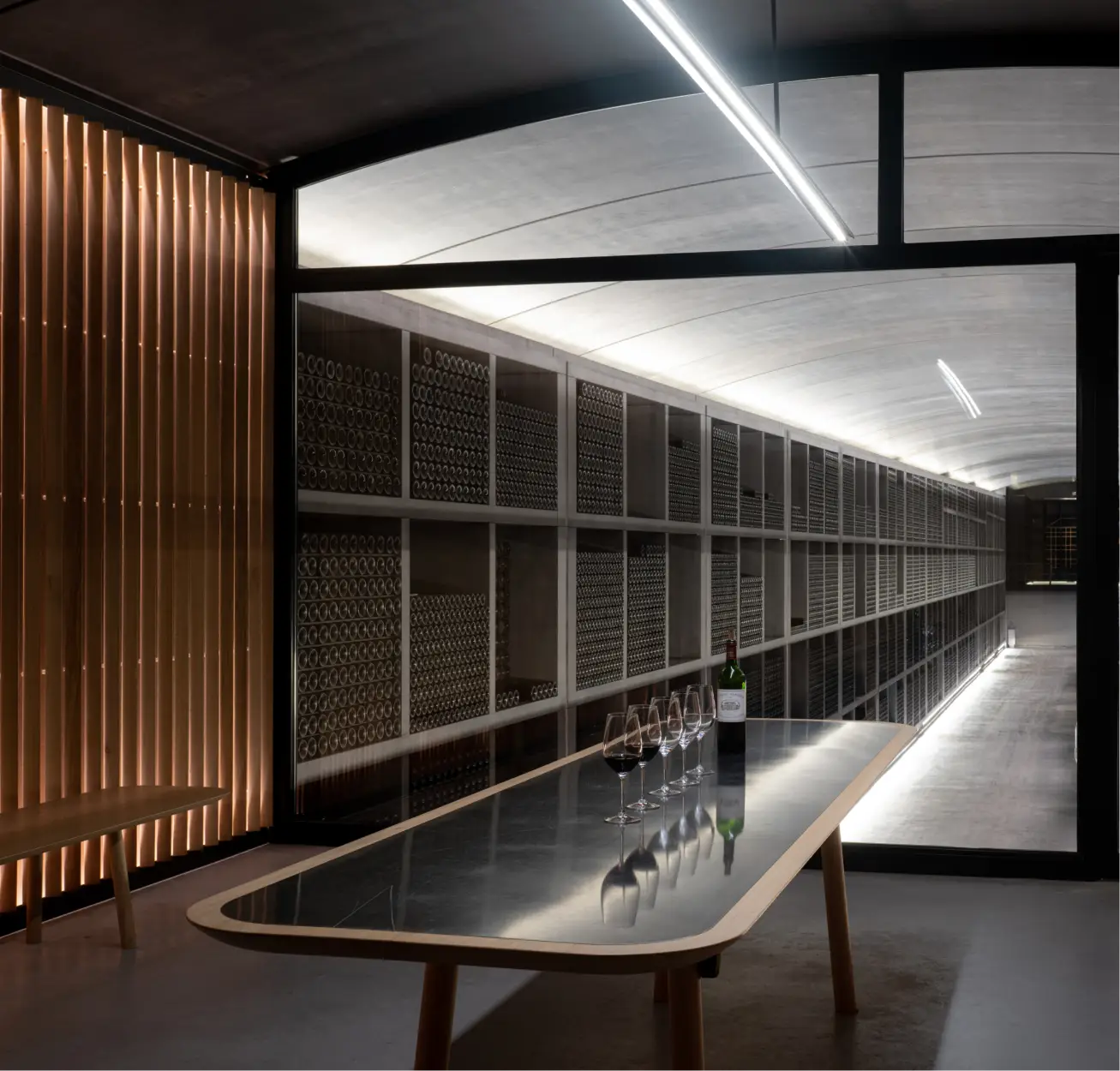
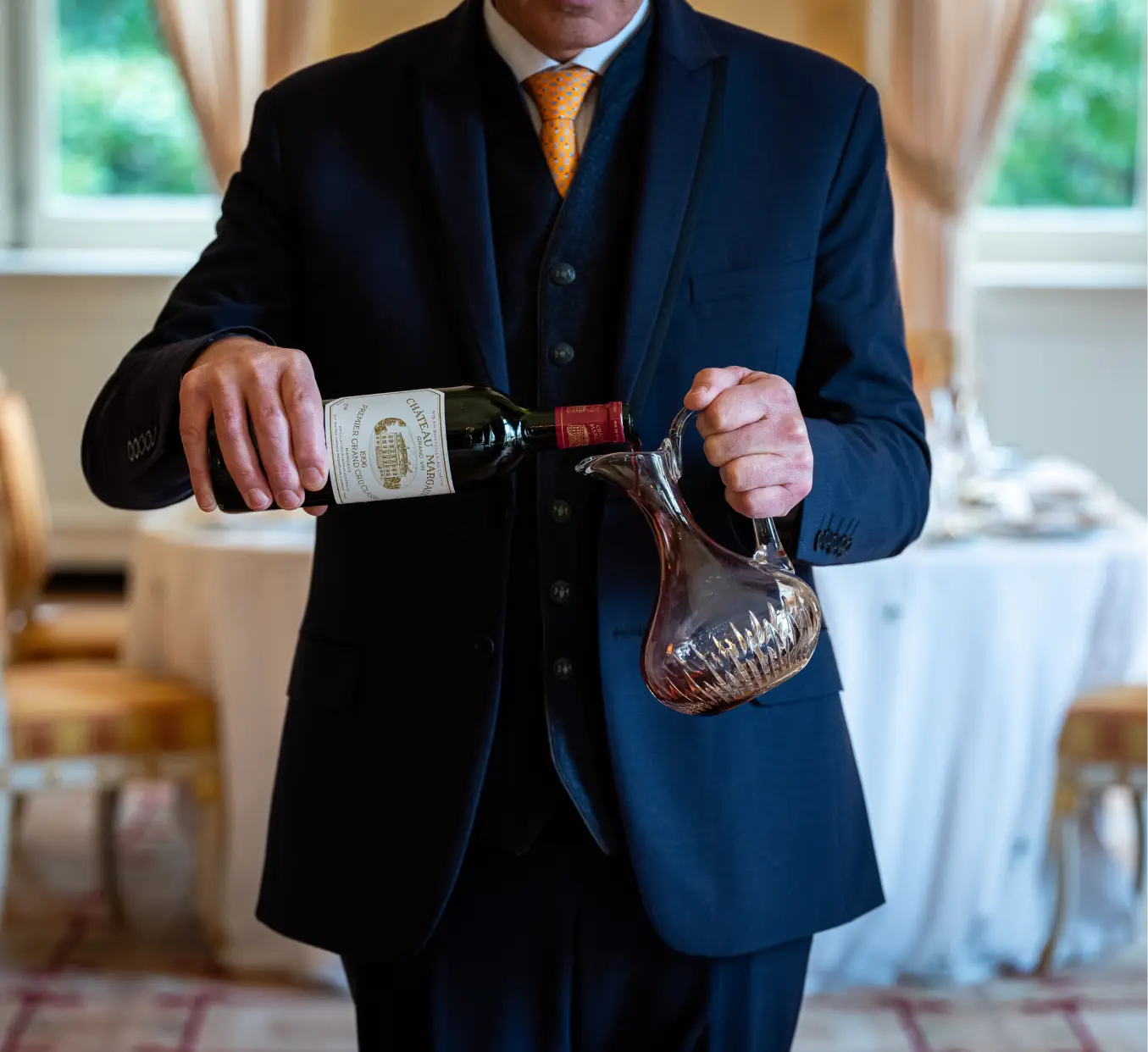
Service & tasting
Discover our tips for serving and tasting your wine in the best conditions.
Service & tasting
Discover our tips for serving and tasting your wine in the best conditions.