
2013
2013
2013

While it is relatively easy, on a great terroir and in a fine vintage, to produce an excellent third wine, the exercise becomes more delicate in certain years when not all plots reach full maturity.
How then, in a vintage such as 2013, can we maintain our commitment to excellence? Indeed, some late plots of cabernet or merlot, affected by “millerandage”, a condition that produces very small berries, have not always met our expectations.
With this objective in mind, we carried out the blends of the vintage. We decided to set aside some very fine lots of Pavillon Rouge, which went to “support” the Margaux du Château Margaux, while nearly a quarter of the production was downgraded to a fourth selection. We thought that the Margaux du Château Margaux would be blended from these downgraded lots, when in fact it is completely composed of wines that used to go into the Pavillon Rouge, which left the quantity sold in bulk unchanged.
Therefore Margaux du Château Margaux 2013 benefits from the extreme selection carried out on the Pavillon Rouge (which only represents 21% of the harvest), and from the removal of the least successful plots (all of which went into the fourth selection sold in bulk).
The merlot makes up only 12% of the blend, putting the emphasis on the cabernet sauvignon which was the main success of the vintage (88% of the whole).
It is just like all the best wines of the vintage, fresh, perfumed, very soft on the palate, and with no hint of harshness or aggression. It is a charming wine that appeals to delicate foods and although it does not have the same ageing potential as the other vintages, will nevertheless offer immediate pleasure to those who taste it. It is perfect for drinking today. (Octobre 2025)
Climate
The particularly cool temperatures at the end of winter and into spring delayed the shooting and then the flowering by a good ten days compared to the average. And as it also rained a lot during this period, the flowering was slow and the formation of the grapes difficult which caused a generalised “millerandage” and a bad problem of “coulure” - falling of underdeveloped fruit - in the Merlots. This latter phenomenon turned out to be more moderate for the Cabernets. Straightaway, we knew that the 2013 vintage wouldn’t be plentiful…
Fortunately, the summer drought enabled the grapes to catch up some of their lateness: at the moment of changing colour, we didn’t find the same heterogeneity as at the moment of flowering. It is also possible that their low quantity accentuated the catching up. At the beginning of September hope was growing for a harvest, certainly small, but that seemed to be ripening under excellent conditions.
September was paradoxical, relatively dry, but damp at the same time. Frequent small bursts of rain, in fact, maintained a raised ambient humidity without causing too much precipitation. So there was everything to play for until the end of the month when a sudden development of Botrytis led us to a quick start of the harvest ; in the end, the grapes would lose just a few days’ ripening, enough to dash the hopes of a great vintage, not enough to take away all its promises.
The harvest of the whites took place from the 19th to the 27th of September, and that of the reds, from the 30th of September to the 11th of October.
While it is relatively easy, on a great terroir and in a fine vintage, to produce an excellent third wine, the exercise becomes more delicate in certain years when not all plots reach full maturity.
How then, in a vintage such as 2013, can we maintain our commitment to excellence? Indeed, some late plots of cabernet or merlot, affected by “millerandage”, a condition that produces very small berries, have not always met our expectations.
With this objective in mind, we carried out the blends of the vintage. We decided to set aside some very fine lots of Pavillon Rouge, which went to “support” the Margaux du Château Margaux, while nearly a quarter of the production was downgraded to a fourth selection. We thought that the Margaux du Château Margaux would be blended from these downgraded lots, when in fact it is completely composed of wines that used to go into the Pavillon Rouge, which left the quantity sold in bulk unchanged.
Therefore Margaux du Château Margaux 2013 benefits from the extreme selection carried out on the Pavillon Rouge (which only represents 21% of the harvest), and from the removal of the least successful plots (all of which went into the fourth selection sold in bulk).
The merlot makes up only 12% of the blend, putting the emphasis on the cabernet sauvignon which was the main success of the vintage (88% of the whole).
It is just like all the best wines of the vintage, fresh, perfumed, very soft on the palate, and with no hint of harshness or aggression. It is a charming wine that appeals to delicate foods and although it does not have the same ageing potential as the other vintages, will nevertheless offer immediate pleasure to those who taste it. It is perfect for drinking today. (Octobre 2025)
Climate
The particularly cool temperatures at the end of winter and into spring delayed the shooting and then the flowering by a good ten days compared to the average. And as it also rained a lot during this period, the flowering was slow and the formation of the grapes difficult which caused a generalised “millerandage” and a bad problem of “coulure” - falling of underdeveloped fruit - in the Merlots. This latter phenomenon turned out to be more moderate for the Cabernets. Straightaway, we knew that the 2013 vintage wouldn’t be plentiful…
Fortunately, the summer drought enabled the grapes to catch up some of their lateness: at the moment of changing colour, we didn’t find the same heterogeneity as at the moment of flowering. It is also possible that their low quantity accentuated the catching up. At the beginning of September hope was growing for a harvest, certainly small, but that seemed to be ripening under excellent conditions.
September was paradoxical, relatively dry, but damp at the same time. Frequent small bursts of rain, in fact, maintained a raised ambient humidity without causing too much precipitation. So there was everything to play for until the end of the month when a sudden development of Botrytis led us to a quick start of the harvest ; in the end, the grapes would lose just a few days’ ripening, enough to dash the hopes of a great vintage, not enough to take away all its promises.
The harvest of the whites took place from the 19th to the 27th of September, and that of the reds, from the 30th of September to the 11th of October.
Service & tasting
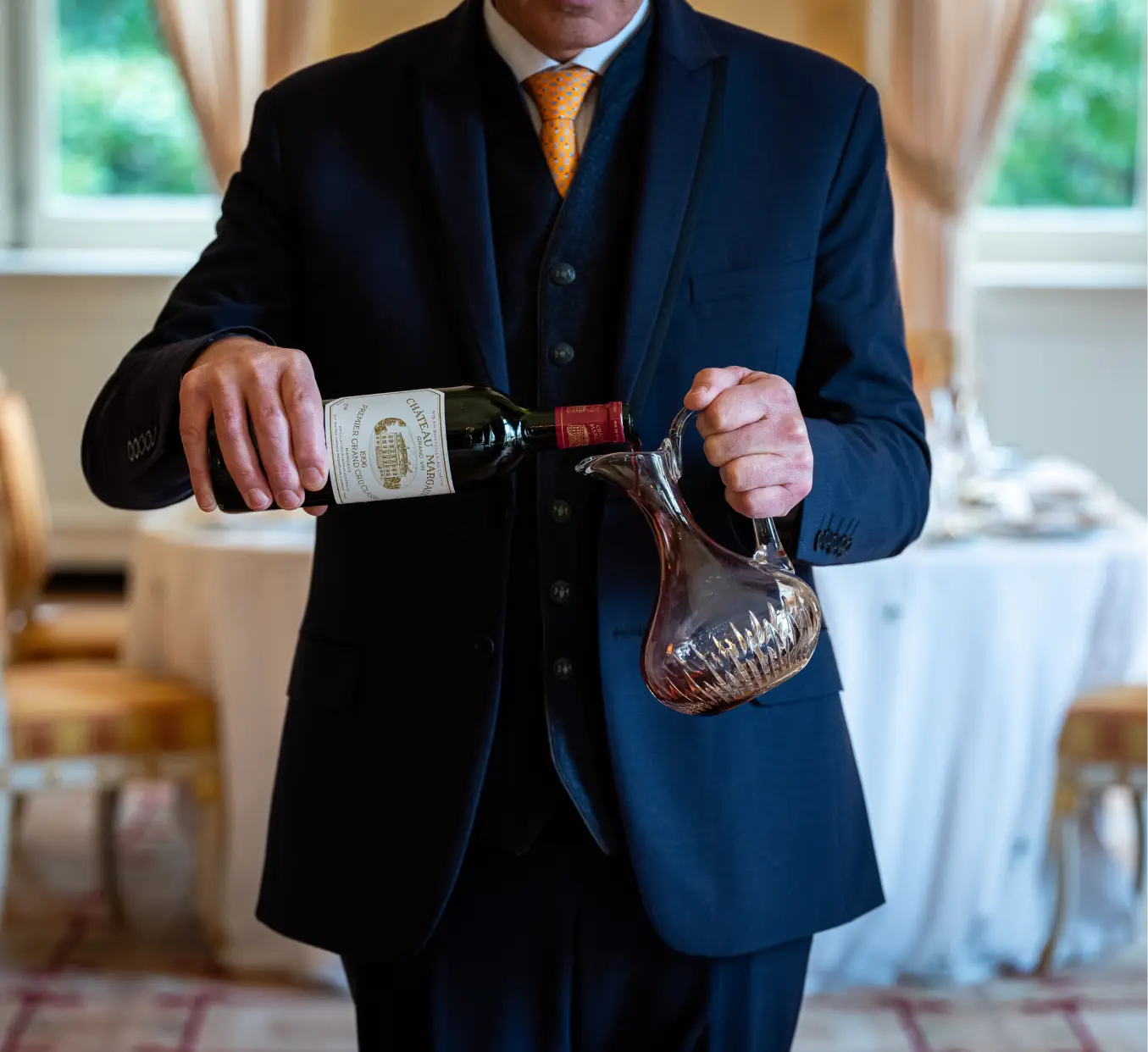
Discover our tips for serving and tasting your wine in the best conditions.
Service & tasting
Discover our tips for serving and tasting your wine in the best conditions.